Medical Summary
High testosterone in men means a total testosterone result above the adult male reference interval reported by that laboratory. In practice this usually reflects use of anabolic steroids or high-dose testosterone, and less commonly an androgen-secreting tumour or a rare adrenal condition such as congenital adrenal hyperplasia. Typical features include acne and oily skin, mood irritability, reduced sperm production, testicular shrinkage (with exogenous androgens), raised red blood cell count (erythrocytosis), and sometimes gynaecomastia due to conversion of testosterone to oestrogen. If you are on testosterone replacement therapy (TRT), “supraphysiological” levels raise the risk of side effects without clear added benefit, so dosing should aim for the normal range with regular monitoring of haematocrit, PSA, and symptoms.[1][2][3][4][5][6]
MYTRT treatment eligibility
MYTRT treats men only when they have compatible symptoms and meet both biochemical limits: total testosterone of 15 nmol/L or below, and free testosterone of 0.35 nmol/L or below.
Testing should be performed in the morning, ideally fasting and when well, and confirmed on a repeat sample. Where results are high, clinicians check sex hormone-binding globulin (SHBG), calculate free testosterone, and assess luteinising hormone (LH), follicle-stimulating hormone (FSH), and prolactin to determine whether the drive is testicular, pituitary, adrenal, or exogenous. Many men with high results feel well, but persistent values above the reference interval warrant clinical review because complications such as erythrocytosis and fertility impairment can arise silently. If you’re using TRT, agree a monitoring plan for blood counts and prostate with your prescriber, and keep testosterone within your lab’s normal range.[1][2][6][7]
High testosterone in men
There is no single UK-wide number that defines “high testosterone.” Instead, each laboratory reports an adult male reference interval derived from healthy cohorts and its assay method. A high result means your value sits above that upper limit. Reference intervals vary by lab, they are influenced by the testing platform, population, and handling of binding proteins, so always interpret a number against the stated range on your report, not against a figure you found online. Endocrine guidance emphasises confirming unexpected highs with a repeat, morning sample when you’re well, because illness, timing, and supplements can transiently shift results.[1][2]
A persistently raised total testosterone may reflect genuinely excess androgens or a shift in binding proteins such as SHBG that alters the total measurement. That is why clinicians often calculate free testosterone (or use equilibrium dialysis where available) and interpret free and total together. If total and free are both high, the clinical picture often points to one of three scenarios in practice: anabolic steroid use or high-dose TRT; an androgen-producing tumour (testicular Leydig cell tumour or, rarely, adrenal); or a congenital enzyme condition causing adrenal androgen excess. Lifestyle supplements can sometimes contain undeclared androgens, so a careful medication history is essential.[2][8][9]
If you are unsure how your result compares, read our guide to normal testosterone levels, which explains total versus free testosterone and SHBG. For a refresher on hormone roles, see what is testosterone? If your result is already high, or you are on TRT and want to understand appropriate targets, our overview of what is TRT and the TRT in the UK pathway can help you decide next steps.
| Laboratory report | What it often means | Suggested next step |
|---|---|---|
| Total T above upper limit; free T normal | Raised SHBG inflates total; true androgen action may be normal | Repeat morning test with SHBG; calculate free T; review symptoms[2] |
| Total and free T both high | Exogenous androgens or, rarely, androgen-secreting tumour/adrenal cause | Detailed drug/supplement history; LH/FSH; consider testicular US or endocrine work-up[2][9] |
| High T with suppressed LH/FSH | Exogenous androgens (negative feedback) | Discuss stopping non-prescribed androgens; safety testing (FBC, LFTs) and fertility counselling[3] |
| High T with high/normal LH | Less typical; check assay, repeat test; consider lab error or rare pathologies | Confirm with repeat; involve endocrinology if persistent |
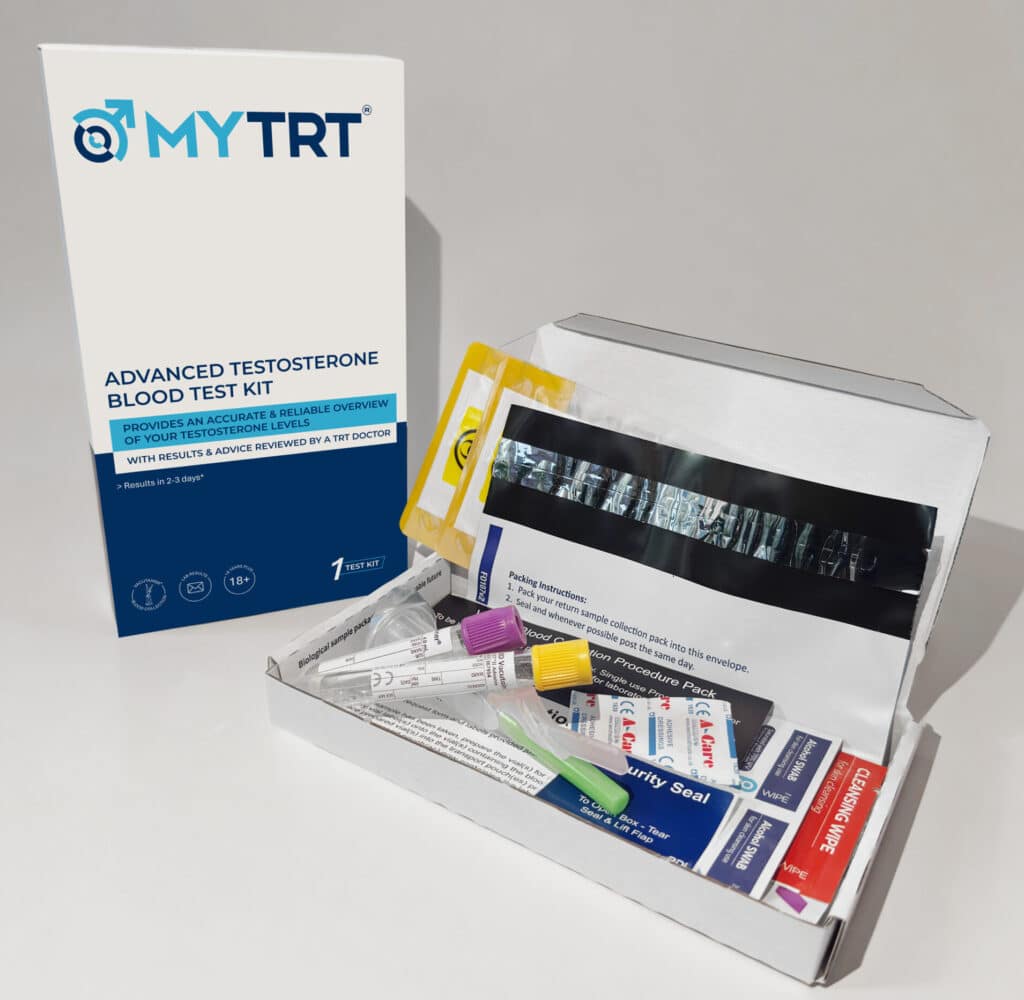
If you are considering a check, MYTRT provides a home testosterone blood test kit and an advanced testosterone blood test that includes SHBG and calculated free testosterone for a more complete picture. You can also read our explainer on the testosterone test process and the option of a testosterone test on the NHS.
Signs of high testosterone
Signs are features that can be observed or measured. In clinic we typically see a cluster of dermatological, haematological, and reproductive signs when testosterone exposure is excessive — especially when the source is anabolic steroids or supraphysiological TRT dosing.[1][3][6]
- Acne and oily skin: sebaceous glands are androgen sensitive; increased sebum fuels acne, often on the face, chest, and back.[4]
- Increased body hair and scalp hair thinning: androgens can thicken body hair yet accelerate male pattern hair loss in predisposed men.[3]
- Raised haematocrit/red cell count (erythrocytosis): androgens stimulate erythropoiesis, which can increase blood viscosity.[6][7]
- Gynaecomastia: excess testosterone can aromatise to ooestradiol, stimulating breast tissue in some men.[10]
- Testicular atrophy: exogenous androgens suppress pituitary LH/FSH, reducing intratesticular testosterone and sperm production, testes can shrink visibly.[3]
- Blood pressure elevations and fluid retention: sometimes seen with supraphysiological exposure.[5]
Beyond appearance, laboratory signs matter because they can precede symptoms. A full blood count may show a haematocrit above the safe threshold used in guidelines for TRT monitoring, prompting dose adjustment or therapeutic venesection. If you are new to TRT or currently self-medicating, you should understand the side-effect profile described in official product information and society guidance, see our overview of TRT side effects for patient-friendly detail.[1][5][6]
High testosterone symptoms
Symptoms are what you feel. Some men with very high levels feel well; others notice unwanted effects. The pattern often depends on source (endogenous vs exogenous), dose, aromatisation to oestrogen, age, and personal susceptibility.[1][3]
- Irritability, anxiety or swings in mood, and sometimes aggression — especially with anabolic steroid cycles or fluctuating short-acting injections.[3]
- Headaches, flushing, and reduced exercise tolerance if haematocrit climbs; some describe “thick blood” sensations or pins and needles, though these are not specific.[7]
- Low fertility or infertility: reduced sperm count and poor motility during and after exogenous androgen exposure.[3]
- Nipple tenderness or breast swelling consistent with gynaecomastia from increased ooestradiol.[10]
- Poor sleep or worsening obstructive sleep apnoea where present; that is why untreated severe OSA is a caution for TRT initiation[11].[1]
- Acne flares and skin sensitivity, often worsened by occlusive gym clothing and oils.[4]
If you are experiencing symptoms and have a high result, resist the temptation to self-adjust doses. Establish cause first, then treat. Start with a proper blood panel, total testosterone, SHBG, calculated free testosterone, full blood count, LH/FSH, prolactin, and clinical review. If you are exploring over-the-counter products that claim to raise testosterone, consider reading our evidence review of testosterone “boosters” before spending money.
Causes of high testosterone in men
Excess androgen exposure has a short list of common culprits and a longer list of rare ones. A careful history and targeted testing usually reveal the answer.
- Anabolic steroid use and non-prescribed androgens: by far the most common cause of significantly high levels in otherwise healthy men. Preparations include injectable testosterone esters, oral androgens, and designer steroids often obtained online. Side effects include acne, mood changes, testicular atrophy, infertility, gynaecomastia, hypertension, and liver strain.[3]
- Supraphysiological TRT dosing: prescribed or self-directed adjustments that push levels above the reference range. Sometimes occurs when injection intervals are too short or gel application is excessive relative to absorption. Monitoring should correct this to the lab’s normal range.[1][5]
- Androgen-producing tumours: testicular Leydig or Sertoli cell tumours can secrete testosterone independently of pituitary control. Adrenal tumours usually secrete adrenal androgens (DHEA-S, androstenedione) that convert peripherally.[9]
- Congenital adrenal hyperplasia (CAH): classical forms present in childhood; non-classical forms may be subtle in adults and can increase adrenal androgens, sometimes mimicking high testosterone states.[8]
- Assay artefacts and binding protein shifts: high SHBG can raise total testosterone without raising free testosterone; biotin supplements can interfere with some immunoassays. Calculated free testosterone and repeat testing help resolve this.[2]
Clues from the pituitary-gonadal axis help. Low LH/FSH with high testosterone suggests exogenous androgen use suppressing the axis. Normal or raised LH with high testosterone is uncommon and should prompt confirmation and specialist input. If fertility is a current or future priority and you are taking non-prescribed androgens, stop and seek medical support; recovery of sperm parameters can take months. For structured care, see our guide on how to get TRT in the UK and, if relevant, set expectations with our pages on TRT on the NHS and TRT cost in the UK.
Health risks when testosterone is too high
Short-term performance gains can obscure longer-term harms. The most consistent and clinically relevant risk from sustained supraphysiological testosterone is erythrocytosis — an excessive rise in haematocrit that thickens blood and may increase thrombotic risk. Professional guidance flags haematocrit as a key safety marker and recommends dose reduction or venesection when it exceeds a threshold used in TRT monitoring frameworks.[1][6][7]
- Erythrocytosis and thrombotic risk: monitor full blood count; symptoms can be subtle or absent, so scheduled testing matters.[6][7]
- Skin and hair issues: acne, folliculitis, and accelerated androgenic alopecia in genetically susceptible men.[4]
- Cardiometabolic effects: blood pressure increases and fluid retention have been described with androgen excess; robust cardiovascular outcome data at supraphysiological levels are limited, so clinicians minimise exposure outside the normal range where risks are likelier to exceed benefits.[5]
- Reproductive suppression: infertility and testicular atrophy due to pituitary suppression; recovery can be slow and incomplete in some cases.[3]
- Gynaecomastia and breast tenderness from aromatisation, which may persist if fibrotic tissue forms.[10]
- Sleep-disordered breathing: androgen therapy can worsen obstructive sleep apnoea in susceptible men, particularly at higher doses; untreated severe OSA is a caution for TRT.[1]
Product information for licensed testosterone medicines lists acne, increased haematocrit, oedema, and mood changes among adverse reactions. Those effects become more likely the further you stray above the physiological window, which is why good TRT care aims for normal, not “as high as possible.”[5]
If you obtained testosterone online without a prescription, read our safety explainer on buying testosterone online. Unregulated products may contain the wrong dose or additional potent androgens that amplify risks.
Advanced Testosterone Blood Test
Book a venous draw at a clinic £99.49
Book a venous draw at home with a nurse £109.49
 General health check
How and when to test for high testosterone
Timing and preparation determine how meaningful your result will be. Testosterone has a diurnal rhythm, peaking in the early morning and falling later in the day. For consistency, take samples between 7–11 am, ideally after an overnight fast and when you are otherwise well. Repeat an unexpected high result on a separate morning before acting on it. If you are on TRT, draw blood at a consistent point in your dosing cycle (e.g., midway between injections or 2–4 hours after applying gel) so trends are interpretable.[1][2]
- Core tests: total testosterone, SHBG, albumin (to calculate free testosterone), full blood count (for haematocrit), LH, FSH, and prolactin.[2][6]
- Sometimes: ooestradiol (E2) if gynaecomastia/tenderness, DHEA-S/androstenedione if adrenal source suspected, PSA (age-appropriate), liver function tests, lipid profile.
- Confirming free testosterone: calculated free T using SHBG and albumin is common and correlates with symptoms in many men; equilibrium dialysis is a reference method where available.[2]
For a step-by-step on arranging tests, including at-home fingerprick kits versus venous samples, see our testosterone test guide and our at-home kit. If your GP is arranging tests, this NHS overview on testosterone testing via the NHS explains what to expect. Men uncertain about next steps can browse our TRT FAQs.
Check your levels the right way
Morning, consistent, and comprehensive
What high results mean if you are on TRT
TRT is intended to restore physiological levels and relieve proven deficiency. Pushing above the reference interval does not improve outcomes and raises risks, particularly erythrocytosis, gynaecomastia, acne, and fluid retention. Clinical practice guidelines recommend titrating the dose to maintain testosterone within the normal range for healthy young men, while using symptom relief as a compass, not a license to exceed physiological bounds.[1][6]
- Injections: spacing doses evenly and avoiding aggressive front-loading smooths peaks. If troughs are low and peaks high, consider smaller, more frequent doses rather than larger, infrequent boluses.
- Gels: absorption varies; applying to clean, dry skin and allowing full drying helps. If levels are high, the solution is dose reduction, not skipping monitoring.
- Monitoring: check full blood count, testosterone (timed to the regimen), and symptom response regularly. Address haematocrit rises promptly, and always individualise decisions in men with cardiovascular or sleep apnoea risk.[1][7]
If you’re exploring whether TRT is right for you, our guide to getting TRT in the UK explains assessment, and our article on the side effects of TRT outlines what good monitoring looks like. Cost and access vary; you can compare options in TRT on the NHS and TRT cost UK.
Myths about “alpha” traits and performance
Popular culture often equates high testosterone with dominance, fearlessness, and limitless performance. Medicine does not. Testosterone influences muscle mass, libido, red cell production, and aspects of mood, but personality traits and success are shaped by many biological and social factors. Beyond a normal, healthy range, extra testosterone adds side effects more reliably than it adds advantages. When men report feeling temporarily invincible on anabolic cycles, that can reflect mood elevation and irritability that carry their own costs — to relationships, judgment, and long-term health.[3]
From a clinician’s perspective, the goal is sustainable wellbeing: stable energy, libido, and body composition within a safe hormonal window. If you are tempted by supplements that promise “natural” surges, read our analysis of testosterone boosters and consider lifestyle basics (sleep, nutrition, resistance training) that support healthy levels without pushing you into risk territory.
When to test and what to do next
Test if you have persistent features suggestive of androgen excess (acne, new gynaecomastia, high haematocrit, testicular atrophy), if you use or recently used anabolic steroids, or if you are on TRT and haven’t checked levels in several months. Men with sudden, unexplained high values, especially alongside testicular symptoms, should seek medical review to exclude a tumour source, although this is uncommon.[1][9]
- Arrange a morning panel: total T, SHBG, calculated free T, LH/FSH, prolactin, full blood count. Consider E2 if gynaecomastia; DHEA-S if adrenal source suspected.[2]
- Check reference ranges: interpret your value against the lab’s interval, not an internet average. Confirm highs on a second morning sample.[2]
- Address the cause: stop non-prescribed androgens; adjust TRT with your prescriber; pursue imaging/endocrine assessment if an endogenous source is suspected.[1][3][9]
- Protect fertility: if you want children, avoid anabolic steroids and discuss alternatives that preserve spermatogenesis. The NHS page on low testosterone also outlines testing steps that overlap with fertility evaluation.[12]
You can arrange testing with MYTRT: start with a basic kit, or choose the advanced panel if you need free T and SHBG. If high results persist, book a clinical review and bring your history, including any supplements. If you’re new to the topic, you might want to read our primers on what is TRT, TRT in the UK, and browse the TRT FAQ to understand safe, regulated care.
References
- Endocrine Society — Testosterone Therapy in Men With Hypogonadism: An Endocrine Society Clinical Practice Guideline (2018). ↩
- NCBI Bookshelf (Endotext) — Male Hypogonadism. ↩
- NHS — Anabolic steroid misuse. ↩
- NHS — Acne. ↩
- medicines.org.uk (MHRA) — Tostran 2% Gel, Summary of Product Characteristics. ↩
- NCBI (PMC) — Erythrocytosis Following Testosterone Therapy. ↩
- NHS — Polycythaemia (erythrocytosis). ↩
- Mayo Clinic — Congenital adrenal hyperplasia. ↩
- NCBI Bookshelf (StatPearls) — Leydig Cell Tumour. ↩
- NHS — Gynaecomastia. ↩
- NHS — Obstructive sleep apnoea. ↩
- NHS — Low testosterone in men. ↩