Medical Summary
Testosterone replacement therapy (TRT) in the UK is an evidence-based treatment for men diagnosed with hypogonadism — a condition characterised by persistently low serum testosterone alongside recognised clinical symptoms. The diagnosis requires two fasting morning blood tests taken on separate days, with most UK clinicians using a threshold of below 12 nmol/L total testosterone as indicative of deficiency, in line with British Society for Sexual Medicine (BSSM) guidance.[1] Symptoms typically include fatigue, reduced libido, low mood, poor concentration, loss of lean muscle mass, and increased central adiposity.
MYTRT treatment eligibility
MYTRT treats men only when they have compatible symptoms and meet both biochemical limits: total testosterone of 15 nmol/L or below, and free testosterone of 0.35 nmol/L or below.
TRT is available through the NHS, though access is highly variable depending on region and clinical threshold applied by individual CCBs or ICBs. Private clinics — including MYTRT — offer structured, clinician-led TRT programmes with shorter waiting times and more personalised monitoring protocols. Treatment forms include testosterone injections, topical gels, and transdermal patches. When appropriately prescribed and monitored, TRT has a strong safety and efficacy profile, improving quality of life, body composition, sexual function, and mood in men with confirmed hypogonadism.[2]
What Is TRT and Why Is It Used in the UK?
Testosterone replacement therapy is the medical administration of exogenous testosterone to men whose bodies no longer produce sufficient amounts of the hormone on their own. In a healthy adult male, the testes produce testosterone under the direction of the hypothalamic-pituitary-gonadal (HPG) axis — a tightly regulated feedback loop involving gonadotropin-releasing hormone (GnRH), luteinising hormone (LH), and follicle-stimulating hormone (FSH). When this system fails — whether due to age-related decline, pituitary dysfunction, testicular damage, or other pathology — circulating testosterone levels drop and symptoms emerge.
Patients often ask us whether TRT is simply an anti-ageing supplement or a legitimate medical treatment. The distinction matters. TRT in the UK is a prescription-only medicine, and responsible prescribers require objective biochemical evidence of deficiency alongside the presence of symptoms. It is not, nor should it be, dispensed without clinical assessment. The BSSM guidelines are clear: testosterone therapy is indicated for symptomatic hypogonadism confirmed on at least two separate blood tests.[1]
In the UK, interest in TRT has grown substantially over the past decade. Greater awareness of male hormonal health, broader media coverage, and a more open conversation around men’s wellbeing have brought thousands of men to seek assessment who might previously have suffered in silence. At MYTRT, we see this every day — men in their 30s, 40s, 50s, and beyond who have been told their bloods are “within normal range” yet continue to experience debilitating symptoms. Understanding where the nuance lies in diagnosis and treatment is central to what we do.
Low Testosterone in the UK: Recognising the Symptoms
Low testosterone — clinically referred to as hypogonadism or testosterone deficiency syndrome (TDS) — presents with a wide and often overlapping cluster of symptoms. No single symptom is diagnostic, which is why clinical assessment must accompany biochemical testing. The most commonly reported symptoms in our patient population include persistent fatigue and reduced energy despite adequate sleep, a noticeable decline in libido and sexual performance, difficulty with erections, reduced ejaculate volume, low mood or frank depression, poor concentration and brain fog, loss of muscle mass and strength despite regular exercise, and accumulation of body fat — particularly viscerally around the abdomen.
Many of these symptoms are non-specific, which means they can be attributed to other conditions — depression, thyroid dysfunction, sleep apnoea, type 2 diabetes, or simply poor lifestyle habits. This is why a comprehensive clinical work-up is essential before attributing symptoms to low testosterone. At MYTRT, initial consultations include detailed symptom scoring using validated tools such as the Aging Males’ Symptoms (AMS) scale, alongside a thorough review of medical history and lifestyle factors.
The physical signs a clinician may observe include reduced testicular size or firmness, loss of body or facial hair, gynaecomastia (enlargement of breast tissue), and reduced bone mineral density — though this latter finding is typically only apparent on imaging. In younger men, symptoms like infertility or reduced morning erections can be an early warning sign of gonadal insufficiency. It is worth noting that symptom burden does not always correlate directly with the degree of biochemical deficiency; some men are symptomatic at 10 nmol/L while others function adequately at 8 nmol/L — individual tissue sensitivity to testosterone plays a significant role.[3]
How Is Low Testosterone Diagnosed? The TRT Test UK Process
Accurate diagnosis is the foundation of good TRT prescribing. The TRT test process in the UK typically begins with a fasting early-morning blood draw, ideally between 08:00 and 10:00, when testosterone levels are at their circadian peak. A single low result is not sufficient for diagnosis — guidelines from the BSSM and the Endocrine Society both stipulate that two separate readings on two different days are required before commencing treatment, unless there is concomitant biochemical evidence of significant pituitary or gonadal pathology.[1][4]
Beyond total testosterone, a comprehensive diagnostic panel should include sex hormone-binding globulin (SHBG), from which free testosterone can be calculated. Free testosterone — the biologically active fraction not bound to SHBG or albumin — provides a more functionally relevant picture, particularly in men with elevated SHBG (common with ageing, liver disease, or hyperthyroidism). LH and FSH levels are also critical: low LH alongside low testosterone suggests a secondary (central) hypogonadism requiring further pituitary investigation, while high LH with low testosterone indicates primary gonadal failure.
A full baseline panel at MYTRT also includes full blood count (FBC), haematocrit, prostate-specific antigen (PSA), ooestradiol, prolactin, thyroid function, HbA1c, and a lipid profile. This not only helps confirm the diagnosis but establishes a safety baseline before therapy begins and identifies any contraindications. Elevated haematocrit above 0.54 or an unexamined elevated PSA, for example, would require further investigation before TRT is commenced.
Testosterone Blood Test Kit
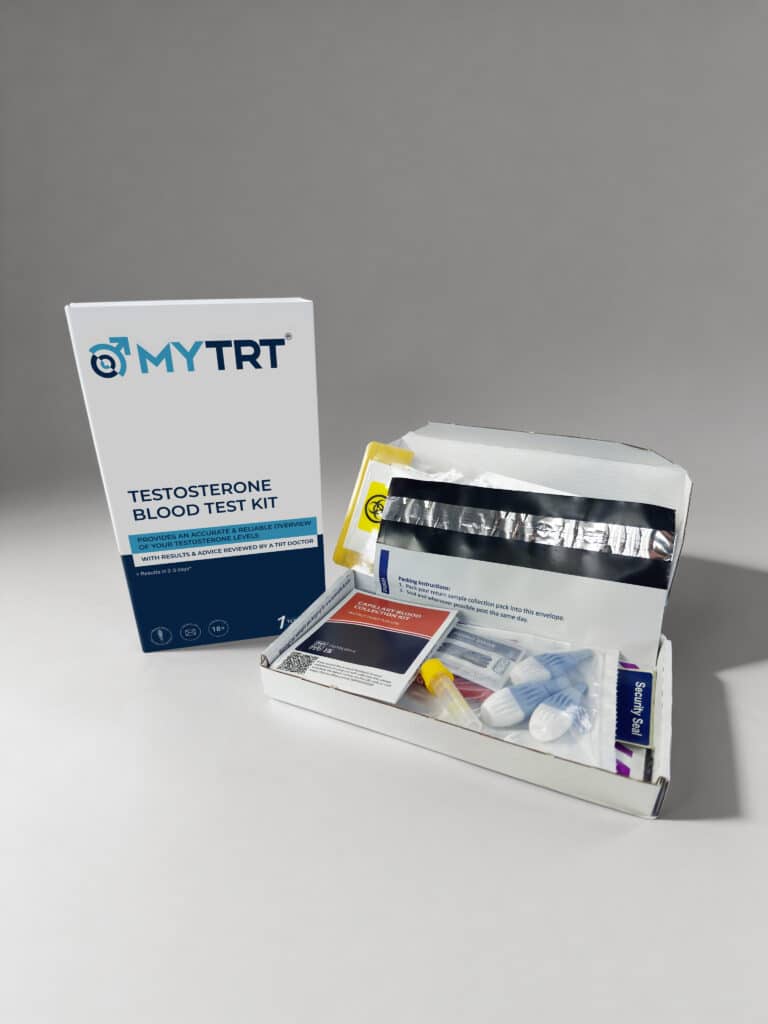
If this test showed you have low testosterone, the Advanced Testosterone Blood Test will assess your suitability for TRT.
How to Get TRT in the UK: NHS and Private Pathways
One of the questions we hear most frequently is: how do I actually get TRT in the UK? The honest answer is that there are two pathways — NHS and private — and they differ substantially in terms of access, speed, treatment options, and ongoing monitoring support.
Through the NHS, a GP will typically initiate a referral to endocrinology or urology if initial blood tests suggest low testosterone. Waiting times for NHS endocrinology appointments vary considerably by region — in many areas, patients wait six to eighteen months for a first specialist appointment. Once seen, NHS treatment is generally restricted to formulary options, which in practice often means testosterone gel or three-monthly Nebido injections. Some men find the monitoring schedule less intensive than they would like, or feel that symptom-based optimisation receives less focus than strict biochemical normalisation.
The private TRT pathway offers a different experience. At MYTRT, patients can be assessed, diagnosed, and started on treatment within a matter of days rather than months. Private clinics also tend to offer a broader range of treatment preparations — including shorter-acting injectable testosterone such as testosterone enanthate or cypionate, which allow for more flexible dose titration and closer symptom management. Ongoing monitoring is built into the programme, with regular blood tests and physician reviews scheduled throughout the year.
It is also worth noting that some men begin treatment privately and later seek shared care arrangements with their NHS GP to facilitate prescription continuation and NHS-funded blood monitoring. This is increasingly common and, where GPs are willing to engage in shared care protocols, can reduce the financial burden of long-term private treatment. For more detail on navigating both pathways, see our dedicated guide on TRT on the NHS and our page on how to get TRT in the UK.
Testosterone Replacement Therapy UK: Available Treatment Forms
TRT in the UK is available in several distinct delivery forms, each with its own pharmacokinetic profile, practical considerations, and patient suitability factors. Understanding the differences helps patients make informed choices in partnership with their prescribing clinician.
Testosterone injections are the most widely used form in the private TRT setting in the UK. Two main preparations dominate: testosterone enanthate (typically dosed every 7 to 14 days) and testosterone undecanoate (Nebido, dosed every 10 to 14 weeks). Enanthate and cypionate are shorter-acting esters that allow for more granular dose adjustments and produce more stable serum levels when injected weekly or fortnightly. Nebido, favoured on the NHS for its infrequent dosing schedule, produces wider peaks and troughs that some patients find symptomatically inconsistent. Self-injection at home is an option that many of our patients adopt after appropriate training, offering significant convenience.
Testosterone gels — applied daily to the skin of the shoulders, upper arms, or inner thighs — are widely prescribed on the NHS and have a good safety and tolerability profile. Brands available in the UK include Testogel, Tostran, and Testim. The main practical concern with gels is transference risk to partners or children through skin contact, which requires careful hygiene management. Absorption can also vary between individuals and application sites, meaning serum levels may be less predictable than with injections.
Testosterone patches are a less commonly used option in the UK, partly due to a higher rate of skin irritation and less favourable cost profiles. They deliver a continuous transdermal dose and are applied to non-scrotal skin daily. For patients who cannot or do not wish to inject and find gels inconvenient, patches can offer a middle ground.
Regardless of the delivery form chosen, the goal of testosterone replacement therapy is not to push levels as high as possible but to restore testosterone to a mid-normal physiological range — typically 15 to 30 nmol/L for total testosterone — that resolves symptoms while maintaining acceptable haematocrit and PSA levels. Dose titration is carried out over the first three to six months of treatment based on clinical response and follow-up bloods.[1]
What to Expect From TRT Therapy UK: Timelines, Monitoring, and Outcomes
In clinic we see that one of the most common sources of frustration for men starting TRT is unrealistic expectations around timelines. Testosterone therapy is not an overnight fix. Different symptoms respond at different rates, and the full benefit of treatment may not be apparent for six to twelve months after achieving stable therapeutic levels.
Libido and sexual function often improve within the first four to six weeks. Energy levels and mood typically begin to shift by weeks six to twelve. Changes in body composition — increased lean muscle mass and reduced fat mass — are slower to manifest and are closely linked to concurrent exercise and nutritional habits. Bone density improvements, relevant for men with long-standing hypogonadism, may take one to two years to become apparent on DEXA scanning.[3]
Monitoring during TRT follows a structured schedule. At MYTRT, patients receive blood tests at three months post-initiation, then six-monthly once stable. Key parameters reviewed include total testosterone, free testosterone, SHBG, haematocrit, PSA, ooestradiol, and full blood count. Haematocrit deserves particular attention: testosterone stimulates erythropoiesis, and levels above 0.54 increase the theoretical risk of thromboembolic events. If haematocrit rises excessively, dose reduction, increased injection frequency, or therapeutic venesection may be warranted.[2]
Ooestradiol monitoring is also important and somewhat underappreciated in NHS settings. Testosterone aromatises to ooestradiol via the aromatase enzyme, and in some men on TRT, ooestradiol rises to levels that cause symptoms including fluid retention, mood instability, or gynaecomastia. Aromatase inhibitors such as anastrozole may be introduced at low doses in these cases, though they are used judiciously given the importance of oestrogen for bone health and cardiovascular function in men.
Fertility is a critically important conversation to have before starting TRT. Exogenous testosterone suppresses the HPG axis, reducing intratesticular testosterone and spermatogenesis. Men wishing to preserve fertility should discuss alternative strategies — including human chorionic gonadotropin (hCG) alongside TRT, or primary management with clomiphene citrate — before commencing treatment. This is a core part of the pre-treatment consultation with any responsible UK TRT prescriber.
TRT Cost UK: Understanding the Financial Commitment
The cost of TRT in the UK varies significantly depending on the pathway chosen. NHS treatment involves standard prescription charges (currently £9.90 per item in England, free in Scotland, Wales, and Northern Ireland), with consultations and blood tests covered by the health service. However, the indirect costs — time spent waiting for appointments and limited treatment flexibility — lead many men to seek private care.
Private TRT involves several cost components: initial diagnostic blood tests, clinical consultations, ongoing prescription medication, and regular monitoring bloods. A comprehensive initial blood panel typically costs between £100 and £150. Initial consultations range from £150 to £250. The ongoing cost of medication depends on the preparation chosen; testosterone enanthate injections are generally the most cost-effective option, while gels and Nebido tend to be more expensive. When factoring in medication, clinic fees, and monitoring bloods, patients should budget approximately £80 to £130 per month for comprehensive private TRT care. For a detailed breakdown, see our guide on TRT costs in the UK.