Medical Summary
Low testosterone can be improved through targeted lifestyle changes when the cause is functional (for example, excess weight, poor sleep, high alcohol intake) and not due to primary testicular failure or pituitary disease. Clinically, the foundation is to confirm the problem with morning blood tests on two separate occasions and assess symptoms, then address reversible causes such as weight, sleep, medications and comorbidities. Many men can gain modest improvements from fat loss, consistent resistance training, better sleep, and limiting alcohol. Supplements marketed as a “natural testosterone booster” rarely produce meaningful changes unless treating a true deficiency (e.g., zinc deficiency). When blood levels remain low and symptoms persist, guideline-led testosterone replacement therapy (TRT) is considered, with individualised dosing and monitoring for safety and benefit. If you’re unsure where you stand, start by reading what testosterone is, check normal testosterone levels, and arrange a morning testosterone test at home with the MYTRT blood test kit or an advanced panel. If deficiency is confirmed, explore what TRT is and UK access routes via TRT in the UK and TRT on the NHS.[1][2][3][4]
MYTRT treatment eligibility
MYTRT treats men only when they have compatible symptoms and meet both biochemical limits: total testosterone of 15 nmol/L or below, and free testosterone of 0.35 nmol/L or below.
How to increase testosterone
Start by making sure testosterone is actually low. Symptoms (low energy, low libido, erectile issues, low mood, reduced muscle mass) can overlap with thyroid disease, depression, sleep apnoea, or side effects from medicines. The clinical approach is two early‑morning (before 10am) total testosterone measurements on different days, with sex hormone-binding globulin (SHBG) and calculated free testosterone where appropriate, plus luteinising hormone (LH) and prolactin if results are low. This helps distinguish functional suppression from primary testicular or pituitary causes.[5][6][4]
Understanding the hormone itself helps. See what testosterone is and why it varies by time of day and health status, then compare your readings to normal testosterone levels. If you haven’t tested yet, consider the at‑home testosterone blood test kit or the advanced testosterone blood test for a fuller picture. We also cover pathways for a testosterone test and what to expect from a testosterone test on the NHS if you go down the GP route.
If deficiency is confirmed, we prioritise reversible factors first: reduce visceral fat, normalise sleep, optimise training and protein intake, moderate alcohol, and review medications that suppress testosterone. When symptoms and low levels persist after that, TRT is considered case by case. For a primer, see what is TRT and TRT FAQs.[1][4]
How to boost testosterone
Fat loss is the single most reliable natural lever. Adipose tissue increases aromatisation of testosterone to ooestradiol and is associated with lower total and free testosterone. Systematic reviews show that clinically significant weight loss via diet, lifestyle change, or bariatric surgery raises testosterone in proportion to the amount of fat lost, with larger improvements after greater weight reduction.[7]
Sleep quality and duration matter. Testosterone follows a daily rhythm with highest values in the morning; restriction of sleep can reduce daytime levels within one week in healthy men. Practically, aim for 7–8 hours, maintain regular sleep/wake times, treat sleep apnoea if present, and limit late caffeine and alcohol.[8]
Exercise supports improvements, especially progressive resistance training. Acute rises during a workout are short‑lived, but over months, training reduces visceral fat, improves insulin sensitivity and can modestly increase basal testosterone in previously sedentary or overweight men. Pair training with sufficient protein (around 1.6–2.2 g/kg/day for active individuals) and adequate dietary fats to support steroidogenesis.[1]
Alcohol has dose‑dependent adverse effects on the male reproductive axis. Heavy or chronic intake is linked to reduced testosterone, impaired spermatogenesis and sexual dysfunction. Reducing intake to within UK low‑risk guidance (no more than 14 units/week, spread across the week) is a practical step that benefits testosterone and overall health.[9]
Medication review is often overlooked. Long‑term opioids, high‑dose glucocorticoids and some androgen‑suppressing treatments can depress testosterone. In clinic we typically see improvements when a prescriber supervises dose reduction or substitution with non‑suppressive alternatives. This must be clinician‑led when drugs are essential for other conditions.[4]
Increase testosterone
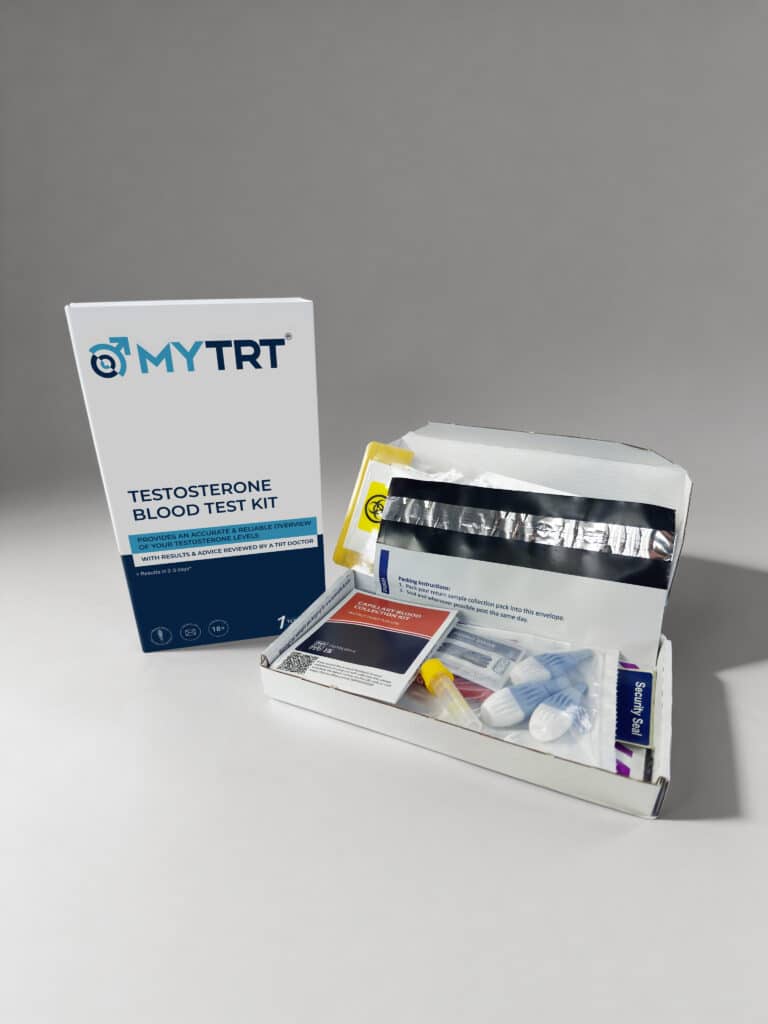
If this test showed you have low testosterone, the Advanced Testosterone Blood Test will assess your suitability for TRT.
Dietary pattern is a cornerstone. Caloric balance to reduce central adiposity is the priority if overweight. Beyond that, ensure sufficient protein, include healthy fats (olive oil, nuts, oily fish) and plenty of vegetables. Extreme low‑fat diets can reduce testosterone; equally, extreme fad diets are not sustainable. Correct clear micronutrient deficiencies, but be cautious about megadosing.
Vitamin D insufficiency is common in the UK, yet trials show mixed or minimal effects of supplementation on testosterone unless correcting a true deficiency. Supplement to reach replete status for bone and general health, but don’t expect a dramatic testosterone increase from vitamin D alone.[10]
Zinc deficiency can suppress testosterone, and repletion restores levels; however, extra zinc above normal needs does not keep pushing levels higher. If your diet is low in meat, shellfish or wholegrains, a standard multivitamin or targeted low‑dose zinc can be reasonable short‑term while improving diet quality.[11]
For a clear foundation, read our primer on what testosterone is and check how your readings compare with normal testosterone levels. If you want to organise labs today, use the MYTRT testosterone blood test kit or opt for the advanced testosterone blood test that adds SHBG and related markers. Questions about practicalities are covered in the TRT FAQ and our guide to testosterone tests.
Natural testosterone booster
Many supplements are presented as a quick fix, but very few have robust evidence for clinically meaningful increases in testosterone in eugonadal men. If a product helps you sleep better, train harder, or eat well, the secondary benefit may be real; that’s different from the compound directly increasing serum testosterone. See our evidence reviews on testosterone boosters and the best testosterone booster in the UK for a practical summary of what does and doesn’t stack up.
Herbal blends often underdose ingredients or rely on studies in specific deficient groups. Be cautious with proprietary blends that do not disclose exact amounts. If you choose to supplement, think like a clinician: identify a deficiency or a plausible mechanism (e.g., zinc in a low‑intake diet), use a standardised dose, and reassess after 8–12 weeks. Don’t forget to retest in the morning to judge whether anything changed meaningfully.
When lifestyle and targeted correction do not restore levels or symptoms remain, a structured discussion about TRT is reasonable. We outline pros, cons and costs in what is TRT, TRT UK, TRT cost in the UK and considerations for TRT on the NHS. Safety information, including possible side effects, is summarised in TRT side effects with signposting to official medicines data.[3][4][12]
| Intervention | Expected impact on T | Timeframe | Notes/Evidence |
|---|---|---|---|
| 5–10% weight loss | Small to moderate increase | 8–16+ weeks | Effect scales with fat loss; improves symptoms in many men[7] |
| Resistance training 2–4x/week | Small increase; symptom benefit | 12+ weeks | Acute spikes are transient; chronic benefit via body composition[1] |
| 7–8 hours quality sleep | Small increase | 1–4 weeks | Sleep restriction reduces testosterone within a week[8] |
| Alcohol moderation (≤14 units/week) | Small increase | 2–8 weeks | Heavy/chronic use suppresses the axis[9] |
| Vitamin D (if deficient) | Minimal to small | 8–12 weeks | Mixed RCT results; correct deficiency for general health[10] |
| Zinc (if deficient) | Small to moderate (deficient only) | 4–12 weeks | Repletion normalises; no extra benefit when sufficient[11] |
| Guideline‑led TRT | Large increase to normal range | Days to weeks | For confirmed hypogonadism with symptoms; monitored therapy[4][12] |
How to naturally increase testosterone
Build habits you can keep. A weekly framework that consistently works in clinic is: three progressive resistance sessions, two cardio sessions, 7–8 hours of sleep nightly with a set wake time, alcohol‑free weekdays, and a high‑protein, Mediterranean‑style diet in a slight calorie deficit if overweight. Add daily sunlight or a vitamin D supplement during dark months, and schedule wind‑down time to protect sleep.
Track change with the same rigour you’d use for training. Repeat morning bloods after 8–12 weeks of consistent habits. Use the same lab and sampling time for comparability. You can self‑organise with our testosterone blood test kit or upgrade to the advanced panel when you want SHBG and related markers rechecked together. For interpretation support, our TRT FAQ answers common questions about retesting and thresholds.
If lifestyle shifts do not move the needle and symptoms remain intrusive, read what TRT is and the UK process in TRT UK including pathways for the NHS. Costs, treatment types and monitoring schedules are outlined in TRT cost in the UK and TRT side effects with references to official medicine summaries.[3][12]
How to increase testosterone levels quickly
Short‑term spikes from a heavy gym session do not translate to lasting increases in basal testosterone, so they won’t fix persistent symptoms. The quickest reliable natural gains come from removing acute suppressors: restore sleep for a week or two, cut back alcohol, and avoid late‑night eating. If you are severely overweight, meaningful increases require fat loss over weeks to months—there is no safe “overnight” method.[8][7]
When genuine hypogonadism is confirmed, TRT can normalise serum testosterone within days to weeks depending on the formulation. Symptom improvement follows a variable timeline: libido and energy often improve within weeks, while changes in body composition and bone density take longer. Therapy must be prescribed, monitored and adjusted to achieve steady physiological levels and minimise risk.[4][12]
If you are evaluating options, compare routes and pricing in our guide to how to get TRT in the UK (pricing), and read the risks of buying testosterone online without a prescription. For a measured approach, test first with the MYTRT blood test kit, then decide based on evidence and your goals.
Boost testosterone
When TRT is indicated, choice of formulation matters. Options include transdermal gels, long‑acting injections, and other physician‑directed routes. Gels deliver daily dosing and stable levels when applied correctly; injections vary from short‑acting to long‑acting esters. The aims are to restore physiological testosterone, alleviate symptoms, and maintain safety markers within range (haematocrit, PSA as age‑appropriate, lipids, blood pressure).[12][13]
Correct application reduces risks. With gels, ensure clean, dry skin, apply to the recommended site, and wash hands thoroughly afterwards; avoid skin‑to‑skin transfer to partners or children until dry and covered by clothing. These precautions are set out in MHRA safety updates and medicine summaries. Injections require correct interval timing and trained administration to keep trough levels above the symptomatic threshold.[14][13]
TRT is a prescription therapy. If you are comparing access routes, review TRT UK and the pros and cons of pursuing TRT on the NHS versus private care, including practical costs. Side effect profiles and mitigation strategies are summarised in TRT side effects. The TRT FAQ covers common queries on fertility, monitoring and long‑term planning.[12]
What increases testosterone
Consistent habits increase the chance of sustained improvement: progressive resistance training, adequate sleep, energy balance that reduces central fat, and alcohol moderation. Morning testing at consistent times reduces measurement noise from natural diurnal variation. Managing stress and addressing comorbidities such as type 2 diabetes or obstructive sleep apnoea often helps, directly and indirectly, via better weight and metabolic health.[1]
Several medicines are associated with lower testosterone. Long‑term opioids and high‑dose glucocorticoids are common culprits identified in history taking. Switching, tapering or finding non‑hormone‑suppressing alternatives can be effective under a prescriber’s supervision. If anti‑androgen therapy is being used for a specific condition, testosterone should not be raised without specialist input.[4]
If you’ve ruled out obvious barriers and remain symptomatic, complete a structured assessment and repeat morning bloods. The advanced testosterone blood test can help define whether total or free testosterone is low and whether SHBG is a factor. Our testosterone test article and normal levels resource explain interpretation in plain terms.
How to get more testosterone
Use a stepwise plan. Step 1: confirm low testosterone with two morning tests. Step 2: tackle reversible causes for 8–12 weeks: weight loss if needed, consistent resistance training, better sleep, and reduced alcohol. Step 3: reassess symptoms and bloods. Step 4: if still low and symptomatic, consider TRT under supervision, with clear tracking of benefits and safety markers.[2][4]
You can get started today with a home kit: order the testosterone blood test kit, then follow up with the advanced panel if initial results are borderline. If you’re considering treatment options and costs, read how to get TRT in the UK and our guides on TRT UK, TRT costs, and TRT via the NHS.
Increase testosterone naturally
A practical weekly template might look like this: Monday, Wednesday and Friday resistance training covering compound lifts; Tuesday and Saturday brisk 30–40 minute cardio; consistent 22:30 lights‑out; alcohol saved for Saturday dinner and kept under 6–8 units weekly; protein at each meal with vegetables and wholegrains; and a 300–500 kcal daily deficit if weight loss is needed. Reassess body weight, waist circumference and sleep quality weekly.
Layer in micronutrients intelligently. If your diet is low in oily fish, consider omega‑3 from food first. If winter sun exposure is minimal, supplement vitamin D to achieve replete levels rather than chasing testosterone via large doses. If your diet lacks zinc‑rich foods, a standard supplement can be used for a few weeks while you upgrade nutrition—then stop once your intake is adequate.[10][11]
Keep expectations grounded. Natural methods can help many men move from borderline to acceptable levels with worthwhile symptom improvement, but they rarely take a man with true hypogonadism into the normal range. That’s where a careful conversation about TRT is appropriate, referencing what TRT is and how it is supervised.[1][4]
How to raise testosterone
Two real‑world patterns stand out in clinic. First, men in their 40s–50s with central adiposity, snoring and intermittent training plans often respond well to 10–15% weight loss, a set sleep schedule, and three full‑body resistance sessions per week. Symptoms improve, and morning testosterone moves up in step with better metabolic health. Second, men with clearly low levels on repeat tests despite solid lifestyle changes typically benefit from guideline‑directed TRT with structured monitoring.[7][8][4]
If you’re deciding what to do next: read up on normal levels, arrange a testosterone test, and compare treatment routes in the UK. Be wary of shortcuts like buying hormones online—see our safety explainer on buying testosterone online—and keep changes measurable with repeat morning labs using the same method each time. Medicine summaries for licensed products, such as transdermal gels, set out how to use them safely and what side effects to monitor.[13]
References
- NHS — Hypogonadism (male). ↩
- Hackett G, Kirby M, Rees RW, et al. British Society for Sexual Medicine, Guidelines on Male Adult Testosterone Deficiency, with Statements for Practice (2023). World J Mens Health. 2023;41(3):508–537. ↩
- BSSM — British Society for Sexual Medicine, Guidelines on Male Adult Testosterone Deficiency, with Statements for Practice (2023). ↩
- Endocrine Society — Testosterone Therapy in Men With Hypogonadism: Clinical Practice Guideline. ↩
- PubMed — Body weight loss reverses obesity-associated hypogonadism: systematic review and meta-analysis. ↩
- PubMed — Effect of 1 week of sleep restriction on testosterone in young men. ↩
- PubMed — Alcohol and the male reproductive system. ↩
- PubMed — Vitamin D supplementation and testosterone: systematic review and meta-analysis. ↩
- PubMed — Zinc status and serum testosterone during depletion and supplementation. ↩
- Mayo Clinic — Testosterone therapy: Potential benefits and risks as you age. ↩
- eMC — Testogel 16.2 mg/g gel: Summary of Product Characteristics. ↩
- MHRA — Testosterone gels: ensure patients are aware of risk of transfer to others. ↩
- Endocrine Society — Testosterone Therapy. ↩
- PubMed/NCBI — Effect of Vitamin D Supplementation on Testosterone Levels in Men. ↩