
Medical Summary
When searching for a testosterone replacement therapy clinic, location is no longer the primary factor for most patients. The shift towards telemedicine means that the best TRT clinic in the UK may not be geographically close to you, but can still provide comprehensive care through home blood testing and online consultations. A legitimate TRT clinic must be registered with the Care Quality Commission (CQC) and employ prescribers registered with the General Medical Council (GMC). Proper diagnostics, including at least two separate venous blood tests confirming low testosterone levels, are clinically required before initiating treatment. Ongoing blood monitoring is essential to ensure safety and efficacy, alongside transparent pricing structures that do not hide the true cost of care. Patients should be wary of clinics that offer treatment without comprehensive blood work, fail to provide regular follow-up appointments, or supply medications without a valid UK prescription. Choosing a clinic based on clinical standards rather than proximity ensures a safer and more effective treatment pathway.
Why “TRT Clinic Near Me” Matters Less Today
Historically, finding a testosterone replacement therapy clinic meant searching for a local physical premises. You would need to travel for initial consultations, blood tests, and follow-up appointments. This geographical restriction often limited patients to whatever services happened to be nearby, regardless of their specific expertise in male hormone health. Today, the landscape of medical care has shifted significantly. The rise of telemedicine has transformed how we access specialist treatments, making the physical location of a clinic far less important than the quality of care it provides.
In clinic we typically see patients who have struggled to find local specialists with a deep understanding of testosterone deficiency. By expanding your search beyond a “TRT clinic near me”, you gain access to a wider pool of expertise. Modern clinics operate nationwide, utilising home blood testing kits or local phlebotomy services to gather the necessary diagnostic information. Consultations are conducted via secure video links, allowing you to speak with experienced doctors from the comfort of your own home. This approach saves time and travel expenses and ensures that you are not compromising on the standard of care simply for the sake of convenience.
The focus should always be on finding the best TRT clinic UK wide, rather than the closest one. A clinic’s ability to provide accurate diagnostics, personalised treatment plans, and rigorous ongoing monitoring is what truly matters. When you remove the geographical barrier, you can prioritise these clinical standards, ensuring that your health is in the hands of qualified professionals who specialise in testosterone replacement therapy.
Choosing a TRT Clinic
-
 CQC Registered
-
GMC Doctors
-
Transparent Pricing

What Makes a Legitimate UK TRT Clinic?
Identifying a legitimate testosterone clinic requires looking beyond glossy marketing and focusing on regulatory compliance and clinical protocols. The cornerstone of any reputable medical service in England is registration with the Care Quality Commission (CQC). The CQC is the independent regulator of health and social care, ensuring that services provide people with safe, effective, compassionate, and high-quality care [1]. A clinic that is not CQC registered is operating outside the standard regulatory framework, which should be an immediate cause for concern.
Equally important is the medical team. Any doctor prescribing testosterone must be registered with the General Medical Council (GMC). You can easily verify a doctor’s registration status on the GMC’s online register. This ensures that the individual responsible for your care is fully qualified and adheres to the professional standards expected of medical practitioners in the UK. A legitimate TRT doctor will always conduct a thorough medical history and review comprehensive blood test results before considering treatment.
Proper diagnostics are non-negotiable. The British Society for Sexual Medicine (BSSM) guidelines state that a diagnosis of testosterone deficiency requires at least two separate blood tests, taken in the morning (usually between 8 AM and 11 AM), showing low testosterone levels [2]. A clinic that offers treatment based on a single test, or without testing at all, is not following established clinical guidelines. Furthermore, a legitimate clinic will insist on ongoing blood monitoring to track your progress, adjust dosages as necessary, and monitor for potential side effects such as changes in haematocrit or prostate-specific antigen (PSA) levels.
Red Flags to Watch Out For
When evaluating testosterone replacement therapy clinics, it is crucial to be aware of certain red flags that indicate substandard or potentially unsafe practices. One of the most significant warning signs is a clinic that is willing to prescribe testosterone without comprehensive blood work. As mentioned, diagnosing testosterone deficiency is a precise process that requires specific biochemical evidence. If a clinic offers to start treatment based solely on symptoms, or with inadequate testing, they are compromising your safety.
Another major red flag is the lack of ongoing monitoring. Testosterone replacement therapy is not a “fire and forget” treatment. It requires careful management to ensure that hormone levels remain within a healthy physiological range and to mitigate risks. Clinics that do not schedule regular follow-up appointments or require periodic blood tests are failing in their duty of care. You should always ask a prospective clinic about their monitoring protocols before committing to treatment.
Be extremely cautious of clinics that supply medications without a valid UK prescription or those that rely on imported medications of unknown origin. All medications prescribed should be sourced from regulated UK pharmacies. The Medicines and Healthcare products Regulatory Agency (MHRA) ensures that medicines meet applicable standards of safety, quality, and efficacy [3]. Using unregulated products poses a severe risk to your health. Additionally, transparent pricing is vital. Some clinics may advertise low initial consultation fees but hide the true cost of medications, blood tests, and follow-ups. A reputable clinic will provide a clear, comprehensive breakdown of all expected costs upfront.
Advanced Testosterone Blood Test
Book a venous draw at a clinic £108.49
Book a venous draw at home with a nurse £118.49
 General health check
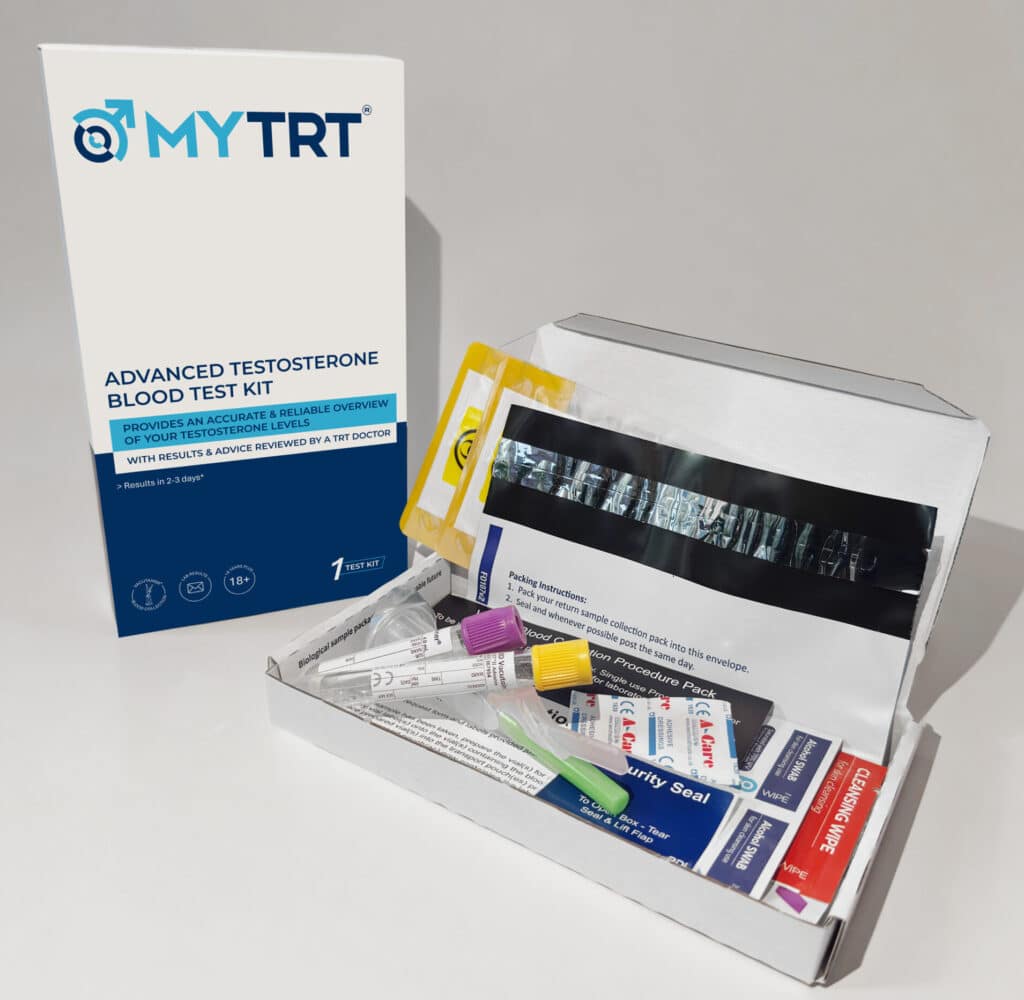
This test is only suitable when you have eligible results from our Initial Testosterone Blood Test
Online vs In-Person Care: Which is Better?
The debate between online and in-person care is common when patients begin looking for a testosterone replacement clinic. Both models have their merits, but the effectiveness of the treatment depends entirely on the clinical protocols followed, rather than the physical setting. In-person clinics offer face-to-face interaction, which some patients prefer for building a rapport with their doctor. They also allow for immediate physical examinations if required. However, they can be inconvenient, requiring travel and time off work, and you are limited to the expertise available in your local area.
Online clinics, on the other hand, offer unparalleled convenience. Consultations can be scheduled around your commitments, and you have access to specialists regardless of where you live in the UK. The diagnostic process is handled through home blood testing kits or by visiting a local partner clinic for a venous draw. The results are then reviewed remotely by the medical team. This model is highly efficient and, when executed correctly, maintains the same rigorous clinical standards as an in-person clinic.
The key is to ensure that the online clinic you choose does not cut corners. They must still require comprehensive blood tests, conduct thorough video consultations, and mandate regular follow-up monitoring. In clinic we typically see that patients who choose a reputable online service experience a high level of satisfaction due to the combination of expert care and convenience. Ultimately, the best choice depends on your personal preferences, provided that the clinic adheres to strict medical guidelines.
Questions to Ask Before Signing Up
Before committing to any testosterone replacement therapy clinics near me or online, it is essential to ask specific questions to gauge their legitimacy and standard of care. Start by asking about their regulatory status. Are they registered with the CQC? Can they provide their registration number? This is a fundamental requirement for any healthcare provider in England. Next, enquire about the medical team. Are the prescribing doctors registered with the GMC? What is their specific experience in managing testosterone deficiency?
You must also understand their diagnostic process. Ask how many blood tests are required before a diagnosis is made and what specific markers are tested. A reputable clinic will test for a comprehensive panel, including total testosterone, free testosterone, SHBG, oestradiol, prolactin, and full blood count, among others. Enquire about their monitoring protocols. How often will you need follow-up blood tests and consultations? This demonstrates their commitment to your long-term health and safety.
Finally, ask for a complete breakdown of costs. Transparency is crucial. You need to know the price of initial consultations, diagnostic blood tests, ongoing medication, and follow-up appointments. Some clinics operate on a subscription model, while others charge on a pay-as-you-go basis. Ensure you understand exactly what is included in the price to avoid unexpected expenses later on. By asking these questions, you can confidently select a clinic that prioritises your health and well-being.
Comparing TRT Clinic Options
When evaluating different TRT clinics UK wide, it can be helpful to compare the standard pathways. The NHS provides testosterone replacement therapy, but the process can be lengthy and the criteria for treatment are often very strict. Private clinics offer a more streamlined approach, but standards vary significantly between providers. The table below outlines the key differences you might encounter when comparing a dedicated private clinic to the standard NHS pathway.
| Feature | Dedicated Private TRT Clinic | Standard NHS Pathway |
|---|---|---|
| Waiting Times | Usually within days for initial consultation | Can be several months for specialist referral |
| Diagnostic Criteria | Follows BSSM guidelines, often more nuanced | Strict adherence to local formulary guidelines |
| Treatment Options | Wide range including gels, injections, and alternatives | Often limited to gels or specific long-acting injections initially |
| Monitoring Frequency | Regular, proactive monitoring (e.g., every 3-6 months) | Variable, often less frequent once stable |
| Cost | Self-funded, requires transparent pricing | Free at the point of use (standard prescription charges apply) |
This comparison highlights why many men choose to seek care privately. While the NHS provides an essential service, the waiting times and restricted treatment options can be frustrating for those experiencing significant symptoms of testosterone deficiency. A dedicated private clinic can offer a more responsive and tailored approach, provided you select one that adheres to the highest clinical standards.
The Importance of Comprehensive Blood Testing
Comprehensive blood testing is the foundation of safe and effective testosterone replacement therapy. It is not enough to simply measure total testosterone levels. A full diagnostic picture requires analysing a range of biomarkers to understand the underlying cause of the deficiency and to ensure that treatment is appropriate. This includes measuring free testosterone, which is the active form of the hormone available to your tissues. Sex hormone-binding globulin (SHBG) levels must also be assessed, as this protein binds to testosterone, affecting how much is freely available.
Furthermore, testing must include markers such as oestradiol, prolactin, luteinising hormone (LH), and follicle-stimulating hormone (FSH). These help to differentiate between primary hypogonadism (a problem with the testes) and secondary hypogonadism (a problem with the pituitary gland or hypothalamus). A full blood count is also essential to establish a baseline haematocrit level, as testosterone therapy can stimulate red blood cell production, potentially leading to polycythaemia if not monitored carefully.
When choosing a clinic, ensure they mandate this level of detailed testing. Clinics that offer a comprehensive blood test demonstrate a commitment to thorough clinical assessment. This rigorous approach confirms the diagnosis and helps to identify any contraindications to treatment, ensuring that your health is protected throughout your TRT journey.
Understanding Treatment Options and Protocols
A high-quality testosterone clinic will offer a range of treatment options tailored to your specific needs and lifestyle. There is no one-size-fits-all approach to TRT. The most common delivery methods include topical gels and intramuscular or subcutaneous injections. Gels are applied daily and provide a steady absorption of testosterone, mimicking the body’s natural diurnal rhythm. They are non-invasive but require careful application to avoid transferring the hormone to others.
Injections, such as testosterone cypionate or enanthate, are typically administered weekly or bi-weekly. They offer precise dosing and eliminate the risk of transference. Some clinics also offer longer-acting injections, such as testosterone undecanoate, which are administered every 10 to 14 weeks. The choice of treatment should be a collaborative decision between you and your doctor, taking into account your symptoms, blood test results, and personal preferences.
Beyond the testosterone itself, a comprehensive protocol may include ancillary medications to manage potential side effects or preserve fertility. For example, human chorionic gonadotropin (hCG) is often prescribed alongside TRT to maintain testicular size and function. An aromatase inhibitor may be used if oestrogen levels rise too high, although this is generally avoided unless clinically necessary. A clinic’s ability to offer and manage these nuanced protocols is a strong indicator of their expertise in male hormone health.
The Role of Ongoing Monitoring and Support
Initiating treatment is only the first step; ongoing monitoring is where the true value of a specialist clinic becomes apparent. Testosterone replacement therapy requires careful titration to find the optimal dose that resolves symptoms while minimising side effects. This process relies heavily on regular blood tests and clinical reviews. During the first year of treatment, you should expect to have blood tests every three to six months, followed by annual reviews once your levels are stable.
These reviews are not just about checking testosterone levels. They must also monitor your haematocrit, prostate-specific antigen (PSA), liver function, and lipid profile. Elevated haematocrit is a known risk of TRT and requires prompt management, which may involve adjusting the dose or arranging for a therapeutic venesection. Regular monitoring ensures that any potential issues are identified and addressed early, maintaining the safety of the treatment.
Furthermore, ongoing support from the medical team is vital. You should have access to your doctor or a specialist nurse to discuss any concerns, report new symptoms, or ask questions about your treatment. A clinic that provides robust, accessible support demonstrates a commitment to patient care that goes beyond simply issuing a prescription. This level of service is what distinguishes the best TRT clinics from those that merely dispense medication.
Navigating the Costs of Private TRT
Understanding the financial commitment is a crucial part of choosing a clinic. Private healthcare involves out-of-pocket expenses, and the costs associated with TRT can vary widely between providers. It is essential to look beyond the headline price of an initial consultation and consider the total cost of care over a year. This includes the cost of diagnostic blood tests, follow-up consultations, the testosterone medication itself, and any necessary ancillary medications or supplies.
Some clinics charge a monthly subscription fee that covers all consultations and medications, providing predictable costs. Others operate on a pay-as-you-go basis, where you pay separately for each appointment and prescription. Both models have their pros and cons, but the most important factor is transparency. A reputable clinic will provide a clear, itemised breakdown of all expected costs before you commit to treatment.
Be wary of clinics that seem unusually cheap, as they may be cutting corners on diagnostics or monitoring, or they may hit you with hidden fees later on. Conversely, the most expensive clinic is not necessarily the best. Focus on value—the quality of care, the expertise of the medical team, and the comprehensiveness of the service provided relative to the cost. By carefully reviewing the pricing structures, you can make an informed decision that aligns with your budget and healthcare needs.
Making Your Final Decision
Choosing the right testosterone replacement therapy clinic is a significant decision that will impact your health and well-being for years to come. By shifting your focus away from simply finding a “TRT clinic near me” and instead prioritising clinical excellence, regulatory compliance, and comprehensive care, you can ensure that you receive the best possible treatment. Take the time to research your options, ask the right questions, and verify the credentials of the medical team.
Remember that legitimate clinics will always require thorough blood testing and will insist on regular ongoing monitoring. They will be transparent about their pricing and will offer a range of treatment options tailored to your individual needs. By being vigilant for red flags and demanding high standards, you can confidently navigate the process of finding a clinic that will safely and effectively manage your testosterone deficiency.
Ultimately, the goal of TRT is to restore your hormone levels to a healthy physiological range, alleviating symptoms and improving your quality of life. Partnering with a reputable, expert clinic is the most reliable way to achieve this outcome. Whether you choose an online provider or an in-person clinic, ensure that their commitment to patient care and clinical safety is unwavering.
Two checks take minutes and remove most of the risk. Any prescriber should appear on the GMC medical register, which is free to search[4], and a credible clinic will follow recognised UK assessment standards such as those summarised in NICE clinical knowledge material[5]. NHS information on the male menopause is also a useful benchmark for the symptom picture a genuine clinic should be investigating rather than glossing over[6].
References
- Care Quality Commission — What we do. ↩
- British Society for Sexual Medicine — BSSM Practical Guide on the Management of Complex Testosterone Deficiency. ↩
- Medicines and Healthcare products Regulatory Agency — About us. ↩
- GMC — The medical register — check a doctor’s registration. ↩
- NICE — Clinical Knowledge Summary relevant to testosterone deficiency assessment. ↩
- NHS — The “male menopause”. ↩