Medical Summary
Testosterone replacement therapy dosing is determined by mass in milligrams rather than liquid volume in millilitres. Asking whether 1 ml of testosterone a week is sufficient demonstrates a common misunderstanding of pharmacology, as 1 ml may contain anywhere from 100 mg to 250 mg of the active hormone depending on the specific ester formulation. Clinical guidelines from the British Society for Sexual Medicine recommend targeting trough serum testosterone levels between 15 and 25 nmol/L [1]. Achieving this optimal range typically requires starting doses of 100 to 125 mg per week, which often equates to 0.4 ml to 0.5 ml of standard UK preparations. Consequently, a full 1 ml dose is usually excessive for most male patients seeking physiological replacement and increases the risk of adverse effects such as erythrocytosis and elevated oestrogen. Proper medical management relies entirely on precise milligram dosing and rigorous blood monitoring rather than arbitrary liquid volumes.[7]
MYTRT treatment eligibility
MYTRT treats men only when they have compatible symptoms and meet both biochemical limits: total testosterone of 15 nmol/L or below, and free testosterone of 0.35 nmol/L or below.
The Confusion Between Volume And Dose
When men begin treatment for testosterone deficiency, they often look at their prescription vial and ask if 1 ml of testosterone a week is enough. It sounds like a standard, round number that makes intuitive sense. After all, a single millilitre seems like a tiny amount of liquid. However, in the medical field, measuring medication purely by liquid volume is entirely meaningless without knowing the concentration of the fluid.
Think of it like ordering a pint of a beverage. A pint of light beer will have a very different effect on your body compared to a pint of pure vodka. The volume is exactly the same, but the active ingredient is vastly different. The same logic applies to injectable medications. You cannot determine if a dose is correct by looking at the markings on the syringe barrel alone. You must know how many milligrams of the active hormone are dissolved into every single millilitre of the carrier oil.
This misunderstanding often leads to men either severely under-dosing or dangerously over-dosing themselves. If you are prescribed a highly concentrated formulation, drawing up a full millilitre could flood your system with supraphysiological levels of hormones. Conversely, if you have a very dilute formulation, a full millilitre might barely bring you into the lower end of the normal reference range. To understand your treatment, you must shift your focus away from the liquid volume and concentrate entirely on the milligram dosage.
Testosterone Blood Test Kit
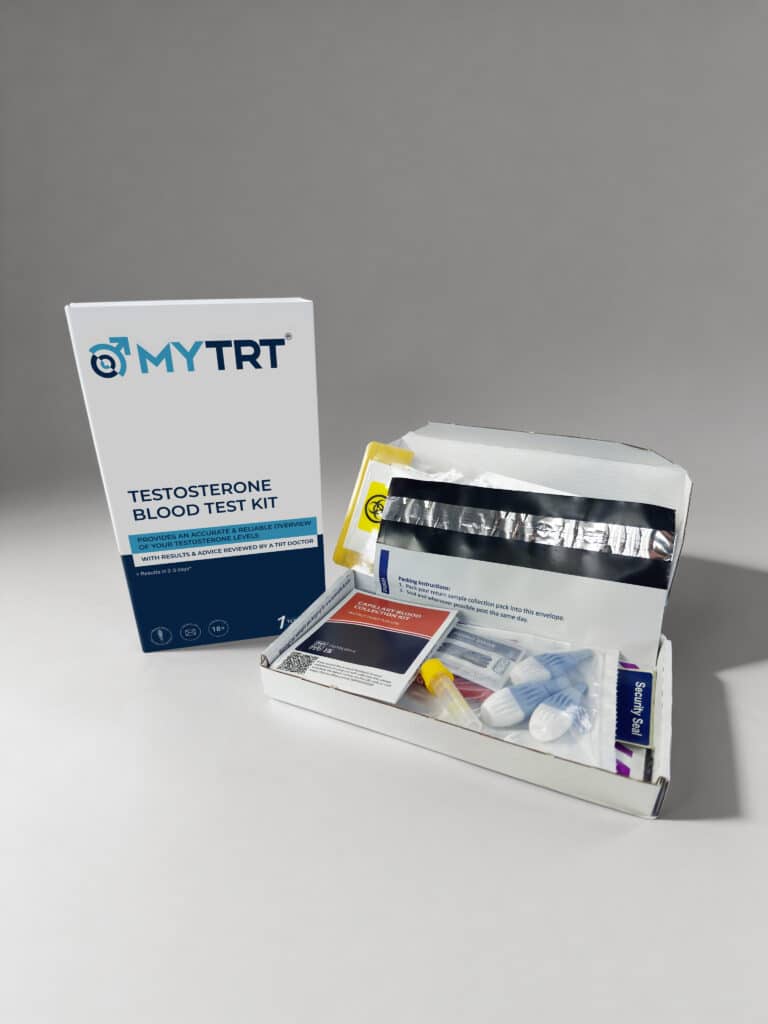
If this test showed you have low testosterone, the Advanced Testosterone Blood Test will assess your suitability for TRT.
UK Testosterone Formulations And Concentrations Explained
To answer the specific volume question accurately, we must look at the standard medications available to patients in the UK. Different pharmaceutical companies manufacture testosterone using different esters, which are chemical chains attached to the hormone to dictate how slowly it releases into your bloodstream. Each of these products comes with a specific concentration.
Sustanon 250 is one of the most common preparations prescribed by the NHS and private clinics. As the name suggests, it contains 250 mg of an active hormone blend per 1 ml of oil. This blend includes four distinct esters: propionate, phenylpropionate, isocaproate, and decanoate. If you inject a full millilitre of Sustanon, you are administering a massive 250 mg of testosterone into your muscle tissue.
Testosterone enanthate is another widely used option. In the UK, the standard ampoules or vials typically come in a concentration of 250 mg per 1 ml. Just like Sustanon, drawing up a full millilitre means you are taking a 250 mg dose. You can learn more about the specific pharmacology of this ester in our detailed guide to testosterone enanthate.
Testosterone cypionate is frequently used in private practice and is usually manufactured at a concentration of 200 mg per 1 ml. In this case, a full millilitre provides 200 mg of the hormone. As you can see, the exact same volume in the syringe delivers a completely different medical dose depending on the label on your vial.
Understanding Ester Weights And Active Hormone Yield
To complicate matters further, we must discuss ester weights. When you inject 100 mg of testosterone enanthate, you are not actually receiving 100 mg of pure testosterone. The enanthate ester has a molecular weight that takes up space in the compound. Once your body cleaves the ester away through enzymatic action, the actual yield of free base testosterone is roughly 70 to 72 mg.
This biological reality makes precise dosing even more vital. If you were to inject a full 1 ml of a 250 mg preparation, you are delivering a massive payload of esterified hormone that your body must process, cleave, and metabolise over the coming days. The liver and kidneys work constantly to manage this influx. Understanding the actual yield of the hormone helps clinicians fine-tune your protocol to ensure your body receives exactly what it needs to function optimally without being overwhelmed by excess compounds.
The Mathematics Of Testosterone Dosing
Calculating your exact dose requires a very simple mathematical formula. You multiply the volume you intend to inject by the concentration of the medication. Volume in millilitres multiplied by concentration in milligrams per millilitre equals your total dose in milligrams.
| Volume in Syringe | Concentration 250mg/ml (e.g. Sustanon, Enanthate) | Concentration 200mg/ml (e.g. Cypionate) |
|---|---|---|
| 0.2 ml | 50 mg | 40 mg |
| 0.3 ml | 75 mg | 60 mg |
| 0.4 ml | 100 mg | 80 mg |
| 0.5 ml | 125 mg | 100 mg |
| 0.6 ml | 150 mg | 120 mg |
| 0.8 ml | 200 mg | 160 mg |
| 1.0 ml | 250 mg | 200 mg |
This table clearly illustrates why discussing your protocol in terms of liquid volume is highly inaccurate. If a patient tells a doctor they are taking 0.5 ml a week, the doctor still does not know if the patient is receiving 100 mg or 125 mg until the specific medication is identified. Always communicate with your healthcare provider using milligrams.
Patient Scenario: The 1 ml Misstep
Consider a hypothetical patient named David. David sourced his own medication and decided that 1 ml of testosterone a week was the standard protocol he read about online. He drew up a full millilitre of testosterone enanthate (250 mg) every Monday morning. By Wednesday, David felt incredibly energised, but his face was flushed, and his blood pressure was elevated. By Sunday, he felt lethargic, moody, and completely exhausted.
When he finally consulted a private clinic, his blood tests revealed a trough testosterone level of 38 nmol/L and an ooestradiol level double the upper reference limit. His body was completely overwhelmed by the massive influx of hormones. The excess testosterone had rapidly converted into oestrogen, causing severe mood swings and water retention. By reducing his dose to 0.4 ml (100 mg) split into two weekly injections, David achieved stable levels, his blood pressure normalised, and his mood swings vanished. This scenario plays out constantly in clinical practice when men focus on volume rather than precise medical dosing.
So, Is 1 ml Of Testosterone A Week Enough?
For the vast majority of men undergoing legitimate medical treatment for hypogonadism, 1 ml of testosterone a week is not just enough; it is usually far too much. If we assume you are using standard UK formulations at 250 mg/ml, injecting a full millilitre means you are taking 250 mg every single week.
Clinical best practice dictates that a standard starting dose for replacement therapy sits between 100 mg and 125 mg per week [2]. Therefore, a 250 mg weekly dose is double the recommended starting point. Taking this amount will almost certainly push your blood serum levels well beyond the natural physiological range of a healthy young male.
When your levels exceed the natural range, your body attempts to restore balance through various mechanisms. Excessive testosterone stimulates the kidneys to produce more erythropoietin (EPO), a hormone that signals your bone marrow to accelerate red blood cell production. While a mild increase is a normal and often beneficial effect of therapy, massive doses from injecting a full 1 ml of highly concentrated oil can push your haematocrit levels into dangerous territory [8]. High haematocrit means your blood becomes thick and viscous, much like trying to pump syrup through a narrow pipe. This places immense strain on your cardiovascular system and significantly elevates the risk of hypertension and thrombosis. We cover these risks extensively in our guide to TRT side effects.
Is 0.5ml Of Testosterone A Week Enough?
This brings us to a much more appropriate volume for standard UK medications. Is 0.5ml of testosterone a week enough? If you are using a 250 mg/ml formulation like enanthate or Sustanon, 0.5 ml equates to exactly 125 mg. For many men, this is the absolute sweet spot for symptom resolution.
Starting at 125 mg allows your clinician to observe how your body metabolises the hormone without overwhelming your system. Many patients find that this dose brings their trough levels perfectly into the upper quartile of the normal reference range, restoring their energy, libido, and cognitive function without triggering any negative side effects. If you are using a 200 mg/ml formulation like cypionate, 0.5 ml provides 100 mg, which is also an excellent and highly effective starting dose.
Is 1.5 ml Of Testosterone A Week Enough?
Sometimes we hear men asking if 1.5 ml of testosterone a week is enough, often after reading misinformation on internet forums. To put this into perspective, 1.5 ml of a 250 mg/ml formulation equals 375 mg of testosterone per week. This is not medical replacement therapy; this is a supraphysiological steroid cycle.
A healthy male testicle produces roughly 6 to 10 mg of testosterone per day, equating to about 40 to 70 mg per week naturally. While injectable esters have different absorption rates and require slightly higher milligram doses to mimic natural production, taking 375 mg a week is flooding the body with an excessive amount of androgens. No reputable doctor in the UK will prescribe this volume for standard hypogonadism treatment. It guarantees severe side effects, rapid blood thickening, and significant cardiovascular risk.
Why Your Testosterone Dose Must Be Highly Individualised
You might wonder why we cannot simply give every man 125 mg a week and send them on their way. The reality of human biology is incredibly complex, and how one man processes a hormone will differ drastically from the next. Several physiological factors dictate whether a specific dose will be adequate for you.
The Role Of Sex Hormone Binding Globulin
Sex Hormone Binding Globulin, commonly referred to as SHBG, is a protein produced by your liver. Its primary job is to bind to sex hormones in your blood, transporting them around the body. However, when testosterone is bound to SHBG, it is biologically inactive. Your body can only use the unbound portion, known as free testosterone [5].
If you have naturally high SHBG levels, a standard dose of testosterone might not be enough to relieve your symptoms because the majority of the hormone gets locked up by the binding proteins. In these cases, clinicians might need to adjust your protocol to ensure your free testosterone levels reach an optimal state. Conversely, men with very low SHBG excrete testosterone much faster. They often require smaller, more frequent injections to maintain stable levels, rather than a single large dose.
Body Composition And Aromatisation
Your body fat percentage plays a massive role in how you respond to a specific dose. The aromatase enzyme is highly concentrated in adipose tissue, which is the medical term for body fat. When testosterone levels spike after a large injection, this enzyme aggressively binds to the excess androgens and converts them into ooestradiol, the primary female sex hormone.
Men with higher body fat percentages possess more of this enzyme, making them exceptionally prone to oestrogenic side effects if their dose is too high. This conversion can lead to water retention, emotional volatility, and the dreaded development of gynaecomastia, which is the growth of glandular breast tissue in males. Clinicians must account for your body composition when determining your starting dose, often opting for a lower initial amount for heavier men to prevent massive oestrogen spikes while they work on losing weight.
Metabolic Clearance Rate And Receptor Sensitivity
Every individual has a unique metabolic clearance rate. Some men process and excrete medications rapidly, while others hold onto them for much longer. Two men can inject the exact same 100 mg dose, and one might have a blood level of 20 nmol/L five days later, while the other might have dropped to 12 nmol/L.
Furthermore, the density and sensitivity of your androgen receptors are genetically determined. Some men experience complete symptom relief with a blood level of 16 nmol/L because their receptors are highly efficient at capturing and utilising the hormone. Other men might need their levels pushed closer to 25 nmol/L to feel the exact same benefits. This biological variance is exactly why cookie-cutter protocols fail.
Pharmacokinetics: Weekly Vs Biweekly Injections
The frequency of your injections is just as critical as the total weekly dose. Historically, the NHS would often prescribe a single 1 ml injection of Sustanon every three or four weeks [6]. We now know from modern pharmacokinetic studies that this is a highly flawed approach.
Testosterone enanthate has a terminal half-life of approximately 4.5 to 5 days [4]. This means that five days after your injection, half of the active hormone has been cleared from your system. When you inject a large volume of oil into your muscle, the hormone absorbs rapidly over the first 48 hours, creating a massive peak in your blood levels. Over the following days, the ester breaks down and the hormone is excreted. If you wait a full week or longer before your next injection, your levels will crash back down to baseline.
This creates a rollercoaster effect. You feel fantastic and highly energetic on days two and three, but by day six, you are lethargic, irritable, and experiencing low libido. To combat this, modern private clinics advocate for splitting the weekly dose. Instead of injecting 0.5 ml once a week, a patient might inject 0.25 ml twice a week. This micro-dosing strategy flattens the curve, preventing the massive peaks that drive side effects and eliminating the crushing troughs that bring back symptoms. For guidance on how to physically administer these smaller volumes safely, review our comprehensive guide on testosterone injections.
Testosterone Blood Test Kit
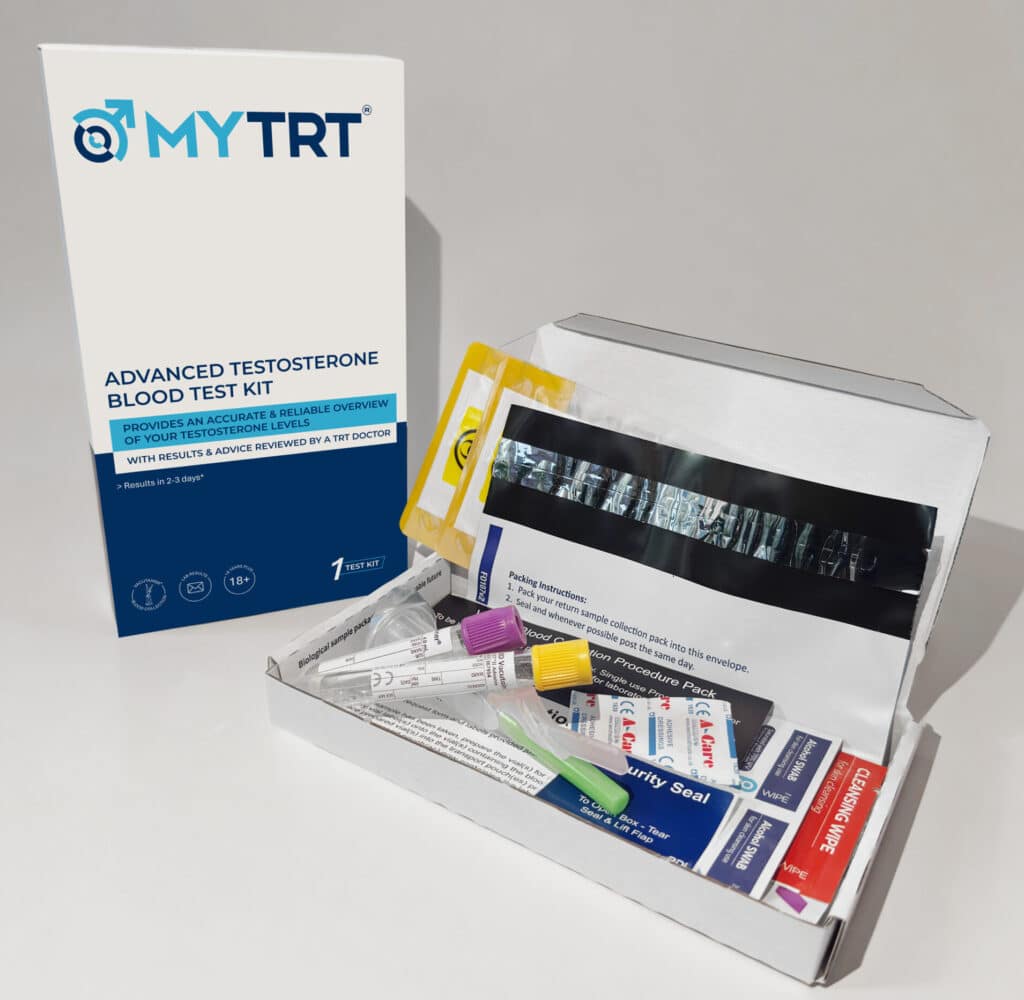
If this test showed you have low testosterone, the Advanced Testosterone Blood Test will assess your suitability for TRT.
Target Trough Blood Levels According To BSSM
To determine if your dose is truly enough, we do not rely on guesswork or how you feel on a random Tuesday. We rely on rigorous blood testing, specifically looking at your trough levels. The trough is the absolute lowest point your testosterone levels reach, which occurs on the morning immediately before your next scheduled injection.
According to the British Society for Sexual Medicine (BSSM) guidelines, the target trough level for a man on replacement therapy should sit comfortably between 15 and 25 nmol/L [1]. If we test your blood on the morning of your injection and your level is 10 nmol/L, your dose is not enough, and you are spending half the week in a hypogonadal state. If your trough level is 35 nmol/L, your dose is far too high, and you are exposing yourself to unnecessary risks.
We measure the trough rather than the peak because the peak is highly variable and less clinically relevant. As long as the lowest point of your week remains within the healthy physiological range, we can be confident that your body has adequate androgen support at all times.
How Clinicians Titrate Your Dose
Finding your perfect dose is a process of clinical titration. When you first learn how to get TRT, your doctor will start you on a conservative protocol, usually around 100 mg to 125 mg per week. You will remain on this exact protocol for approximately six weeks. This timeframe is necessary because it takes about five half-lives for the medication to reach a stable state in your blood serum.
At the six-week mark, you will undergo a comprehensive blood test. The doctor will review your trough total testosterone, free testosterone, ooestradiol, full blood count, and prostate markers. They will also have a detailed consultation with you to discuss your symptom resolution. Are you sleeping better? Has your morning wood returned? Is your brain fog gone?
Based on the clinical data and your subjective feedback, the doctor will make micro-adjustments. If your trough is slightly low, they might increase your dose from 100 mg to 110 mg. This requires a tiny adjustment in the syringe volume, perhaps moving from 0.4 ml to 0.44 ml. These precise, data-driven adjustments continue until you reach a state of optimal health and symptom resolution. This careful monitoring aligns with the European Association of Urology guidelines for safe practice [3].
The Dangers Of Self-Dosing And Cookie-Cutter Protocols
The internet is flooded with anecdotal advice from men sharing their personal protocols. You might read a post from someone claiming that 1 ml of testosterone a week is the only way to feel like a man. Following this advice without medical supervision is exceptionally dangerous.
When you introduce exogenous androgens into your system, your hypothalamus detects the elevated levels and ceases production of Gonadotropin-Releasing Hormone. This subsequently halts Luteinising Hormone and Follicle-Stimulating Hormone production from the pituitary gland. Your natural testicular production shuts down entirely. Because your body is no longer contributing its own daily testosterone, you rely entirely on the injected ester. This is why getting the milligram dose exactly right is so vital; you are entirely replacing a complex endocrine function with a needle and a vial.
Self-dosing ignores all the individual physiological factors we have discussed. You do not know your SHBG levels, your haematocrit response, or your aromatisation rate without regular blood work. Blindly injecting large volumes of hormones based on forum advice is a guaranteed path to severe complications, including thickened blood, elevated blood pressure, and permanent damage to your endocrine system. Always work with a qualified medical professional who uses objective data to guide your treatment.
Conclusion
Overall, asking if a specific liquid volume is sufficient for therapy is the wrong approach to your health. You must always think in terms of milligrams. For the vast majority of men, 1 ml of standard UK testosterone preparations delivers a dose that is far too high for safe, long-term replacement therapy. By working with a specialist clinic, starting with a conservative milligram dose, and adjusting based on rigorous blood testing, you can find the exact protocol that restores your vitality without compromising your long-term health. Precision is the key to successfully optimising your hormones.
Advanced Testosterone Blood Test
Book a venous draw at a clinic £99.49
Book a venous draw at home with a nurse £109.49
 General health check
References
- Hackett G, et al. British Society for Sexual Medicine Guidelines on Male Adult Testosterone Deficiency, with Statements for Practice. World J Mens Health. 2023;41(3):508–537. View
- Bhasin S, et al. Testosterone Therapy in Men With Hypogonadism: An Endocrine Society Clinical Practice Guideline. J Clin Endocrinol Metab. 2018;103(5):1715–1744. View
- Salonia A, et al. European Association of Urology Guidelines on Sexual and Reproductive Health. Eur Urol. 2022;82(1):49–64. View
- Nieschlag E, et al. Pharmacokinetics of testosterone enanthate. Horm Metab Res. 1976;8(5):397–400. View
- Vermeulen A, et al. A critical evaluation of simple methods for the estimation of free testosterone in serum. J Clin Endocrinol Metab. 1999;84(10):3666–3672. View
- National Institute for Health and Care Excellence (NICE). British National Formulary: Testosterone enanthate. View
- Bachman E, et al. Testosterone induces erythrocytosis via increased erythropoietin and suppressed hepcidin. J Clin Endocrinol Metab. 2014;99(10):3914–3920. View
- Jones SD Jr, et al. Erythrocytosis and polycythemia secondary to testosterone replacement therapy in the aging male. Sex Med Rev. 2015;3(2):101–112. View