Medical Summary
An NHS testosterone test is usually a morning blood test arranged by a GP when symptoms and clinical context suggest possible testosterone deficiency, also called male hypogonadism. In clinic we see the best results when testing is symptom-led, repeated when borderline or low, and interpreted alongside sex hormone-binding globulin, luteinising hormone, follicle-stimulating hormone, prolactin and relevant general health bloods. Testosterone naturally fluctuates through the day, so UK and international guidance supports testing in the morning, with confirmation on a separate sample before a diagnosis is made.[1][2]
MYTRT treatment eligibility
MYTRT treats men only when they have compatible symptoms and meet both biochemical limits: total testosterone of 15 nmol/L or below, and free testosterone of 0.35 nmol/L or below.
The NHS pathway can work well, particularly where there are clear symptoms, very low results, pituitary concerns or fertility issues. Some men, however, find that borderline results, long waiting times or limited access to calculated free testosterone make the process slower. A testosterone blood test is only one part of assessment. A safe diagnosis also considers symptoms, medication history, sleep, body weight, alcohol intake, diabetes, thyroid disease, depression and whether testosterone replacement therapy is appropriate or potentially harmful.
Can you get a testosterone test on the NHS?
Yes, you can get a testosterone test on the NHS if your GP believes there is a clinical reason to check it. Patients often ask us whether they can simply request a testosterone check as part of a routine screen. In practice, NHS testing is usually guided by symptoms, examination findings, existing medical conditions or medicines that increase the risk of low testosterone.
Common reasons for an NHS testosterone blood test include reduced libido, persistent erectile dysfunction, loss of morning erections, infertility, reduced shaving frequency, low-trauma fractures, reduced muscle mass, hot flushes, breast tenderness, delayed puberty, testicular problems or symptoms after chemotherapy, radiotherapy or pituitary disease. GPs may also consider testing where type 2 diabetes, obesity, obstructive sleep apnoea, long-term opioid use or glucocorticoid use is present, although the decision depends on the wider picture.
The phrase “testosterone test NHS” can mean several things. For many men it means a total testosterone blood test requested by a GP. For others it means a wider male hormone test NHS panel, including luteinising hormone, follicle-stimulating hormone, prolactin, sex hormone-binding globulin and sometimes thyroid, liver, kidney and full blood count markers. The more complete approach is often more useful because testosterone is regulated by the brain, pituitary gland and testes, and a single number rarely explains the whole clinical situation.
If you are refused a test, it does not always mean your symptoms are being dismissed. Your GP may feel another cause is more likely, such as depression, relationship stress, anaemia, thyroid disease, poor sleep or medication side effects. That said, if you have persistent sexual symptoms, infertility, reduced testicular size, low bone density or several symptoms suggestive of testosterone deficiency, it is reasonable to ask for the clinical reason why testing is or is not being offered.
At MYTRT we often see men who have already had one NHS testosterone result but remain unsure what it means. A result within the laboratory reference range may still need context, particularly if it was taken late in the day, during illness, after poor sleep or without SHBG. If you want a broader explanation of what is measured, see our guide to the testosterone test.
How testosterone works: the physiology behind an NHS testosterone blood test
Testosterone is mainly produced in the Leydig cells of the testes. The signal starts in the hypothalamus, which releases gonadotrophin-releasing hormone in pulses. This tells the pituitary gland to release luteinising hormone and follicle-stimulating hormone. Luteinising hormone stimulates testosterone production, while follicle-stimulating hormone supports sperm production alongside intratesticular testosterone.
This system is controlled by feedback. When testosterone and ooestradiol levels are adequate, the brain reduces its signalling. When testosterone is low because the testes are not responding, luteinising hormone and follicle-stimulating hormone often rise. When the problem sits in the pituitary or hypothalamus, testosterone may be low with low or inappropriately normal luteinising hormone and follicle-stimulating hormone.
This distinction matters because primary and secondary hypogonadism are investigated differently. Primary hypogonadism points towards testicular causes, such as Klinefelter syndrome, previous mumps orchitis, testicular trauma, chemotherapy, radiotherapy or undescended testes. Secondary hypogonadism can be linked with pituitary tumours, high prolactin, haemochromatosis, anabolic steroid suppression, obesity, sleep apnoea, severe systemic illness or medicines such as opioids.
Most testosterone in the blood is not freely circulating. A large proportion is bound tightly to sex hormone-binding globulin, some is bound loosely to albumin, and only a small fraction is free testosterone. Total testosterone is the standard first-line measurement, but SHBG can change with age, thyroid status, liver disease, body weight, insulin resistance and some medicines. This is why calculated free testosterone can be helpful when total testosterone is borderline or symptoms do not match the total testosterone result.
Testosterone also follows a daily rhythm. In younger men, levels are typically highest in the morning and lower later in the day. The rhythm can flatten with age, shift work, poor sleep and illness, but morning testing remains the usual standard for diagnosis. The Endocrine Society recommends diagnosing hypogonadism only in men with consistent symptoms and unequivocally low testosterone concentrations, confirmed by repeat morning testing.[3]
In clinic, we always ask what was happening around the time of the test. A man who had flu, slept three hours, trained intensely the night before or had the blood taken at 4pm may get a misleadingly low result. Conversely, a man using anabolic steroids, selective androgen receptor modulators or testosterone “boosters” may have distorted markers that need specialist interpretation. The context around the blood draw is often as revealing as the number itself.
What does an NHS testosterone test measure?
The usual NHS testosterone test measures total testosterone in serum, reported in nmol/L. This is the combined amount of free testosterone, albumin-bound testosterone and SHBG-bound testosterone. A total testosterone result can identify many men with clear deficiency, but it can be less informative when SHBG is unusually high or low.
A fuller NHS testosterone blood test may include SHBG and albumin so that calculated free testosterone can be estimated. Free testosterone is not always measured directly on the NHS, and direct free testosterone assays can vary in quality. Many specialists prefer calculated free testosterone using total testosterone, SHBG and albumin, particularly when total testosterone sits in a grey zone.
Luteinising hormone and follicle-stimulating hormone help establish whether low testosterone is likely to be primary or secondary. If testosterone is low and luteinising hormone is high, the testes may not be producing enough testosterone despite strong pituitary stimulation. If testosterone is low and luteinising hormone is low or normal, the brain-pituitary signal may be reduced or suppressed.
Prolactin is often checked where secondary hypogonadism is suspected, because high prolactin can suppress testosterone and may indicate a pituitary issue. Thyroid function can be relevant because thyroid disease affects energy, mood, libido and SHBG. Liver and kidney function, HbA1c, lipids and full blood count can help identify metabolic or systemic contributors.
Some men expect ooestradiol to be checked routinely. Ooestradiol is produced partly by conversion of testosterone through aromatase, particularly in fat tissue. It matters for bone, libido, mood and sexual function, but it is not always included in an initial NHS male hormone test. It may be checked in specialist settings, especially if breast tenderness, gynaecomastia, obesity or TRT monitoring is relevant.
If fertility is part of the concern, a semen analysis is usually more directly relevant than testosterone alone. Testosterone replacement can reduce sperm production by suppressing luteinising hormone and follicle-stimulating hormone. Men who want children should raise this before any treatment is started, as fertility-preserving options may be preferable.
Symptoms that may justify a GP testosterone test
Symptoms of low testosterone can be specific, non-specific or mixed with other health problems. The more specific symptoms include reduced sexual desire, fewer spontaneous or morning erections, erectile dysfunction, reduced testicular volume, infertility, breast enlargement, hot flushes and loss of body hair. These carry more diagnostic weight than tiredness alone.
Non-specific symptoms include fatigue, low mood, poor concentration, irritability, reduced motivation, increased body fat, loss of muscle, poor exercise recovery and disturbed sleep. These symptoms are real and can be debilitating, but they overlap with many common conditions. In clinic we see men whose symptoms improve after treating sleep apnoea, iron deficiency, depression, excess alcohol intake or uncontrolled diabetes, even when testosterone is not the main driver.
Bone health is another important clue. Testosterone deficiency can contribute to reduced bone mineral density and fractures. A man with a low-trauma fracture, especially at a younger age, should have secondary causes considered. NHS and specialist assessment may include vitamin D, calcium, renal function and bone density assessment as well as testosterone.
Age changes the conversation but does not make symptoms irrelevant. Testosterone tends to decline gradually with age, and SHBG often rises. A healthy 68-year-old with clear sexual symptoms and repeated low morning testosterone deserves careful assessment, not a dismissive assumption that “it is just ageing”. At the same time, TRT is not an anti-ageing treatment and should not be prescribed for numbers alone.
Medication history is often decisive. Opioid painkillers, anabolic steroid use, some psychiatric medicines, glucocorticoids and certain cancer treatments can affect testosterone. Finasteride and other hair-loss or prostate medicines may affect sexual symptoms independently of testosterone. If you ask your GP for an NHS testosterone test, take a clear list of medicines, supplements and previous hormone use.
How to ask your GP for a testosterone test on the NHS
The most effective approach is to describe your symptoms clearly and link them to duration, severity and impact. Rather than saying “I want my testosterone checked”, explain that you have had, for example, six months of reduced libido, loss of morning erections, worsening erectile function, lower energy and reduced muscle despite consistent training. Mention fertility concerns, testicular pain, previous testicular surgery or a history of pituitary problems.
Ask whether a morning testosterone blood test would be appropriate. Morning means ideally before 10am, although local NHS pathways vary. If your first result is low or borderline, ask whether it should be repeated and whether SHBG, albumin, luteinising hormone, follicle-stimulating hormone and prolactin are needed. BSSM guidance supports biochemical testing in symptomatic men and recognises the need to interpret total testosterone with free testosterone where SHBG affects interpretation.[4]
Prepare for the appointment. Note your sleep pattern, alcohol intake, training load, weight change, stress, mood, erections, libido and any change in body hair or shaving frequency. If you have used anabolic steroids, SARMs or non-prescribed testosterone, be honest. Clinicians are there to assess risk and help you safely, not to judge you.
If your GP arranges the blood test, ask what is being included. Some surgeries request total testosterone only, while others include a wider hormone profile. If the test comes back “normal” but you remain symptomatic, ask for the actual number and units rather than relying on a text message. You can then compare it with established ranges and decide whether further assessment is sensible.
For a detailed explanation of ranges and interpretation, our guide to normal testosterone levels explains why a reference interval is not the same as an individual optimum. A reference range tells you where most results fall in a laboratory population. It does not automatically tell you whether your symptoms are caused by testosterone, nor whether TRT is appropriate.
Testosterone Blood Test Kit
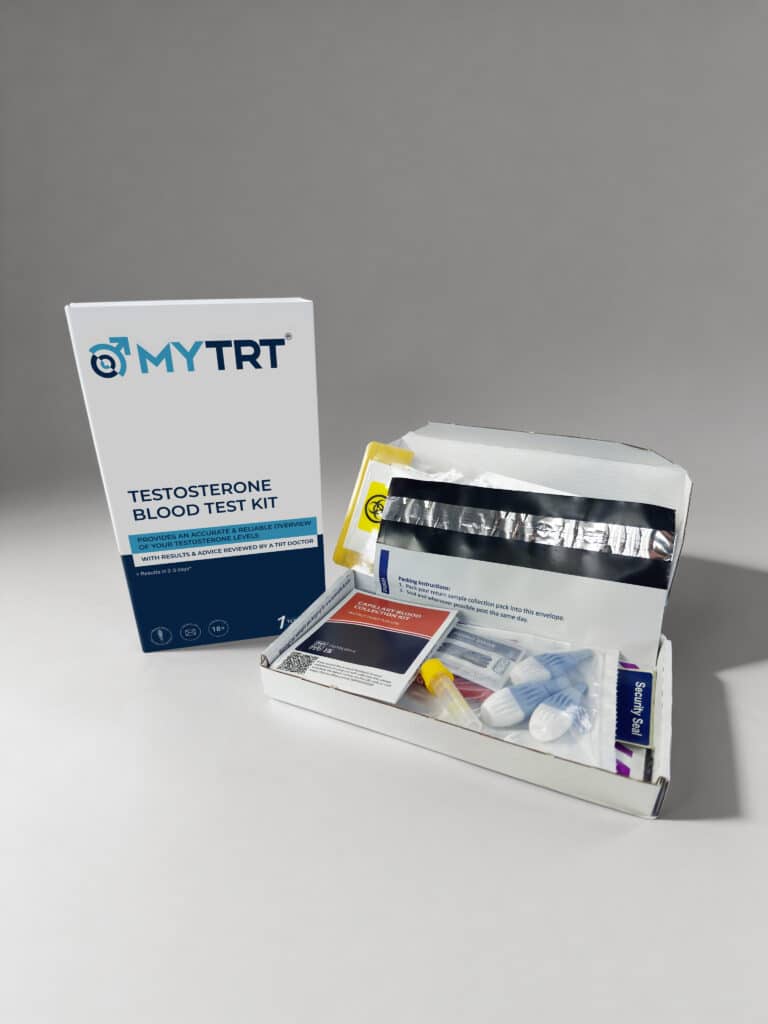
If this test showed you have low testosterone, the Advanced Testosterone Blood Test will assess your suitability for TRT.
How to prepare for an NHS testosterone blood test
Try to arrange the test in the morning, preferably before 10am. Avoid booking it during an acute illness if it is not urgent, because infections and inflammatory illness can temporarily lower testosterone. Aim for a normal night of sleep beforehand and avoid heavy alcohol in the previous 24 to 48 hours.
Do not stop prescribed medication unless your doctor tells you to. If you take biotin supplements, tell your clinician, as high-dose biotin can interfere with some immunoassays. If you use testosterone, anabolic steroids, hCG, clomifene, enclomifene, aromatase inhibitors or SARMs without prescription, tell the clinician before testing. These can alter results dramatically and may change which tests are needed.
Training can matter. One hard gym session is unlikely to explain months of symptoms, but extreme endurance exercise, overtraining and inadequate calorie intake can suppress reproductive hormones. If you are testing because of persistent symptoms, it is sensible not to do an unusually intense session immediately before the blood draw. Keep conditions as ordinary as possible so the result reflects your usual physiology.
Fasting is not always required for testosterone itself, but some linked tests, such as lipids or glucose, may be requested fasting depending on the laboratory and GP instructions. Follow the instructions on your blood form or appointment message. Drink water before the test, as dehydration can make venepuncture harder.
Ask how and when you will receive the results. NHS results are sometimes reported through the NHS app, by text, by phone or during follow-up. If the result is low, request a repeat morning test and the accompanying pituitary hormones. A low testosterone result should not be treated as a diagnosis until it has been confirmed and interpreted properly.
Understanding NHS testosterone test results in nmol/L
UK laboratories usually report total testosterone in nmol/L. Reference ranges vary by laboratory because assays, populations and reporting methods differ. A typical adult male reference range may start around 8 to 12 nmol/L and extend to roughly 25 to 30 nmol/L, but your own lab’s reference interval should be used first.
Many guidelines use thresholds to guide diagnosis rather than rigidly define every individual case. BSSM guidance has commonly described total testosterone below 8 nmol/L as strongly supportive of testosterone deficiency in symptomatic men, 8 to 12 nmol/L as a possible borderline zone requiring further assessment, and above 12 nmol/L as less likely to represent classical deficiency unless free testosterone is low or clinical factors are compelling.[4] The Endocrine Society also emphasises symptoms plus consistently low levels, not a single isolated result.[3]
Free testosterone can be helpful in two common scenarios. The first is obesity or insulin resistance, where SHBG may be low, sometimes making total testosterone look low while free testosterone is less reduced. The second is older age or high SHBG, where total testosterone may look acceptable but free testosterone may be low. This is why a free testosterone test NHS request may be made by specialists, but it is not always available through routine GP ordering.
A borderline testosterone result should be repeated. We often see men labelled as “low testosterone” after one afternoon test, then a repeat morning sample is higher. We also see the reverse, where one “normal” result masks a consistent borderline pattern when properly repeated. Diagnosis is a pattern of symptoms, timings, repeated biochemistry and cause-finding.
Luteinising hormone and follicle-stimulating hormone are key to interpretation. Low testosterone with high LH and FSH suggests primary testicular failure. Low testosterone with low or normal LH and FSH suggests secondary hypogonadism or functional suppression. Raised prolactin, very low testosterone, headaches, visual symptoms or other pituitary hormone abnormalities may require endocrinology referral and pituitary imaging.
Do not interpret the result in isolation from haematocrit, PSA, liver function, lipids and cardiovascular risk if TRT is being considered. TRT can raise red blood cell concentration, and baseline haematocrit is important. Prostate symptoms and PSA need age-appropriate assessment. NICE provides guidance on lower urinary tract symptoms in men, and clinicians consider urinary symptoms before and during testosterone therapy.[5]
What happens if your NHS testosterone test is low?
If your testosterone is low, the next step is usually repeat morning testing and additional hormones. This is to confirm persistence and identify the likely level of the problem. Your GP may check LH, FSH, prolactin, SHBG, albumin, thyroid function, HbA1c, ferritin, full blood count and liver and kidney function. The exact panel depends on your age, symptoms, fertility plans and the degree of abnormality.
If the repeat result is clearly low and symptoms fit, your GP may refer you to endocrinology, urology or an andrology service depending on local pathways. Men with fertility concerns are often best assessed in a reproductive medicine or andrology setting. Men with suspected pituitary disease, high prolactin or multiple hormone abnormalities need endocrine review.
Functional causes should be addressed even when testosterone is genuinely low. Weight loss in men with obesity can improve testosterone. Treating obstructive sleep apnoea, reducing alcohol, improving glycaemic control and reviewing opioid or steroid medication may improve the hormonal picture. This does not mean symptoms are “lifestyle only”; it means the reversible drivers should be treated as part of safe care.
If primary or organic secondary hypogonadism is diagnosed, testosterone replacement therapy may be discussed. NHS TRT options often include gels, long-acting injections or shorter-acting injectable preparations, depending on formulary and specialist preference. Monitoring is essential, including testosterone levels, symptoms, haematocrit, PSA where appropriate, blood pressure, side effects and treatment adherence.
TRT is not suitable for every man with a low result. It can suppress fertility, worsen untreated severe sleep apnoea, raise haematocrit and may be unsuitable in active prostate or breast cancer. The Endocrine Society advises against starting testosterone in men planning fertility in the near term and in several other higher-risk situations.[3] A safe plan starts with diagnosis, not a prescription.
NHS TRT pathway after a low testosterone test
The NHS TRT pathway varies by region. Some GPs can initiate parts of the work-up, but many areas require specialist confirmation before testosterone is prescribed. This is especially likely in younger men, men wanting fertility, men with pituitary abnormalities, very low testosterone or complex comorbidity. Shared-care arrangements may then allow ongoing prescriptions and monitoring through primary care.
NHS clinicians generally aim to treat confirmed hypogonadism, not to optimise testosterone to high-normal levels in men without diagnostic criteria. This can be frustrating for men with symptoms and borderline results. It reflects the need to balance benefit, safety, cost and evidence. NICE technology appraisal processes and local formularies influence which preparations are routinely available, and local policies can differ.
Testosterone gel is commonly used because dosing can be adjusted and blood levels are relatively steady. It must be applied daily and care is needed to prevent transfer to partners or children. Injections are less frequent, but levels may peak and trough depending on preparation and interval. Some men feel well on injections; others prefer the consistency of gel.
Monitoring is not optional. Testosterone levels should be checked at the correct time for the formulation, such as trough levels before some injections or timed levels after gel application depending on local advice. Haematocrit should be monitored because excessive rises increase risk. PSA and prostate assessment are considered according to age, symptoms and risk factors.
Our detailed guide to TRT on the NHS explains referral routes, shared care and what to expect if a specialist agrees that treatment is appropriate. If you have already been tested and are weighing NHS versus private care, the key issue is not speed alone. The key issue is whether your diagnosis is robust, your treatment is personalised and your monitoring is safe.
Testosterone Blood Test Kit
If this test showed you have low testosterone, the Advanced Testosterone Blood Test will assess your suitability for TRT.
Free testosterone test NHS: when is it needed?
A free testosterone test NHS request is most relevant when total testosterone does not fit the clinical picture. Free testosterone is the fraction not bound to SHBG or albumin. It is biologically available to tissues, although albumin-bound testosterone is also readily available in many calculations. Because free testosterone is a small fraction, accurate measurement is technically more challenging than total testosterone.
SHBG is the main reason free testosterone matters. Low SHBG is common in obesity, insulin resistance, type 2 diabetes and hypothyroidism. High SHBG can be seen with ageing, hyperthyroidism, liver disease and some medications. A man with low SHBG may have a low total testosterone but a free testosterone that is less concerning. A man with high SHBG may have a total testosterone in range but a free testosterone that is low.
Calculated free testosterone is often used rather than direct free testosterone. The calculation needs total testosterone, SHBG and albumin. Some NHS laboratories report it automatically when SHBG is requested; others do not. If your symptoms are convincing and total testosterone is borderline, asking about SHBG and calculated free testosterone is reasonable.
Free testosterone should not be used to justify treatment in isolation. It needs the same clinical discipline as total testosterone: symptoms, repeat testing, cause-finding and safety checks. In our clinical experience, free testosterone is most useful when it clarifies a borderline case, not when it is used as a shortcut around a full diagnosis.
Private testosterone testing versus an NHS testosterone check
The NHS is the right place to start for many men, particularly where there are worrying symptoms, fertility concerns, pituitary signs, testicular abnormalities or other medical problems. It provides joined-up access to GP records, referrals and investigation of broader causes. Emergency or urgent symptoms, such as severe headaches with visual changes or sudden testicular problems, should always be handled through NHS urgent pathways.
Private testing can be helpful when a man wants a structured hormone panel, faster access to results or clinician review after an unclear NHS result. The quality of private care depends on whether testing is comprehensive and whether treatment decisions follow evidence rather than sales pressure. A testosterone result should never be used as a standalone marketing tool.
Private care should never bypass good medicine. If a clinician recommends TRT after one borderline result without repeat testing, cause-finding, fertility discussion or baseline safety bloods, that is a red flag. Whether testing is NHS or private, the standards should be the same: careful diagnosis, informed consent and monitored treatment.
If you bring NHS results to MYTRT, we look at timing, units, laboratory range, whether the sample was repeated, whether SHBG and pituitary hormones were checked, and whether the symptoms fit. We also consider whether a referral back into NHS endocrinology or urology is the safest route. Good care is not private versus NHS; it is correct diagnosis, safe treatment and honest follow-up.
Common pitfalls with NHS testosterone testing
The first pitfall is testing at the wrong time. A late afternoon testosterone can be lower than a morning result, particularly in younger men. If the result is borderline, repeating it in the morning can prevent misdiagnosis.
The second pitfall is treating a single low number. Acute illness, calorie restriction, overtraining, alcohol excess and sleep deprivation can temporarily reduce testosterone. A diagnosis of hypogonadism should rest on persistent symptoms and repeated biochemical evidence.
The third pitfall is ignoring fertility. Men sometimes start TRT without being told that sperm production may fall substantially. If fatherhood is planned, a fertility-preserving approach or specialist referral should be discussed before testosterone is started.
The fourth pitfall is not looking for the cause. Low testosterone can be a signal of pituitary disease, testicular failure, haemochromatosis, medication effects or metabolic illness. Replacing testosterone without understanding the cause may miss something important.
The fifth pitfall is assuming “normal” means optimal. A laboratory range is useful, but symptoms and SHBG can alter interpretation. Equally, assuming every symptom is testosterone-related can lead to unnecessary treatment and missed diagnoses. The best assessment keeps both possibilities in mind.
References
[1] NHS. Blood tests. https://www.nhs.uk/conditions/blood-tests/
[2] NICE Clinical Knowledge Summaries. Erectile dysfunction. https://cks.nice.org.uk/topics/erectile-dysfunction/
[3] Endocrine Society. Testosterone Therapy in Men with Hypogonadism: Clinical Practice Guideline. https://www.endocrine.org/clinical-practice-guidelines/testosterone-therapy
[4] British Society for Sexual Medicine. Guidelines on Adult Testosterone Deficiency, with Statements for UK Practice. British Society for Sexual Medicine, Guidelines on Male Adult Testosterone Deficiency, with Statements for Practice (2023)
[5] Al-Sharefi A, Quinton R. How to manage low testosterone level in men: a guide for primary care. Br J Gen Pract. 2020;70(696):364–365. View