Medical Summary
Testosterone is the primary male sex hormone, playing a central role in the development and maintenance of male physical characteristics. In clinic, we see it influence muscle mass, bone density, and the production of red blood cells. It also significantly affects libido, mood, and cognitive function. Produced mainly in the testes, testosterone levels naturally fluctuate throughout life but tend to decline gradually with age.
MYTRT treatment eligibility
MYTRT treats men only when they have compatible symptoms and meet both biochemical limits: total testosterone of 15 nmol/L or below, and free testosterone of 0.35 nmol/L or below.
Maintaining healthy testosterone levels is crucial for overall health and wellbeing. Low levels can lead to symptoms such as fatigue, decreased muscle strength, reduced sexual desire, and mood disturbances. Conversely, excessively high levels may cause adverse effects, highlighting the importance of balance. In practice, we monitor testosterone concentrations carefully, usually measured in nmol/L, to ensure they remain within a healthy range suited to the individual’s age and physiological needs.[1]
Clinical consensus supports that adequate testosterone supports metabolic function, cardiovascular health, and bone integrity. Therefore, early recognition and management of imbalances can prevent long-term complications and improve quality of life for patients.[4]
What is Testosterone?
Patients often ask us to define testosterone and explain its role in the body. Simply put, testosterone is a steroid hormone that plays a critical role in male health and development. It is the primary male sex hormone responsible for the development of male secondary sexual characteristics, such as muscle mass, body hair, and a deeper voice. In clinical terms, understanding testosterone meaning helps us appreciate how this hormone influences various physiological processes.
Testosterone is mainly produced in two places within the body. The majority is synthesised by the Leydig cells in the testes, while a smaller amount is produced by the adrenal glands. These glands sit above the kidneys and contribute to hormone production, including testosterone and other androgens. In women, the ovaries and adrenal glands also produce testosterone but in much smaller quantities compared to men.
Biochemical Production and Regulation
In clinic, we see that testosterone production is tightly regulated through a feedback loop known as the hypothalamus-pituitary-gonadal (HPG) axis. The hypothalamus, a small region in the brain, releases gonadotropin-releasing hormone (GnRH). This hormone signals the pituitary gland to secrete luteinising hormone (LH), which then stimulates the Leydig cells in the testes to produce testosterone.[2]
When testosterone levels in the blood reach an adequate concentration, this hormone signals back to the hypothalamus and pituitary gland to reduce GnRH and LH production, maintaining hormonal balance. This feedback mechanism ensures testosterone levels stay within a healthy range, typically measured in nanomoles per litre (nmol/L).
Understanding the definition of testosterone extends beyond its production. It also involves recognising its broader effects on mood, energy levels, bone density and even cardiovascular health. In men, low testosterone can lead to symptoms such as fatigue, reduced libido and muscle weakness, which is why hormone testing and management are key in clinical practice.
Understanding the Role of Testosterone in the Male Body
Patients often ask us about the role of testosterone and how this hormone influences various aspects of male health. Testosterone is a crucial androgen hormone primarily produced in the testes and, to a lesser extent, the adrenal glands. It plays a central role in the development and maintenance of male characteristics and overall well-being.
Physical Health Effects of Male Testosterone
In clinic, we observe that testosterone significantly impacts muscle mass and strength. It promotes protein synthesis, which helps build and maintain muscle tissue. This is why men with normal testosterone levels tend to have greater muscle mass compared to women or men with low testosterone.
Bone density is another area influenced by testosterone. The hormone stimulates bone mineralisation, which helps prevent osteoporosis and fractures. Men with reduced testosterone levels are at higher risk of bone thinning as they age. Additionally, testosterone affects fat distribution; it tends to limit fat accumulation around the abdomen, promoting a leaner physique.[4]
Testosterone’s Role in Sexual Health
Sexual health is often a key concern when discussing male testosterone. Testosterone is essential in maintaining libido or sexual desire. In men with low testosterone, a noticeable decline in sexual interest is common. Furthermore, testosterone supports erectile function by modulating nitric oxide synthesis, which is crucial for blood flow to the penis.[3]
Testosterone also converts into dihydrotestosterone (DHT), a more potent androgen that plays a critical role in the development of male genitalia during puberty and influences prostate health later in life.
Mental Health and Cognitive Effects
In our practice, many patients report improvements in mood and energy levels when testosterone levels are optimised. The hormone supports cognitive functions such as memory and concentration. Low testosterone is often linked with symptoms like fatigue, irritability, and even depression.
Interestingly, testosterone also converts to oestrogen via the aromatase enzyme. This conversion is important for brain function and bone health in men. Oestrogen contributes to synaptic plasticity in the brain, which affects learning and memory.
In summary, the role of testosterone in the male body extends far beyond the reproductive system. It affects physical health by maintaining muscle, bone, and fat balance; supports sexual health by regulating libido and erectile function; and influences mental health through mood, cognition, and energy. Understanding how testosterone works helps us appreciate its vital contribution to men’s health at every stage of life.
Understanding Normal Testosterone Levels and Age-Related Decline
Patients often ask us about what constitutes a normal testosterone level and how these levels change as they age. In the UK, testosterone levels are typically measured in nanomoles per litre (nmol/L). For adult males, normal total testosterone levels generally range from about 8 to 30 nmol/L, though this can vary slightly depending on the laboratory and measurement methods used.
Testosterone levels reach their peak in early adulthood, usually in the late teens to early twenties. This is the period when men experience the highest concentrations of circulating testosterone, which supports muscle mass, libido, mood, and overall vitality. After this peak, levels begin a gradual decline, typically by about 1% per year from the age of 30 onwards.
In clinical practice, we observe that by the time men reach their 50s and 60s, some may experience symptoms associated with this decline, such as reduced energy, decreased muscle strength, and lowered libido. This gradual reduction in testosterone is often referred to as andropause or late-onset hypogonadism. Unlike the sudden hormonal changes women experience during menopause, testosterone decline in men is slower and more variable.
It’s also important to distinguish between total and free testosterone. Total testosterone measures all testosterone in the blood, including that bound to proteins like sex hormone-binding globulin (SHBG). However, only free testosterone—the fraction that is unbound and biologically active—can enter cells and exert physiological effects. In some cases, total testosterone may appear normal, but free testosterone levels are low, which can explain symptoms despite seemingly adequate hormone levels.
In clinic, we often assess both total and free testosterone levels to gain a comprehensive understanding of a patient’s hormonal status. This dual approach helps us tailor treatment plans appropriately, ensuring that those with symptomatic testosterone deficiency receive the care they need.
Symptoms of Low Testosterone (Hypogonadism)
In clinic, patients with low testosterone, or hypogonadism, often present with a range of symptoms affecting physical, sexual, and psychological health. These symptoms can significantly impact quality of life and may develop gradually, making diagnosis challenging without a thorough clinical assessment.
Physical Symptoms
Fatigue is one of the most common complaints among men with low testosterone. Patients frequently describe a persistent lack of energy that does not improve with rest. Alongside fatigue, weight gain can occur, particularly an increase in abdominal fat, which contrasts with the typical muscle mass loss seen in these individuals. Muscle weakness and reduced strength are notable as testosterone plays a key role in maintaining muscle bulk and function. Some patients also report decreased bone density leading to a higher risk of fractures.
Sexual Symptoms
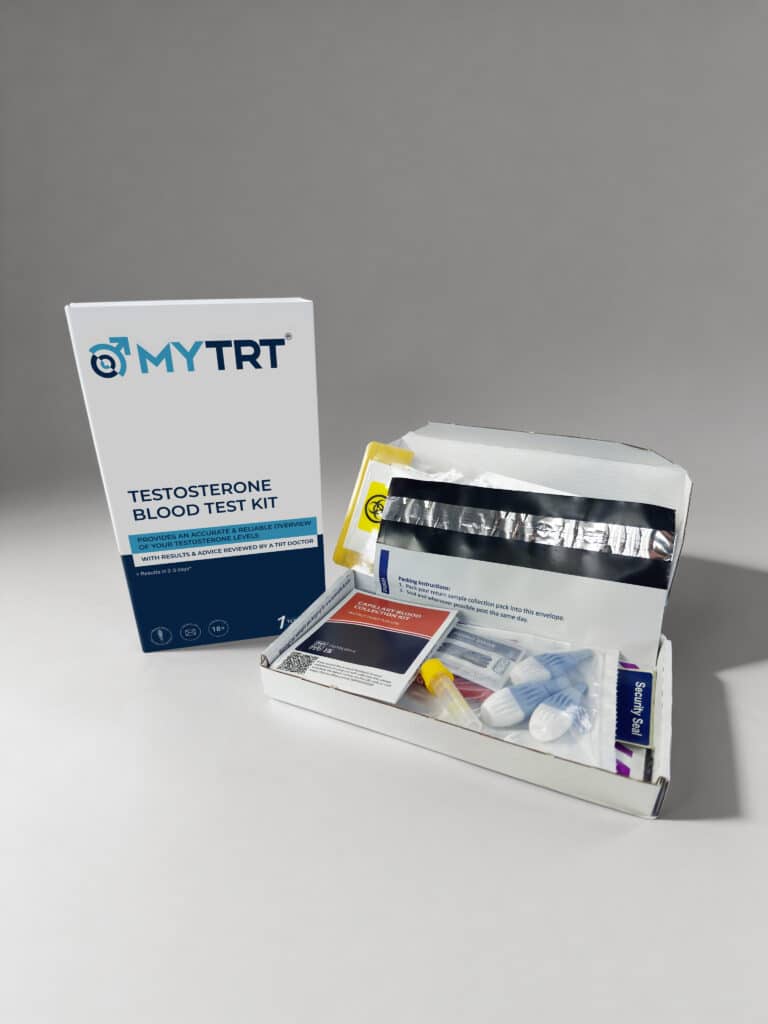
If this test showed you have low testosterone, the Advanced Testosterone Blood Test will assess your suitability for TRT.
Sexual health is often markedly affected by low testosterone. Patients often report a reduced libido, which can lead to decreased sexual activity and strain in relationships. Erectile dysfunction (ED) is another common symptom, though it is important to consider other potential causes. In clinic, we find that addressing low testosterone can improve these sexual symptoms, highlighting the hormone’s crucial role in sexual function.
Psychological Symptoms
Psychological manifestations of hypogonadism are frequently overlooked. Men may experience brain fog, characterised by difficulty concentrating and memory problems. Depression and irritability are also common, with some patients describing mood swings and a general sense of low well-being. These symptoms can sometimes be misattributed to other mental health disorders, so a thorough hormonal evaluation is essential.
When patients present with a combination of these symptoms, it often prompts further investigation into their testosterone levels. Early recognition and management of hypogonadism can improve both physical and psychological outcomes.
Diagnosing and Treating Low Testosterone
Patients often ask us how low testosterone is diagnosed. In clinic, the process begins with a detailed clinical assessment, including a review of symptoms such as fatigue, low libido, and mood changes. However, confirmation requires blood tests, which must be carefully timed and interpreted to ensure accuracy.
Testosterone levels naturally fluctuate throughout the day, peaking in the early morning. For this reason, blood samples are typically taken between 7am and 10am to capture the highest circulating levels. We also recommend fasting beforehand, as food intake can influence hormone measurements, potentially leading to misleading results.
Blood tests measure total testosterone, which includes both bound and free forms. In some cases, free testosterone or bioavailable testosterone is also assessed, especially if symptoms persist despite normal total testosterone levels. The normal range varies slightly between laboratories but generally falls between 8 and 30 nmol/L for adult men. Levels consistently below this range, combined with clinical symptoms, support a diagnosis of low testosterone.
Once low testosterone is confirmed, Testosterone Replacement Therapy (TRT) is the primary treatment option. TRT aims to restore testosterone levels to the normal physiological range, alleviating symptoms and improving quality of life. Various formulations are available, including gels, injections, and implants, allowing treatment to be tailored to individual preferences and medical needs.
In clinic, we closely monitor patients on TRT, regularly checking testosterone levels, haematocrit, and prostate health to ensure safety and efficacy. Treatment decisions are always personalised, taking into account potential benefits and risks.
Age changes the picture considerably. From roughly the age of 30, total testosterone in men falls by around 1 per cent each year, and by their fifties many men sit noticeably below the levels they had in early adulthood. That decline is gradual and often unremarkable, but when it is combined with weight gain, poor sleep, type 2 diabetes or long-term medication use, the drop can become symptomatic. UK laboratories generally regard a morning total testosterone below 12 nmol/L as borderline and below 8 nmol/L as clearly low, although the British Society for Sexual Medicine advises interpreting every result alongside symptoms rather than in isolation.[3]
Lifestyle exerts more influence on this hormone than most patients expect. Resistance training, adequate protein intake, seven to nine hours of sleep and maintaining a healthy waist circumference all support natural production. Chronic stress works in the opposite direction, because cortisol suppresses the hypothalamic signals that drive testicular output. Alcohol in excess, opioid painkillers and anabolic steroid misuse are three of the commonest suppressors we identify in clinic, and each is reversible to a degree once addressed.
If you recognise persistent symptoms in yourself, the sensible first step is measurement rather than guesswork. A venous or finger-prick blood sample taken before 11am, ideally fasted and repeated on a second morning, gives a reliable baseline. From there, the result can be interpreted against age-appropriate reference ranges, and any confirmed deficiency investigated for an underlying cause before treatment is ever discussed.[5]
References
- NHS – Testosterone deficiency in men. Available at: View ↩
- NICE Clinical Knowledge Summaries – Hypogonadism in men. Available at: View ↩
- British Society for Sexual Medicine (BSSM) – Guidelines on Adult Testosterone Deficiency, With Statements for UK Practice. Available at: View ↩
- Endocrine Society – Testosterone Therapy in Men With Hypogonadism: An Endocrine Society Clinical Practice Guideline. Available at: View ↩
- NHS – Blood tests: Testosterone. Available at: View ↩