Medical Summary
The relationship between testosterone and hair loss is frequently misunderstood. Clinical evidence demonstrates that testosterone itself is not the direct cause of male pattern baldness (androgenetic alopecia). Instead, the primary mediator is dihydrotestosterone (DHT), a potent androgen produced when the enzyme 5-alpha reductase converts circulating testosterone. However, elevated DHT levels alone do not guarantee hair loss; the decisive factor is a genetic predisposition that renders scalp hair follicles highly sensitive to DHT, leading to progressive miniaturisation. For men undergoing testosterone replacement therapy, restoring physiological testosterone levels may accelerate hair thinning only if they possess this genetic susceptibility. Conversely, men without the genetic trait typically maintain their hair density regardless of their testosterone or DHT concentrations. Managing hair loss during treatment involves a nuanced approach, often utilising 5-alpha reductase inhibitors or topical treatments, while carefully balancing the systemic benefits of hormonal restoration against potential dermatological side effects.
MYTRT treatment eligibility
MYTRT treats men only when they have compatible symptoms and meet both biochemical limits: total testosterone of 15 nmol/L or below, and free testosterone of 0.35 nmol/L or below.
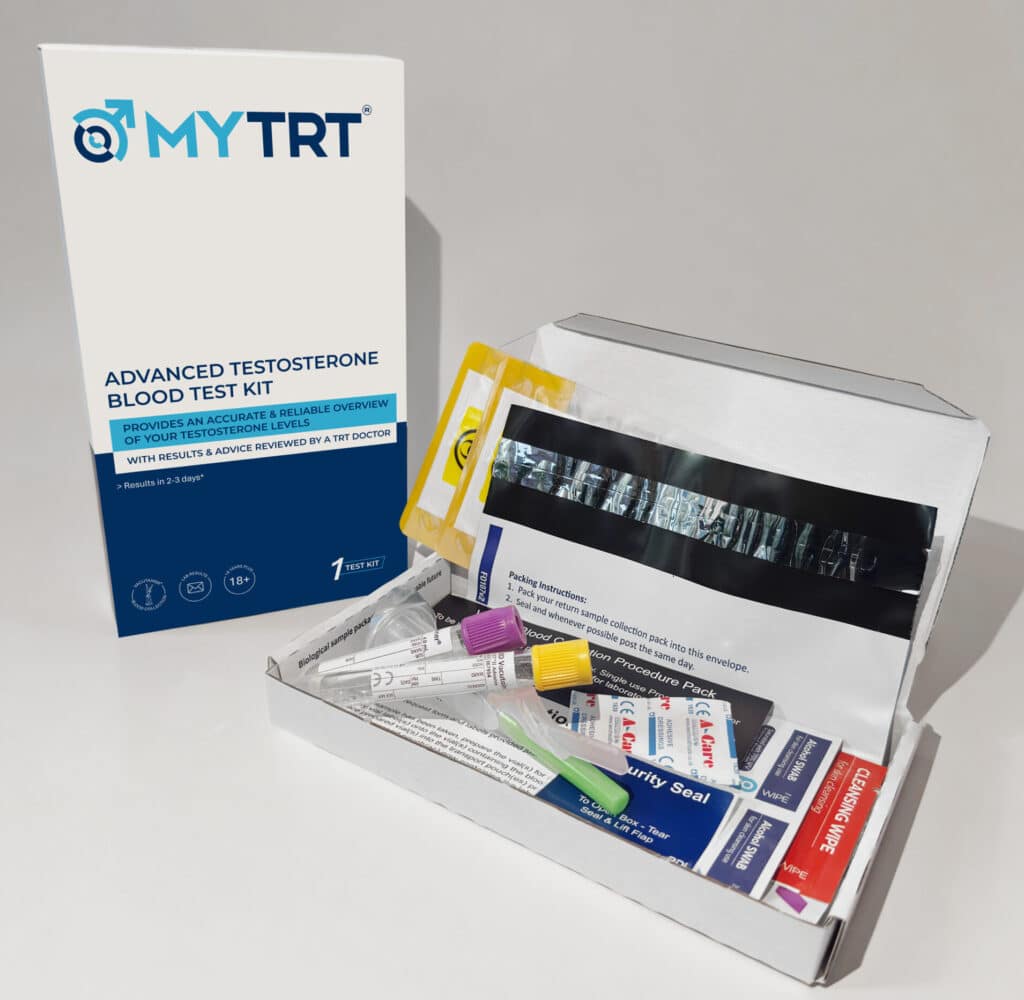
Advanced Testosterone Blood Test
Book a venous draw at a clinic £99.49
Book a venous draw at home with a nurse £109.49
 General health check
The Mechanism: How Hormones Affect Your Hair
Understanding the biological processes behind hair growth and loss requires looking beyond simple testosterone levels. The human body operates a complex endocrine system where hormones frequently convert into more potent forms to exert specific effects on different tissues. You can read more about the broader effects of high hormone levels in our guide to high testosterone in men. The endocrine system is a delicate balance of various hormones, each playing a specific role in maintaining homeostasis. When this balance is disrupted, it can lead to a cascade of effects throughout the body, including changes in hair growth patterns. The hair follicle itself is a complex mini-organ, subject to regulation by numerous factors, including hormones, genetics, and environmental influences. To fully grasp how testosterone impacts hair, we must examine into the intricate mechanisms of hormone metabolism and receptor interaction at the cellular level.
The hair growth cycle consists of three main phases: anagen (growth), catagen (transition), and telogen (resting). In a healthy scalp, the majority of hair follicles are in the anagen phase, which can last for several years. The catagen phase is a brief transitional period, followed by the telogen phase, during which the hair rests before eventually shedding to make way for new growth. Hormones, particularly androgens, play a crucial role in regulating this cycle. While androgens stimulate hair growth in certain areas of the body, such as the face and chest, they can have the opposite effect on the scalp in genetically susceptible individuals. This paradoxical response is a key factor in understanding male pattern baldness and its relationship with testosterone.
The Role of Dihydrotestosterone (DHT)
Testosterone circulates throughout the body, but in certain tissues—including the prostate and the scalp—it encounters an enzyme called 5-alpha reductase. This enzyme converts a portion of testosterone into dihydrotestosterone (DHT), an androgen that binds to the same receptors as testosterone but with significantly greater affinity. In the context of the scalp, DHT is the primary hormone responsible for altering the hair growth cycle[1]. The conversion of testosterone to DHT is a normal physiological process, essential for the development of male characteristics during puberty and the maintenance of certain functions in adulthood. However, in the scalp, DHT can become a potent antagonist to hair growth in those with a genetic predisposition.
When DHT binds to androgen receptors in the hair follicles of susceptible individuals, it initiates a process known as follicular miniaturisation. The growth phase (anagen) of the hair cycle shortens, while the resting phase (telogen) lengthens. Over successive cycles, the affected follicles produce progressively thinner, shorter, and less pigmented hairs, eventually ceasing production entirely. This miniaturisation process is gradual, often taking years or even decades to result in visible baldness. The sensitivity of the androgen receptors to DHT is the critical factor determining the rate and extent of hair loss. It is not merely the presence of DHT, but the follicle’s exaggerated response to it, that drives the progression of androgenetic alopecia.
The interaction between DHT and the androgen receptor triggers a complex cascade of intracellular events. This includes alterations in gene expression, leading to changes in the production of various growth factors and cytokines that regulate the hair cycle. For instance, DHT has been shown to decrease the production of insulin-like growth factor 1 (IGF-1), a key stimulator of hair growth, while increasing the expression of transforming growth factor beta (TGF-beta), which promotes the transition from the anagen to the catagen phase. These molecular changes ultimately result in the characteristic miniaturisation of the hair follicle, highlighting the intricate biological mechanisms underlying male pattern baldness.
The Genetic Factor: Follicle Sensitivity
A common misconception is that high testosterone or high DHT levels universally cause baldness. In reality, the critical determinant is genetics. The androgen receptors in the scalp must be genetically programmed to be sensitive to DHT for miniaturisation to occur[2]. This genetic predisposition is the fundamental prerequisite for male pattern baldness. Without it, even supraphysiological levels of androgens will not induce the characteristic pattern of hair loss. The inheritance of this trait is complex and polygenic, involving multiple genes that interact to determine an individual’s susceptibility.
Men who do not inherit this genetic sensitivity can have very high levels of circulating testosterone and DHT without experiencing male pattern baldness. Conversely, men with a strong genetic predisposition may experience significant hair loss even with relatively low or normal androgen levels. This genetic trait is polygenic, meaning it can be inherited from either the maternal or paternal side of the family, and its expression varies widely among individuals. The androgen receptor gene, located on the X chromosome, is a major contributor to this susceptibility, which explains why the maternal line is often considered a strong predictor of baldness. However, numerous other genes on autosomal chromosomes also play significant roles, making the inheritance pattern far more complex than a simple dominant or recessive trait.
The genetic programming of the hair follicles also determines the specific pattern of hair loss. In male pattern baldness, the follicles in the frontal hairline, temples, and vertex (crown) are typically the most sensitive to DHT, while those in the occipital region (back of the head) are relatively resistant. This differential sensitivity is why hair transplanted from the back of the head to the front usually retains its resistance to DHT and continues to grow. Understanding this genetic basis is crucial for developing effective treatments and managing patient expectations, as it underscores the fact that hair loss is a genetically determined condition rather than a simple consequence of hormone levels.
Does TRT Accelerate Hair Loss?
For men considering or currently undergoing treatment for symptomatic androgen deficiency, the potential impact on their hairline is a valid concern. The answer to whether TRT causes hair loss is nuanced and highly individualised. For a comprehensive overview of potential treatment impacts, see our detailed breakdown of TRT side effects. The decision to pursue therapy involves weighing the significant benefits of hormonal restoration against potential risks, including dermatological changes. It is essential to approach this topic with a clear understanding of the underlying biology and the specific factors that influence an individual’s response to treatment.
The primary goal of therapy is to alleviate the symptoms of hypogonadism, such as fatigue, low libido, mood disturbances, and loss of muscle mass. By restoring testosterone to physiological levels, patients often experience profound improvements in their quality of life. However, this restoration also means an increase in the substrate available for conversion to DHT. The critical question is how this increase in DHT will interact with the patient’s unique genetic profile. For some, the impact on hair may be negligible, while for others, it could be a significant concern that requires proactive management.
Physiological Doses vs. Genetic Predisposition
Testosterone replacement therapy aims to restore serum testosterone to healthy, physiological levels,not to push them into supraphysiological ranges. When testosterone levels rise during treatment, the amount of testosterone available for conversion to DHT also increases. This is a natural and expected consequence of restoring hormonal balance. The key distinction lies in the magnitude of this increase and the individual’s inherent sensitivity to the resulting DHT levels. Physiological dosing is designed to mimic the body’s natural production, avoiding the extreme fluctuations and excessive androgen exposure associated with misuse or abuse.
If a patient possesses the genetic predisposition for androgenetic alopecia, this increase in DHT can accelerate the miniaturisation process, potentially unmasking or worsening hair thinning that might have otherwise progressed more slowly. However, if the patient lacks the genetic sensitivity to DHT, the increase in androgens will not induce male pattern baldness. It is a matter of accelerating an existing genetic timeline rather than creating a new problem from scratch. This concept is crucial for patient counselling, as it helps to set realistic expectations and frame hair loss as a potential acceleration of a pre-existing condition rather than a direct, inevitable side effect of the therapy itself.
Furthermore, the rate of acceleration can vary significantly among individuals. Some men may notice a rapid increase in shedding shortly after initiating treatment, while others may experience a more gradual thinning over several years. The specific formulation and delivery method of the therapy can also influence the pharmacokinetic profile of testosterone and DHT, potentially impacting the rate of hair loss. Regular monitoring and open communication with a healthcare provider are essential for identifying and addressing any changes in hair density early in the course of treatment.
The Scalp vs. Body Hair Paradox
An interesting clinical observation is the divergent effect of androgens on different types of hair follicles. While DHT promotes miniaturisation and loss of scalp hair in genetically susceptible men, it simultaneously stimulates the growth and thickening of facial and body hair[3]. This phenomenon, often referred to as the androgen paradox, highlights the complex and site-specific nature of hormone action. The same molecule that causes the regression of hair follicles on the scalp is responsible for the development of terminal hair on the face, chest, and other androgen-dependent areas.
This paradox explains why some men experience increased beard density or chest hair growth while simultaneously noticing a receding hairline. The androgen receptors in different regions of the body respond to the same hormonal signals in opposite ways, a phenomenon entirely dictated by regional genetic programming. The specific intracellular pathways activated by the androgen receptor vary depending on the location of the follicle, leading to these divergent outcomes. Understanding this paradox is essential for comprehending the full spectrum of androgenic effects on the body and for reassuring patients that these changes are a normal physiological response to hormonal stimulation.
The mechanisms underlying this site-specific response are still being elucidated, but they likely involve differences in the expression of co-regulators and other transcription factors that interact with the androgen receptor. For example, the expression of certain genes involved in hair growth may be upregulated by androgens in facial follicles but downregulated in scalp follicles. This intricate regulatory network ensures that the body responds appropriately to hormonal signals, even when those responses appear contradictory on the surface. This complexity underscores the need for a nuanced approach to managing the dermatological effects of hormonal therapy.

If this test showed you have low testosterone, the Advanced Testosterone Blood Test will assess your suitability for TRT.
The “Bald Men Have High Testosterone” Myth
A pervasive cultural myth suggests that bald men are inherently more virile or possess higher testosterone levels than their full-haired peers. This belief likely stems from the visible association between androgens (specifically DHT) and hair loss, but it represents a fundamental misunderstanding of the underlying biology. The correlation between baldness and masculinity is a cultural construct rather than a scientific reality. While androgens are indeed involved in the process of hair loss, their absolute levels are not the determining factor.
Clinical studies consistently show that men with male pattern baldness do not, on average, have higher circulating testosterone levels than men without hair loss. The difference lies entirely in the genetic sensitivity of their scalp follicles to normal or even low levels of DHT. A man with a full head of hair may have significantly higher testosterone levels than a bald man; his follicles simply lack the genetic vulnerability to DHT-induced miniaturisation. This distinction is crucial for dispelling the myth and providing a scientifically accurate understanding of the condition.
Furthermore, the relationship between testosterone and virility is far more complex than a simple linear correlation. Virility encompasses a wide range of physical, psychological, and behavioural traits, many of which are influenced by factors other than testosterone. While testosterone plays a vital role in male sexual function and physical development, it is not the sole determinant of masculinity. The perpetuation of the myth that baldness equates to high testosterone can lead to misunderstandings about both hair loss and hormonal health, highlighting the importance of accurate medical information.
Managing Hair Loss While on TRT
For men who are genetically predisposed to hair loss and wish to maintain their hair while enjoying the systemic benefits of treatment, several management strategies are available. These approaches aim to mitigate the effects of DHT on the scalp without compromising the overall efficacy of the therapy. If you are wondering is TRT safe when combined with these medications, it requires careful clinical oversight. The goal is to strike a balance between hormonal optimisation and dermatological preservation, a process that requires a tailored and closely monitored approach.
The management of hair loss in this context often involves a combination of pharmacological and non-pharmacological interventions. The choice of treatment depends on various factors, including the severity of the hair loss, the patient’s individual risk profile, and their personal preferences. It is essential to have a comprehensive discussion with a healthcare provider to explore the available options and develop a personalised treatment plan. This collaborative approach ensures that the patient’s concerns are addressed while maintaining the safety and efficacy of their primary therapy.
5-Alpha Reductase Inhibitors
Medications such as finasteride and dutasteride work by inhibiting the 5-alpha reductase enzyme, thereby reducing the conversion of testosterone to DHT. By lowering systemic and scalp DHT levels, these drugs can effectively halt or slow the progression of androgenetic alopecia[4]. These inhibitors are among the most effective treatments for male pattern baldness, as they directly target the underlying hormonal mechanism responsible for follicular miniaturisation. Finasteride primarily inhibits the type II isoenzyme of 5-alpha reductase, while dutasteride inhibits both type I and type II, resulting in a more profound reduction in DHT levels.
However, the use of these inhibitors requires careful clinical consideration. DHT plays a role in various physiological functions, and significantly reducing its levels can sometimes lead to side effects, including changes in libido or erectile function. When combining treatments, clinicians must monitor the patient closely to ensure that the benefits of hair preservation do not come at the cost of the symptomatic relief provided by the primary therapy. The potential for sexual side effects, although relatively uncommon, is a significant concern for many patients and must be thoroughly discussed before initiating treatment. In some cases, the dosage of the inhibitor may need to be adjusted, or alternative treatments may need to be considered.
The decision to use 5-alpha reductase inhibitors should be based on a careful risk-benefit analysis, taking into account the patient’s individual circumstances and priorities. For some men, the preservation of their hair is of paramount importance, and they are willing to accept the potential risks associated with these medications. For others, the potential for side effects may outweigh the benefits, and they may prefer to explore alternative options. A thorough and open discussion with a healthcare provider is essential for making an informed decision that aligns with the patient’s goals and values.
Topical Treatments
For patients who prefer to avoid systemic DHT reduction, topical treatments offer a localised approach. Minoxidil, applied directly to the scalp, stimulates blood flow and prolongs the anagen (growth) phase of the hair follicles, counteracting the miniaturisation process independent of hormonal pathways[5]. Minoxidil is a vasodilator that was originally developed as an oral medication for hypertension. Its ability to stimulate hair growth was discovered as an unexpected side effect, leading to its development as a topical treatment for androgenetic alopecia. It is available over-the-counter in various formulations, including solutions and foams.
The exact mechanism by which minoxidil promotes hair growth is not fully understood, but it is believed to involve the opening of potassium channels in the cell membranes of the hair follicles. This leads to hyperpolarisation of the cell membrane, which in turn stimulates the production of various growth factors and prolongs the anagen phase. Minoxidil is generally well-tolerated, with the most common side effects being local irritation and contact dermatitis. It is often used in combination with other treatments, such as 5-alpha reductase inhibitors, to achieve synergistic effects.
Additionally, ketoconazole shampoo, often used for its anti-fungal properties, has been shown to possess mild anti-androgenic effects at the scalp level. While less potent than oral medications, incorporating these topical solutions can provide a multi-faceted defence against hair thinning without altering systemic hormone profiles. Ketoconazole is thought to disrupt the androgen receptor pathway in the hair follicle, providing a localised anti-androgenic effect. When used in conjunction with minoxidil and other treatments, it can contribute to a comprehensive approach to managing hair loss.
Steroid Abuse vs. Physiological TRT
It is crucial to distinguish between the medical administration of testosterone and the illicit use of anabolic-androgenic steroids (AAS). The impact on hair loss differs significantly between these two scenarios. The misuse of steroids for performance enhancement or bodybuilding involves doses and compounds that are vastly different from those used in legitimate medical therapy. Understanding these differences is essential for accurately assessing the risks associated with hormonal interventions and for dispelling common misconceptions.
The medical use of testosterone is strictly regulated and monitored, with the goal of restoring physiological balance and alleviating symptoms of deficiency. In contrast, the illicit use of AAS is often characterised by the administration of supraphysiological doses, the use of multiple compounds simultaneously (stacking), and the absence of medical supervision. These practices expose the body to extreme hormonal fluctuations and significant health risks, including severe dermatological consequences.
Supraphysiological Doses
Individuals who abuse anabolic steroids often administer doses that far exceed normal physiological production. This results in massive spikes in circulating androgens, leading to a correspondingly high conversion to DHT. In genetically susceptible individuals, this extreme hormonal environment can cause rapid and severe hair loss that is difficult to manage. The sheer volume of androgens overwhelming the receptors in the scalp can accelerate the miniaturisation process to an unprecedented degree, resulting in extensive baldness in a relatively short period.
Furthermore, many synthetic anabolic steroids are designed to be highly androgenic or are derivatives of DHT themselves, directly attacking the hair follicles without the need for 5-alpha reductase conversion. These compounds bypass the body’s natural regulatory mechanisms, exerting a potent and direct effect on the androgen receptors in the scalp. The use of such substances can lead to irreversible hair loss, even in individuals with a relatively mild genetic predisposition. The dermatological consequences of steroid abuse are a stark reminder of the dangers associated with manipulating the endocrine system outside of a controlled medical setting.
The impact of supraphysiological doses extends beyond hair loss, affecting various organ systems and increasing the risk of cardiovascular disease, liver damage, and psychiatric disturbances. The pursuit of extreme physical enhancement through the misuse of AAS carries significant and often irreversible health consequences. It is imperative to educate individuals about these risks and to promote safe, evidence-based approaches to health and fitness.
The Safety of Monitored TRT
In contrast, medical treatment is prescribed at controlled doses designed to mimic natural, healthy testosterone production. The goal is symptom resolution and long-term health optimisation, not extreme muscle hypertrophy. Because the hormonal fluctuations are kept within physiological boundaries, the impact on hair loss is generally much milder and more manageable than the aggressive shedding seen with steroid abuse. Regular blood monitoring ensures that testosterone and DHT levels remain within safe, therapeutic ranges[6]. To understand the process, you can learn how to get TRT in the UK through proper medical channels.
The safety and efficacy of medical therapy depend on careful patient selection, appropriate dosing, and ongoing monitoring. Clinicians must evaluate each patient’s individual risk profile, including their genetic predisposition to hair loss, before initiating treatment. Throughout the course of therapy, regular blood tests are conducted to assess hormone levels, monitor for potential side effects, and adjust the dosage as needed. This rigorous approach ensures that the benefits of treatment are maximised while the risks are minimised.
When managed correctly, the impact of therapy on hair loss can often be mitigated or controlled. By maintaining hormone levels within the physiological range and employing targeted interventions when necessary, patients can achieve the systemic benefits of hormonal restoration without sacrificing their dermatological health. The key is to approach treatment as a collaborative process between the patient and their healthcare provider, with a shared commitment to safety, efficacy, and overall well-being.
Worried about hair loss?
-
 Expert medical advice
-
Personalised treatment plans
-
Ongoing monitoring

The Psychological Impact of Hair Loss
The psychological consequences of hair loss are often profound and can significantly impact a man’s quality of life. For many, hair is closely tied to identity, youth, and vitality. The progressive thinning and eventual loss of hair can lead to feelings of self-consciousness, decreased self-esteem, and even depression. It is essential to acknowledge and address these emotional aspects when discussing the potential dermatological side effects of hormonal therapy. Patients often ask us how to cope with these changes, and we emphasise the importance of open communication and psychological support.
The societal emphasis on physical appearance can exacerbate the distress associated with hair loss. Men may feel pressure to maintain a certain image, and the deviation from this ideal can be a source of significant anxiety. This anxiety can, in turn, affect various aspects of their lives, including personal relationships, social interactions, and professional confidence. Recognising the validity of these feelings is a crucial step in providing comprehensive care. Healthcare providers should be prepared to offer resources and support to help patients navigate the emotional challenges of hair loss.
In clinic we see that addressing the psychological impact often involves a multi-faceted approach. Counselling or therapy can provide a safe space for patients to explore their feelings and develop coping strategies. Support groups, whether in-person or online, can connect individuals with others who are experiencing similar challenges, fostering a sense of community and shared understanding. Additionally, exploring cosmetic options, such as hairpieces or scalp micropigmentation, can help some men regain a sense of control over their appearance and boost their confidence.
Ultimately, the goal is to help patients achieve a healthy perspective on hair loss and to separate their self-worth from their physical appearance. This process takes time and requires patience and empathy from both the patient and their healthcare team. By addressing the psychological dimensions of hair loss alongside the physiological aspects, clinicians can provide truly holistic care that supports the patient’s overall well-being.
Nutritional and Lifestyle Factors
While genetics and hormones are the primary drivers of male pattern baldness, nutritional and lifestyle factors can also influence hair health. A balanced diet rich in essential vitamins and minerals is crucial for maintaining optimal hair growth. Deficiencies in certain nutrients, such as iron, vitamin D, and zinc, have been linked to hair thinning and shedding. Ensuring adequate intake of these nutrients through diet or supplementation can support the overall health of the hair follicles and potentially mitigate some of the effects of hormonal changes.
Protein is another critical component of hair health, as hair is primarily composed of a protein called keratin. A diet lacking in sufficient protein can lead to weak, brittle hair that is more prone to breakage. Incorporating lean sources of protein, such as poultry, fish, beans, and legumes, into the diet can provide the necessary building blocks for strong, healthy hair. Additionally, omega-3 fatty acids, found in fatty fish and certain nuts and seeds, have anti-inflammatory properties that may benefit the scalp environment and promote hair growth.
Lifestyle factors, such as stress and smoking, can also negatively impact hair health. Chronic stress can disrupt the hair growth cycle, pushing more follicles into the resting phase and leading to increased shedding. Managing stress through techniques such as exercise, meditation, and adequate sleep is essential for maintaining overall health, including the health of the hair. Smoking, on the other hand, can impair blood flow to the scalp, depriving the hair follicles of the oxygen and nutrients they need to thrive. Quitting smoking can improve circulation and potentially benefit hair growth.
While addressing nutritional and lifestyle factors may not completely halt the progression of genetically determined hair loss, it can create a more favourable environment for hair growth and potentially slow the rate of thinning. A holistic approach that combines medical treatments with healthy lifestyle choices offers the best chance of maintaining optimal hair health while undergoing hormonal therapy. Patients should discuss their diet and lifestyle habits with their healthcare provider to identify any areas for improvement and develop a comprehensive plan for supporting their hair.
References
2. NICE CKS , Alopecia androgenetic – male
3. BSSM , Guidelines on Adult Testosterone Deficiency
4. Endocrine Society , Testosterone Therapy in Men With Hypogonadism