
Medical Summary
Testosterone replacement therapy (TRT) is a medically supervised treatment used to restore testosterone levels in men whose bodies produce insufficient amounts of the hormone. Low testosterone, clinically termed hypogonadism, is defined in the UK by a serum total testosterone below 12 nmol/L alongside characteristic symptoms, as outlined by the British Society for Sexual Medicine (BSSM).[1] TRT works by supplementing endogenous testosterone production using exogenous testosterone delivered through injectable, topical, or subcutaneous formulations.
MYTRT treatment eligibility
MYTRT treats men only when they have compatible symptoms and meet both biochemical limits: total testosterone of 15 nmol/L or below, and free testosterone of 0.35 nmol/L or below.
The aim of treatment is not simply to raise a number on a blood test. Clinically, the goal is the resolution of symptoms — low energy, reduced libido, poor mood, loss of muscle mass, and impaired cognitive function — while restoring serum testosterone to a healthy physiological range, typically between 15 and 30 nmol/L.[2] Treatment is initiated after thorough assessment including at least two early-morning fasting testosterone readings, full hormonal blood panel, and a detailed symptom review. When prescribed and monitored correctly, TRT has a well-established safety profile supported by decades of clinical evidence.
What Is TRT? Understanding Testosterone Replacement Therapy
Patients often ask us to explain TRT in plain terms, and the simplest answer is this: testosterone replacement therapy is the medical administration of testosterone to a man whose body is no longer producing enough of it on its own. The word “replacement” is key — this is not about enhancing performance beyond normal physiological limits. It is about restoring the body to the hormonal state it should naturally maintain. Think of it in the same category as levothyroxine for hypothyroidism or insulin for type 1 diabetes. The body has lost the capacity to produce a critical hormone, and treatment restores what is missing.
Testosterone is the primary male sex hormone, produced predominantly in the Leydig cells of the testes under the control of luteinising hormone (LH), which itself is regulated by gonadotrophin-releasing hormone (GnRH) from the hypothalamus. This is known as the hypothalamic-pituitary-gonadal (HPG) axis. When this axis breaks down — whether due to age-related testicular decline, pituitary dysfunction, chronic illness, or other factors — testosterone output falls, and the symptoms of hypogonadism follow.[3] TRT bypasses the dysfunctional axis and delivers testosterone directly into the body.
To understand TRT more deeply, it helps to understand what testosterone actually does. Testosterone is involved in regulating libido, erectile function, sperm production, bone mineral density, red blood cell production, muscle protein synthesis, fat distribution, mood regulation, and cognitive performance. It is not merely a “sex hormone” — it is a systemic hormone with receptors throughout the body. When levels fall, the effects are broad, often subtle at first, and frequently misattributed to stress, ageing, or depression.
TRT Meaning: Breaking Down the Terminology
In clinic we see considerable confusion around the language used to describe this area of medicine. TRT, testosterone therapy, testosterone treatment, and testosterone replacement are often used interchangeably, and broadly they refer to the same clinical intervention. However, the nuance matters. “Testosterone therapy” can technically encompass treatments used for conditions beyond hypogonadism — including certain cancers in which testosterone suppression is used. “Testosterone replacement therapy” specifically implies the goal of restoring normal physiological levels in a deficient individual.
The abbreviation TRT has become the shorthand most commonly used by both clinicians and patients in the UK. It is distinct from anabolic steroid use, where supraphysiological doses of testosterone or synthetic androgens are used for performance or aesthetic purposes without a clinical diagnosis. TRT, by contrast, is a licensed medical treatment prescribed to diagnosed patients and monitored with regular blood work and clinical review. The distinction is not merely semantic — it has significant implications for safety, legality, and appropriate clinical governance.
You may also encounter the term “androgen replacement therapy” (ART) or “hormone replacement therapy for men” (sometimes written as male HRT). These terms are occasionally used in academic literature and are clinically equivalent to TRT when referring to testosterone deficiency in men. For clarity and consistency, MYTRT uses the term testosterone replacement therapy throughout its clinical practice and patient communications.
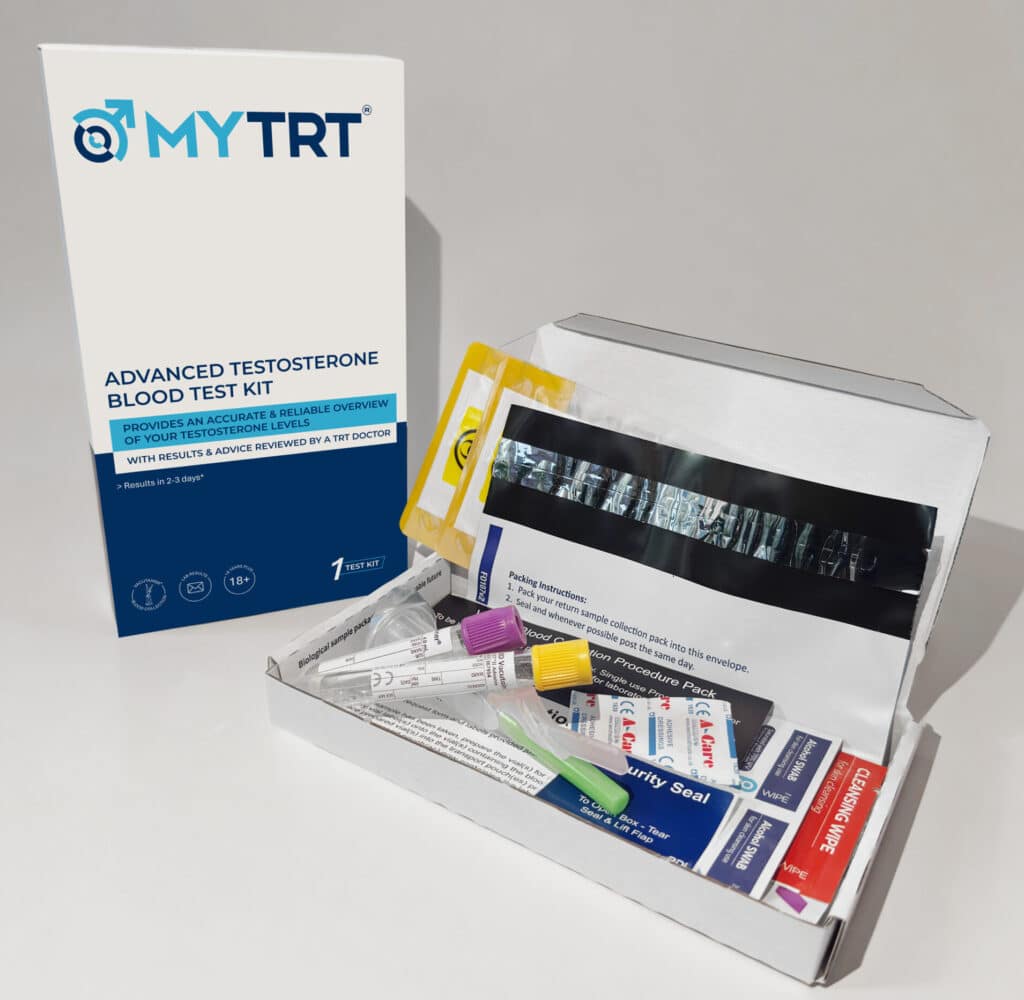
Advanced Testosterone Blood Test
Book a venous draw at a clinic £99.49
Book a venous draw at home with a nurse £109.49
 General health check
Who Needs TRT? The Clinical Picture of Male Hypogonadism
TRT is indicated for men with clinically confirmed hypogonadism — a condition characterised by low serum testosterone alongside symptoms that are attributable to that deficiency. It is not indicated solely on the basis of a low blood test, nor solely on the basis of symptoms without biochemical confirmation. Both elements must be present. This dual requirement is stipulated by the BSSM, the Endocrine Society, and the European Association of Urology.[1][4]
Hypogonadism is categorised as primary or secondary. Primary hypogonadism arises from testicular failure — the testes themselves cannot produce sufficient testosterone despite adequate hormonal signalling from the pituitary. This is reflected in elevated LH and FSH on blood testing. Secondary hypogonadism involves dysfunction at the pituitary or hypothalamic level, resulting in inadequate LH secretion and consequently reduced testicular stimulation. LH and FSH are typically low or inappropriately normal in this context.[3] The distinction matters because secondary hypogonadism may occasionally be reversible if an underlying cause (such as a pituitary adenoma, obesity, or opioid use) is identified and addressed.
Age-related testosterone decline — sometimes called late-onset hypogonadism — is the most common presentation in clinical practice. Testosterone levels decline at approximately 1–2% per year from the age of 30, and by the time men reach their 40s or 50s, a significant proportion have levels below the symptomatic threshold.[2] Common symptoms include:
- Persistent fatigue and low energy despite adequate sleep
- Reduced libido or absent sexual desire
- Erectile dysfunction, particularly reduced morning erections
- Low mood, irritability, or symptoms consistent with depression
- Brain fog and difficulty concentrating
- Loss of muscle mass and increased body fat, particularly visceral fat
- Reduced bone density
- Hot flushes and night sweats
- Reduced motivation and drive
In clinic we frequently see men who have spent years attributing these symptoms to overwork or general ageing, often having been treated for depression or anxiety when the root cause was hormonal. A single blood test and an honest clinical conversation can change the trajectory of a man’s health significantly.
How TRT Works: The Physiology of Testosterone Restoration
When testosterone is administered exogenously, it enters the bloodstream and binds to androgen receptors distributed throughout the body — in skeletal muscle, bone, the brain, adipose tissue, the liver, and the cardiovascular system. This binding initiates a cascade of genomic and non-genomic effects: gene transcription in muscle cells increases protein synthesis, adipocytes shift metabolism away from fat storage, neuronal function improves, and erythropoiesis in the bone marrow is stimulated.[3]
A portion of circulating testosterone undergoes conversion — aromatisation — into ooestradiol (a form of oestrogen) via the enzyme aromatase, found predominantly in adipose tissue. This is a normal and necessary process; ooestradiol plays an important role in male bone health, cardiovascular protection, and libido. However, in men with higher body fat percentages, aromatase activity can be elevated, leading to excessive ooestradiol relative to testosterone. Monitoring ooestradiol during TRT is therefore a standard part of clinical follow-up.
Testosterone is also converted to dihydrotestosterone (DHT) via the enzyme 5-alpha reductase, primarily in the prostate and skin. DHT is a more potent androgen than testosterone and is responsible for certain androgenic effects including prostate tissue stimulation and hair follicle sensitivity. Understanding these conversion pathways is essential for interpreting blood results during TRT and for anticipating and managing potential side effects appropriately.
It is worth noting that TRT suppresses the HPG axis. By delivering exogenous testosterone, the hypothalamus detects adequate androgen levels and reduces GnRH pulsatility, subsequently suppressing LH and FSH secretion. This results in reduced intratesticular testosterone production and — in most cases — a significant reduction in sperm production (spermatogenesis). Men who wish to preserve fertility must discuss this with their clinician before starting TRT, as alternative strategies such as human chorionic gonadotrophin (hCG) co-administration may be appropriate.[1]
TRT Treatment Options Available in the UK
There are several formulations of testosterone available for TRT in the UK, each with distinct pharmacokinetic profiles, administration routes, and practical considerations. The most clinically appropriate option depends on the individual patient’s lifestyle, preference, venous access, skin tolerance, and monitoring requirements. TRT in the UK is available through both NHS pathways and private clinics, though NHS access remains inconsistent and often restricted to confirmed primary hypogonadism.
Injectable testosterone is the most widely used formulation in clinical practice. Testosterone enanthate and testosterone cypionate are long-acting esters administered intramuscularly or subcutaneously, typically every 7 to 14 days. They produce reliable serum levels and allow precise dose titration. Testosterone undecanoate (Nebido) is a very long-acting injectable administered every 10 to 14 weeks once loaded, making it convenient for patients who prefer infrequent injections, though it offers less flexibility for dose adjustment.
Topical testosterone in the form of gels or creams (such as Testogel, Tostran, and compounded testosterone cream) is applied daily to the skin, most commonly to the shoulders, upper arms, or inner thighs. It produces stable, steady-state serum levels without the peaks and troughs associated with less frequent injections. Transfer risk to partners or children is a practical consideration requiring patient counselling.
Testosterone pellets (subcutaneous implants) are inserted under the skin of the buttock or lower abdomen under local anaesthetic and release testosterone steadily over 3 to 6 months. This formulation is less commonly used in the UK but is gaining traction in private practice for its convenience and stable hormone delivery. Each formulation has merits; the goal is always matching the treatment to the individual.
Diagnosing Testosterone Deficiency: The UK Clinical Pathway
Correct diagnosis is foundational to appropriate TRT treatment. The BSSM recommends that total testosterone is measured on at least two separate occasions, taken in the morning (between 08:00 and 11:00) in a fasted state, to minimise the impact of diurnal variation and postprandial suppression on results.[1] A total testosterone below 8 nmol/L is considered indicative of hypogonadism and warrants treatment. Levels between 8 and 12 nmol/L represent a grey zone where symptomatic burden guides clinical decision-making. Above 12 nmol/L, testosterone deficiency as a primary diagnosis is less likely, and other causes of symptoms should be explored.
A full diagnostic blood panel should include: total testosterone, sex hormone-binding globulin (SHBG), LH, FSH, prolactin, full blood count (FBC), PSA (in men over 45), ooestradiol, thyroid function, HbA1c, and liver function tests. SHBG is particularly important because it binds testosterone tightly, rendering it biologically inactive. A high SHBG can result in a normal total testosterone but significantly reduced free (bioavailable) testosterone — and it is the free fraction that exerts the clinical effects.[2]
Calculated free testosterone (using the Vermeulen formula) or direct free testosterone measurement should be used to support diagnosis in men with borderline total testosterone and high SHBG. Patients often come to us having been told their testosterone is “normal” by a GP, when in fact their free testosterone — the clinically active portion — is significantly reduced. This is one of the most common diagnostic oversights we encounter.
Safety, Monitoring, and Long-Term Considerations for Men on TRT
TRT is a long-term commitment. It is not a short course of treatment — once started and found to be effective, many men remain on TRT for life. Consequently, rigorous monitoring is essential to ensure ongoing safety and efficacy. The BSSM guidelines recommend clinical review and blood testing at 3, 6, and 12 months after initiation, and annually thereafter.[1]
The primary safety parameters monitored during TRT include:
- Haematocrit: Testosterone stimulates erythropoiesis, increasing red blood cell production. If haematocrit rises above 54%, the blood becomes more viscous, increasing cardiovascular risk. This is managed by dose reduction, formulation change, or therapeutic venesection.
- Prostate health: TRT does not cause prostate cancer, but it can stimulate the growth of an existing, undiagnosed prostate cancer. PSA monitoring and digital rectal examination (DRE) are required before initiation and during treatment for men over 40.
- Cardiovascular risk: Current evidence suggests TRT is cardiovascularly neutral or potentially protective in men with confirmed hypogonadism, but lipid profiles and blood pressure must be monitored.
- Ooestradiol: Elevated ooestradiol can cause gynaecomastia, water retention, and mood changes. It is managed by dose adjustment or, less commonly, aromatase inhibitors.
When managed by experienced clinicians following established guidelines, TRT is a safe and highly effective intervention that profoundly improves quality of life for men with hypogonadism. The key to success is individualised dosing, regular monitoring, and a collaborative clinical relationship.
Testosterone Blood Test Kit
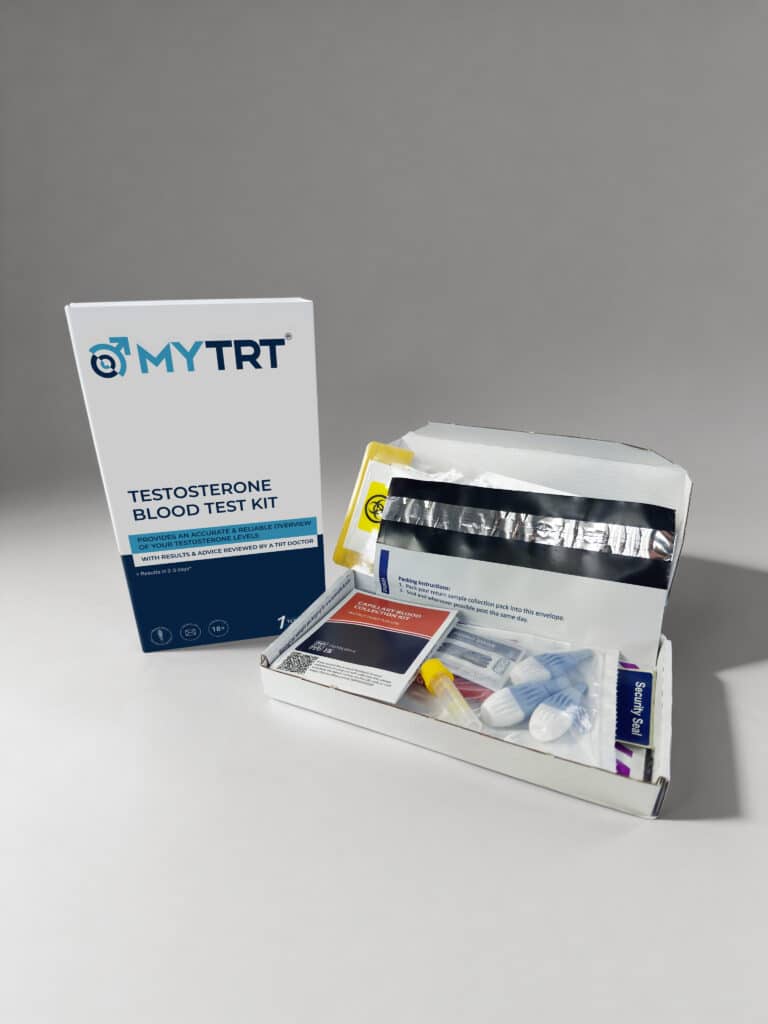
If this test showed you have low testosterone, the Advanced Testosterone Blood Test will assess your suitability for TRT.
References
[1] Hackett, G., et al. (2017). British Society for Sexual Medicine Guidelines on Adult Testosterone Deficiency, with Statements for UK Practice. The Journal of Sexual Medicine, 14(12), 1504-1523. View
[2] Bhasin, S., et al. (2018). Testosterone Therapy in Men With Hypogonadism: An Endocrine Society Clinical Practice Guideline. The Journal of Clinical Endocrinology & Metabolism, 103(5), 1715-1744. View
[3] NHS England. (2021). Clinical Commissioning Policy: Testosterone Replacement Therapy for Male Hypogonadism. NHS England. View
[4] Salonia, A., et al. (2020). European Association of Urology Guidelines on Sexual and Reproductive Health. European Urology, 78(3), 362-375. View