Medical Summary
Testosterone replacement therapy (TRT) is a regulated medical treatment for men with clinically confirmed hypogonadism, defined by the British Society for Sexual Medicine (BSSM) as persistently low serum testosterone alongside compatible symptoms.[1] In the United Kingdom, testosterone preparations are prescription-only medicines (POMs) and are additionally scheduled as Class C controlled substances under the Misuse of Drugs Act 1971, meaning any supply outside of a valid prescription constitutes a criminal offence.[2] Reputable online TRT clinics operate under Care Quality Commission (CQC) registration and General Medical Council (GMC) oversight, requiring blood tests, clinical consultation, and ongoing monitoring in line with published endocrine guidance.[3] Sourcing testosterone from unregulated online sellers exposes patients to significant clinical, pharmacological, and legal risk.[6][7][8]
Getting Testosterone Online in the UK: What You Actually Need to Know
Searching “testosterone online” throws up a confusing mix of results. You’ll see legitimate UK-registered private clinics on one hand, and on the other, a murky corner of the internet selling vials shipped from overseas with no questions asked. The difference between those two options is not just quality, it’s the difference between receiving properly supervised medical care and committing a criminal offence.
If you’re a UK man with symptoms of low testosterone, low libido, persistent fatigue, brain fog, low mood, poor recovery from exercise, or erectile difficulties, then getting help online is a perfectly sensible route. Private online TRT clinics have expanded because NHS waiting lists are long, GP awareness of hypogonadism varies enormously, and many men prefer the discretion of a virtual consultation. But there’s a right way and a wrong way to go about it.
This guide walks you through the legal position, how legitimate UK online TRT services actually work, what to look for, what to avoid, and how to be confident that the testosterone landing on your doorstep is genuine, prescribed lawfully, and appropriate for you clinically. If you already know you want to start treatment through a proper clinical pathway, you can read more about how to buy TRT safely in the UK.
Let’s start where every honest article on this topic should start: the law.
The Legal Framework: Testosterone in UK Law
Testosterone occupies a slightly unusual position in UK law because it’s regulated under two overlapping frameworks. Understanding both matters, because the second one is where people get themselves into serious trouble.
Prescription-Only Medicine Status
First, all licensed testosterone products in the UK, whether that’s Testosterone Undecanoate (Nebido), Testosterone Enantate, Sustanon 250, testogel, Tostran, or Testavan, are classified as prescription-only medicines under the Human Medicines Regulations 2012.[4] This means they can only be supplied by a pharmacy against a valid prescription written by a qualified prescriber (a doctor, or in some cases an appropriately qualified nurse or pharmacist prescriber) who is registered with the relevant UK professional body.
A prescription from an overseas prescriber does not automatically qualify. UK pharmacies dispense against UK-recognised prescriptions. If a website sells you testosterone without any consultation, without any blood tests, and without a prescriber assessing you, then whatever they’re doing is not legal UK supply, regardless of what their homepage says.
Class C Controlled Drug Status
Second, and this is the bit most people miss, testosterone and other anabolic steroids are classified as Class C controlled drugs under the Misuse of Drugs Act 1971, and listed in Schedule 4 Part 2 of the Misuse of Drugs Regulations 2001.[2] This classification exists because of the significant history of anabolic steroid misuse in bodybuilding and athletic contexts.
Here’s what that means in practice:
- Possession for personal use is legal when the testosterone is in the form of a medicinal product. You don’t need to be nervous about having your prescribed vials or gel at home, nor about carrying them when you travel domestically.
- Personal import and export: NHS guidance states that anabolic steroids may be imported or exported for personal use only when carried in person; they cannot be posted or delivered by courier or freight. Travellers carrying prescribed controlled-drug medicines should also follow Home Office evidence and quantity requirements.
- Supply, offering to supply, or possession with intent to supply is a criminal offence carrying up to 14 years’ imprisonment and an unlimited fine.[5]
- Buying testosterone from someone without a valid prescription written for you is, from the seller’s perspective, unlawful supply. You are their customer in an illegal transaction.
The Home Office and Border Force take a particular interest in shipments of anabolic steroids arriving from typical source countries. Parcels are routinely seized. Prosecution of buyers is less common than prosecution of suppliers, but it does happen, and even where it doesn’t, having a seizure notice on your record is not a pleasant experience.
Why “Research Chemicals” and Grey-Market Sites Are a Problem
A number of websites market testosterone esters as “research chemicals not for human consumption” as a legal fig leaf. This does not change the legal status of the substance itself under the Misuse of Drugs Act. If the compound is testosterone, testosterone enanthate, testosterone cypionate, or any other listed anabolic steroid, then supplying it without appropriate authority is unlawful, no matter what the label says.
The same applies to gym-floor sales, forums, and social media suppliers. There is no lawful way to obtain testosterone in the UK without going through a prescriber.
What Legitimate Looks Like
A lawful online TRT service in the UK will, at minimum:
- Be registered with the Care Quality Commission (CQC) in England, or the equivalent regulator in Scotland, Wales, or Northern Ireland.
- Employ GMC-registered doctors as prescribers.
- Dispense medication through a General Pharmaceutical Council (GPhC) registered pharmacy.
- Require blood testing before prescribing (typically total testosterone, free testosterone, SHBG, LH, FSH, oestradiol, prolactin, full blood count, PSA where age-appropriate, and metabolic markers).
- Conduct a proper clinical consultation with a prescriber, not just a tick-box form.
- Follow up with ongoing monitoring bloods and reviews.
If any of those are missing, you’re not dealing with a regulated clinic. You’re dealing with something else, and the consequences, medical and legal, sit entirely with you.
What A Legitimate Online TRT Clinic Actually Looks Like
Before you hand over your card details to anyone selling testosterone online, you need to know what a proper, above-board service looks like. The UK has clear rules on how prescription-only medicines can be sold and monitored, and any clinic worth its salt will happily show you exactly how it complies. If a provider gets cagey when you ask basic questions about regulation, that’s your answer right there.
CQC Registration Or A CQC-Registered Clinical Partner
The Care Quality Commission (CQC) is the independent regulator of health services in England. Any organisation providing a regulated activity, including the prescribing of controlled and prescription-only medicines through remote consultations, must be registered with the CQC.[1] A legitimate online TRT clinic will either hold its own CQC registration or operate in partnership with a CQC-registered medical provider. This registration isn’t a rubber stamp; it means the clinic is inspected, rated, and held to defined standards of safety, effectiveness, and patient care.
You can (and should) look up any UK clinic’s CQC status yourself on the CQC website. Two minutes of checking can save you months of trouble.
GMC-Registered Doctors On The Licence
Every doctor prescribing in the UK must be registered with the General Medical Council (GMC) and hold a licence to practise.[2] A trustworthy online TRT clinic will name its clinicians and let you verify their GMC number on the public register. Testosterone is a prescription-only medicine, and only a suitably qualified prescriber, whether that’s a GMC-registered doctor, a specialist nurse prescriber, or an independent pharmacist prescriber, can lawfully issue a prescription for it after a proper assessment.
Ideally, the clinic will use doctors with genuine experience in men’s health, endocrinology, or general practice with an interest in hormone therapy. TRT isn’t something you want prescribed by someone who looked it up last Tuesday.
Comprehensive Blood Tests Before Any Prescription
This is non-negotiable. The Society for Endocrinology and the British Society for Sexual Medicine both recommend that a diagnosis of male hypogonadism should be based on consistent symptoms alongside unequivocally low morning total testosterone levels, confirmed on at least two separate occasions.[3] A responsible online clinic will require, at minimum:
- Two morning total testosterone readings (usually between 7am and 11am)
- Free testosterone or calculated free testosterone via SHBG
- Luteinising hormone (LH) and follicle-stimulating hormone (FSH)
- Full blood count, including haematocrit and haemoglobin
- Liver function, kidney function, and lipid profile
- Prostate-specific antigen (PSA) for men over 40 or with risk factors
- Oestradiol, prolactin, and thyroid function where clinically indicated
Any provider that offers to prescribe testosterone based on a symptom questionnaire alone, with no bloods, is operating outside accepted UK medical practice. Full stop.
Ongoing Monitoring Protocols
Starting TRT is the beginning of a long-term clinical relationship, not a one-off transaction. UK guidelines recommend follow-up bloods at 3 months, 6 months, and then at least annually thereafter, along with symptom review, blood pressure checks, and prostate assessment as appropriate.[3] A proper online clinic bakes this monitoring into your care plan and won’t keep sending medication indefinitely without seeing recent results.
You can read more about what a good service should include on our TRT clinic guide.
Red Flags That Scream “Walk Away”
The internet is full of people willing to sell you testosterone. Most of them shouldn’t be. Here are the warning signs that separate a real medical service from a glorified drug dealer with a slick website.
No Blood Test Required
If a website will sell you testosterone without seeing a single blood result, run. You could have normal testosterone, a pituitary tumour, undiagnosed prostate cancer, or a haematocrit already flirting with dangerous levels, and they wouldn’t know. Prescribing without objective evidence isn’t just poor medicine; it’s unsafe and, in the UK, unlawful.
No Real Doctor Consultation
A short web form doesn’t count. You should speak, whether by video call or telephone, to an actual named clinician who reviews your history, asks about symptoms, discusses your goals, and explains risks. If the only “consultation” is ticking boxes on a form, there’s no clinician-patient relationship, and no lawful basis for prescribing.
Product Shipped From Abroad
Testosterone posted to you from an overseas source, whether that’s Eastern Europe, Asia, or anywhere else, bypasses UK regulation entirely. You have no guarantee of what’s actually in the vial, no traceability if something goes wrong, and importing prescription-only medicines without proper authorisation can leave you on the wrong side of the Medicines Act 1968.[4] UK Border Force does seize these shipments, and pharmacovigilance simply doesn’t exist for products bought this way.
No UK Pharmacy Involvement
Legitimate prescriptions in the UK are dispensed by pharmacies registered with the General Pharmaceutical Council (GPhC).[5] If your clinic can’t tell you which UK pharmacy will dispense your medication, or if the product arrives with no dispensing label, no patient information leaflet, and no batch number you can trace, you’re not receiving a properly dispensed prescription.
Suspiciously Cheap Prices
Proper TRT in the UK involves consultation time, blood tests, licensed medication, dispensing fees, and ongoing monitoring. If a service is offering all of that for £30 a month, something has been cut, and it’s usually the safety. Compare that against what a realistic monthly cost looks like on our TRT cost UK breakdown and you’ll quickly spot the outliers.
Aggressive Marketing And Unrealistic Claims
Any service promising you’ll “feel 25 again in a week” or heavily pushing testosterone as a lifestyle product rather than a medical treatment is playing fast and loose with your health. TRT can transform quality of life for men with genuine deficiency, but it isn’t a magic bullet, and honest clinics say so.
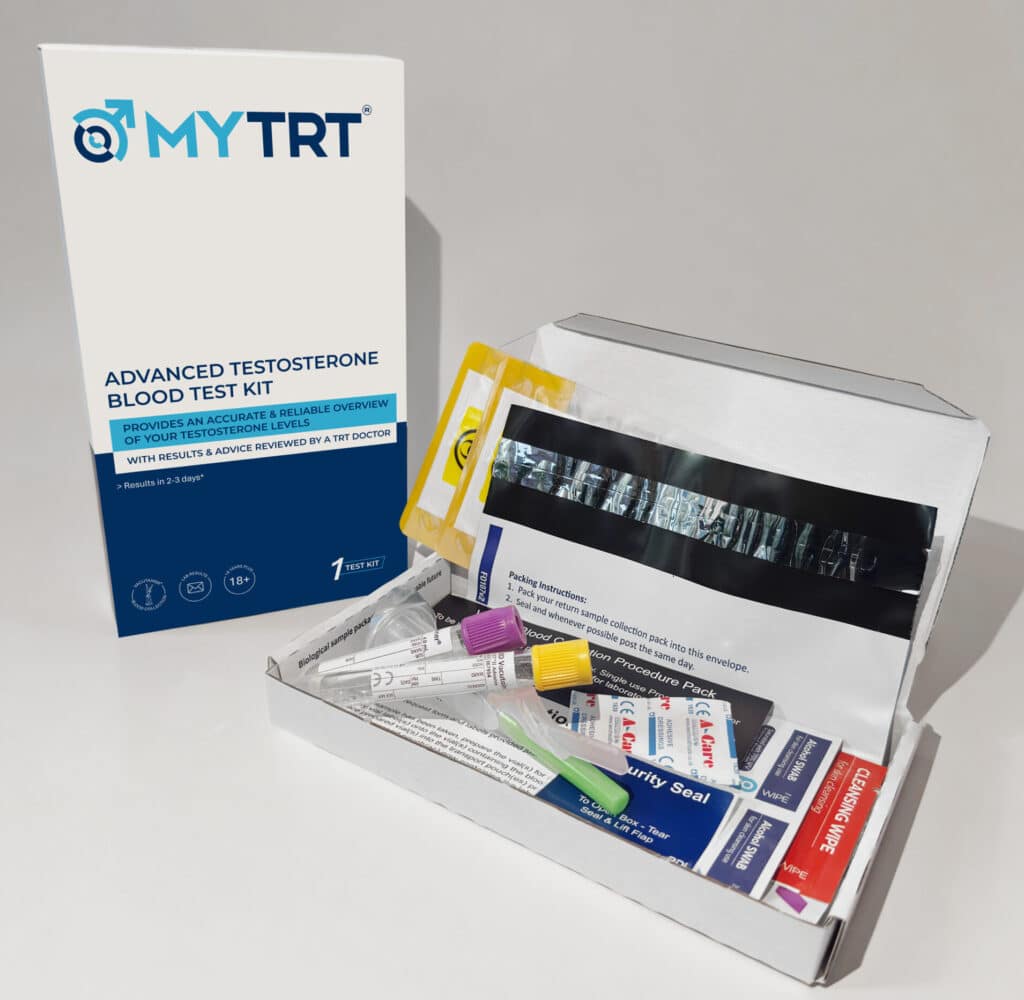
Advanced Testosterone Blood Test
Book a venous draw at a clinic £99.49
Book a venous draw at home with a nurse £109.49
 General health check
Online Versus In-Person TRT Clinics: How Do They Compare?
Assuming you’ve chosen a properly regulated provider, the next question is whether an online model or a traditional in-person clinic suits you better. Both can deliver excellent care; they just do it differently.
| Factor | Online TRT Clinic | In-Person Clinic |
|---|---|---|
| Convenience | Consultations by video or phone; bloods done locally or via home kit; medication posted to your door | Requires travel to the clinic for each appointment and often for injections |
| Cost | Generally lower overheads mean more competitive pricing | Higher fees to cover premises, in-person staff time, and facilities |
| Accessibility | Available UK-wide, including rural areas and to men with busy work schedules | Depends on your postcode; specialist clinics cluster in major cities |
| Quality Of Care | Excellent when the clinic is CQC-regulated, uses GMC doctors, and follows proper monitoring | Excellent when equally well-regulated; benefit of face-to-face physical examination |
| Physical Examination | Limited; may require you to attend a partner clinic or GP for specific checks | Full physical assessment on site, including blood pressure, BMI, and, where appropriate, prostate examination |
| Continuity | Usually the same clinical team throughout; easy to message or book follow-ups | Usually the same consultant, though scheduling in person can be harder |
For most men with straightforward primary or age-related hypogonadism, a well-run online service ticks every clinical box while saving hours of travel and often hundreds of pounds a year. If your case is complex, say you have pituitary disease, fertility concerns, or significant cardiovascular history, an in-person specialist referral, sometimes via the NHS, may be more appropriate at the outset. Many online clinics will tell you this themselves; that honesty is another sign you’re dealing with the right sort of provider.
The best online clinics also give you the option to attend a partner site for injections, physical examinations, or venous blood draws if you’d prefer, blending the flexibility of digital care with the reassurance of a real clinical setting when you want it. You get the best of both, without being tied to a single postcode.
What Happens When You Sign Up To A UK Online TRT Clinic
Most reputable UK online clinics follow a fairly similar pathway from initial enquiry to ongoing treatment. Knowing what to expect at each stage helps you spot red flags early and avoid clinics that cut corners. Here’s how a proper, regulated process should look from start to finish.
Step 1: Registration And Health Questionnaire
You’ll begin by creating an account and completing a detailed medical questionnaire. Expect questions about your symptoms, medical history, current medications, family history of prostate or cardiovascular disease, mental health, and lifestyle factors such as smoking, alcohol and exercise. A good clinic uses this information to screen out anyone who shouldn’t be on TRT, not just to tick a box.[1]
If the questionnaire feels superficial, that’s a warning sign. Genuine prescribers want to know whether you have untreated sleep apnoea, a history of prostate cancer, uncontrolled heart failure, or a haematocrit above the safe range, all of which affect prescribing decisions.
Step 2: Blood Testing (Finger-Prick vs Venous)
Blood work is the backbone of any legitimate TRT diagnosis. UK guidelines from the British Society for Sexual Medicine (BSSM) recommend confirming low testosterone with at least two morning blood samples, ideally taken between 7am and 11am when levels peak.[2]
You’ll usually be offered one of two options:
- Finger-prick home test kits: Convenient, posted to your door, and adequate for initial screening. You lance a fingertip and collect drops into a small tube, then post it back to the lab. Accuracy is generally good for total testosterone but can be less reliable for hormones present at very low concentrations.
- Venous blood draw: A phlebotomist takes blood from your arm at a clinic or your home. This is the gold standard, particularly for a full hormone panel including SHBG, free testosterone, oestradiol, LH, FSH, prolactin, PSA, full blood count and lipids.
Most quality clinics will accept a finger-prick test for initial diagnosis but recommend venous draws for follow-up monitoring, especially when tracking haematocrit and PSA over time.
Step 3: Consultation With A Prescribing Doctor
Once your bloods are back, you’ll have a consultation with a GMC-registered doctor. This should be a proper conversation, not a rubber stamp. The doctor reviews your symptoms alongside your lab results, discusses treatment options, explains risks and benefits, and answers your questions.
A good consultation covers fertility implications (TRT suppresses natural sperm production), potential side effects, the difference between injections, gels and creams, and what monitoring you’ll need going forward. If the doctor hasn’t asked whether you want children in the future, that’s a problem.
Step 4: Prescription Issued
If TRT is appropriate, the doctor issues a private prescription. Common UK options include Testosterone Enantate or Sustanon injections, Testogel or Tostran gels, and occasionally Nebido (long-acting injection). Your prescriber should explain why they’ve chosen a particular formulation for you rather than just defaulting to whatever’s cheapest.
Step 5: Pharmacy Dispatch
The prescription goes to a GPhC-registered pharmacy, which dispenses the medication and posts it to you in discreet packaging. You should receive all the ancillaries you need: needles, syringes, sharps bin, alcohol swabs, and clear instructions on self-injection technique if you’re going down that route. Many clinics also provide video tutorials or a nurse-led onboarding call for first-time injectors.
Step 6: Ongoing Monitoring And Dosage Adjustments
This is where cheap or dodgy providers fall apart. Proper TRT requires regular follow-up bloods, typically at 6 weeks, 12 weeks, 6 months, then every 6 to 12 months once stable.[3] Your clinician monitors:
- Total and free testosterone (are you in the therapeutic range?)
- Oestradiol (has it climbed too high?)
- Haematocrit and haemoglobin (thickening of the blood is a known TRT risk)
- PSA (prostate safety)
- Lipids and liver function
Based on results and how you feel, your doctor adjusts your dose, injection frequency, or adds adjunctive medication if needed. If a clinic isn’t insisting on this level of monitoring, walk away.
What To Ask Before Signing Up
Before you hand over your card details, put the clinic through its paces. Any provider worth using will happily answer these questions. If they dodge or give vague replies, that tells you everything.
1. What Is Your CQC Registration Number?
Every legitimate UK online clinic offering TRT must be registered with the Care Quality Commission (or the equivalent regulator in Scotland, Wales or Northern Ireland). Ask for the number and cross-check it on the CQC website. You’ll see their latest inspection rating and any concerns raised.
2. Who Is My Prescribing Doctor And What Are Their Credentials?
You have a right to know the name and GMC number of the doctor prescribing your medication. Check them on the GMC register. Ideally you want someone with genuine experience in men’s health, endocrinology or andrology, not a generalist moonlighting between platforms.
3. What Is Your Monitoring Protocol?
Ask specifically: how often will I have bloods? What markers do you test? Is monitoring included in the monthly fee or charged separately? A clinic that only tests testosterone and ignores haematocrit or PSA is not looking after you properly.
4. What Happens If I Get Side Effects?
How do you contact your clinician between reviews? Is there a nurse or doctor available if something goes wrong at 8pm on a Sunday? What’s the turnaround time for urgent queries? You want a clinic with a proper clinical support line, not just an email address answered during office hours.
5. What Are The Total Costs, Including Hidden Extras?
Get a clear breakdown. Some clinics advertise a low monthly fee but bill separately for consultations, follow-up bloods, delivery, or dose changes. Ask for an all-in first-year cost. Compare like with like. A slightly higher monthly price that bundles everything is often cheaper overall than a bargain headline rate with add-ons stacked on top.
6. What Is Your Exit Policy?
If you decide to stop TRT, will the clinic support you through a proper wind-down or post-cycle protocol? Or are you left to figure it out alone? A responsible provider plans for this from the outset.
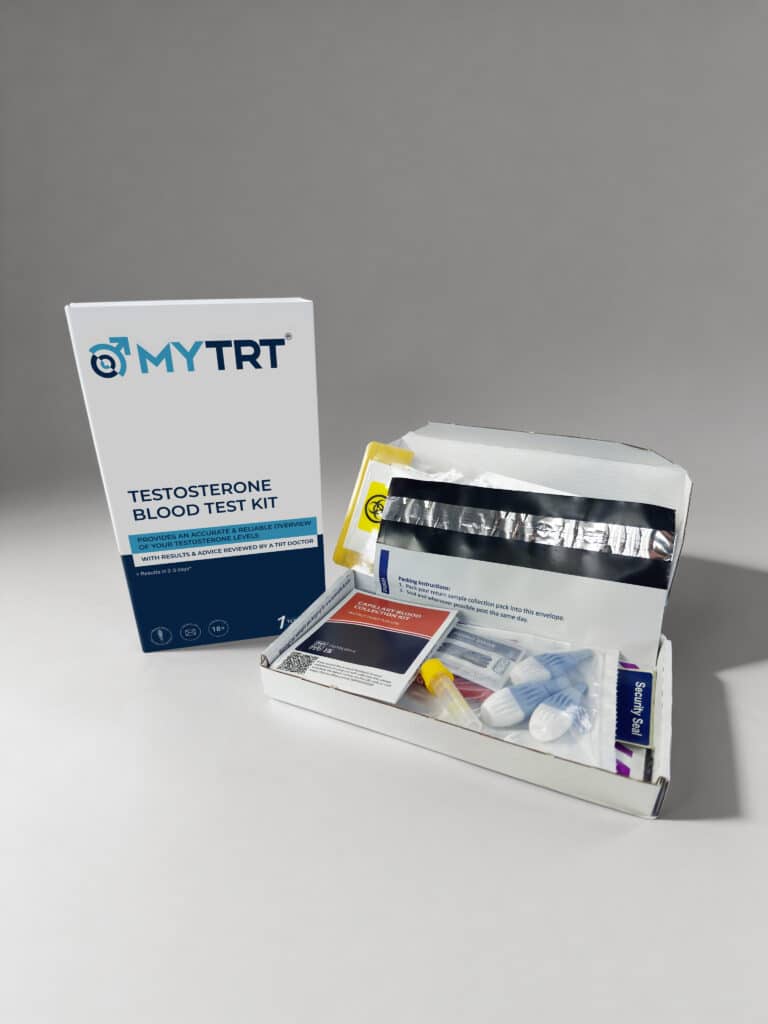
If this test showed you have low testosterone, the Advanced Testosterone Blood Test will assess your suitability for TRT.
Bringing It All Together
Getting testosterone online in the UK is entirely legal, safe and straightforward, provided you choose a properly regulated clinic. The three non-negotiables are CQC registration, GMC-registered prescribers, and GPhC-approved pharmacy dispensing. Add rigorous blood testing, ongoing monitoring and genuine clinical support, and you’ve got a treatment pathway that rivals anything available privately in a bricks-and-mortar setting.
The pitfalls are real. Grey-market sellers on social media, unlicensed overseas pharmacies, and clinics that hand out prescriptions without proper diagnostics can cost you your health, your money, and in some cases your liberty. If a deal looks too good to be true, it almost certainly is.
Take your time researching. Ask the questions above. Read reviews on independent platforms. Speak to the clinical team before you commit. Genuine low testosterone deserves genuine medical care, and you shouldn’t settle for less. For a broader overview of the treatment pathway, our guide on how to get TRT in the UK walks through everything from symptoms to your first injection.
If your symptoms are affecting your energy, mood, libido or quality of life, and blood tests confirm you’re clinically low, TRT delivered through a reputable online clinic can be genuinely life-changing. Do it properly, do it legally, and do it with a clinical team you trust.
References
- General Medical Council. Good practice in prescribing and managing medicines and devices. GMC guidance for doctors. View
- Hackett G, Kirby M, Edwards D, et al. British Society for Sexual Medicine guidelines on adult testosterone deficiency, with statements for UK practice. J Sex Med. 2017. View
- Bhasin S, Brito JP, Cunningham GR, et al. Testosterone Therapy in Men With Hypogonadism: An Endocrine Society Clinical Practice Guideline. J Clin Endocrinol Metab. 2018. View
- Medicines and Healthcare products Regulatory Agency. FakeMeds: buying medicines online safely. View
- General Pharmaceutical Council. Registers of pharmacies, pharmacists and pharmacy technicians. View
- Care Quality Commission. What we do and how we regulate services. View
- The Human Medicines Regulations 2012. Legislation governing prescription only medicines in the United Kingdom. View
- NHS. Anabolic steroid misuse. View