Is Low Testosterone Sabotaging Your Sex Life and Robbing You of Your Vitality?
By Dr. Raphael Olaiya, GP and TRT Doctor (GMC No. 7492303)
Do you feel like you’ve lost a step? Perhaps your energy levels aren’t what they used to be, your mood is unpredictable, or you’ve noticed a frustrating decline in your sex drive. If this sounds familiar, you are not alone. Millions of men across the United Kingdom are silently struggling with the symptoms of low testosterone, a condition that can significantly impact not just your performance in the bedroom, but your overall quality of life.
Low testosterone can silently affect many areas of men’s lives, including sexual performance, libido, energy levels, and overall vitality. Recognising the signs of low testosterone is key to taking control of your health and considering testosterone testing and TRT treatment to restore balance and wellbeing.
Testosterone is the primary male hormone, the very essence of masculine vitality. It governs everything from your libido and erectile function to your muscle mass, energy, and mental clarity. However, as men age, testosterone levels naturally decline. In fact, research shows that average testosterone levels in men are falling by approximately 1% every year [5]. For a significant portion of the male population, this decline is far from gradual, leading to a condition known as Testosterone Deficiency (TD).
The Pervasive Impact of Low Testosterone
While a decline in libido is often the most noticeable sign, the effects of low testosterone extend far beyond the bedroom. A comprehensive UK survey revealed that among men exhibiting symptoms of TD, 31% reported low libido and 27% experienced reduced erectile function [1]. But the story doesn’t end there. Are you also experiencing any of the following?
- Persistent fatigue and a lack of motivation
- A noticeable decrease in muscle mass and strength
- An increase in body fat, particularly around the midsection
- Mood swings, irritability, or feelings of depression
- Difficulty concentrating or “brain fog”
These are not simply inevitable signs of getting older; they are classic symptoms of low testosterone. The condition is alarmingly common, with some estimates suggesting that up to 30% of British men may be affected [17]. Despite this, it remains critically underdiagnosed. A staggering 20% of UK men over 50 suffer from low testosterone, yet a mere 1% receive a proper diagnosis [2].
Knowledge is Power: The First Step to Reclaiming Your Health
Ignoring these symptoms is a gamble with your long-term health. Low testosterone is recognised as an independent risk factor for developing metabolic syndrome and type 2 diabetes [12]. It is associated with increased insulin resistance, higher body fat, and unhealthy cholesterol levels [14].
The good news is that identifying and addressing low testosterone is straightforward. You don’t have to remain in the dark, wondering if your symptoms are “normal.” The first and most crucial step is to get tested. A simple, accurate blood test can provide a definitive answer and empower you to take back control of your health and well-being.
For many men, Testosterone Replacement Therapy (TRT) can be a life-changing intervention. Clinical evidence demonstrates that TRT can significantly improve sexual function, increase muscle mass and bone density, reduce fat, and enhance mood and energy levels [6] [7] [9] [10]. Concerns about cardiovascular risks have also been addressed by major clinical trials like the TRAVERSE study, which found that testosterone therapy did not increase the risk of major adverse cardiac events in men with a high risk of cardiovascular disease [11].
But before any treatment can be considered, you need to know your numbers.
About the Author
Dr. Raphael Olaiya is a UK-based General Practitioner and a specialist in Testosterone Replacement Therapy. With years of experience helping men optimise their health, Dr. Olaiya is dedicated to providing safe, effective, and evidence-based care. (GMC No. 7492303)
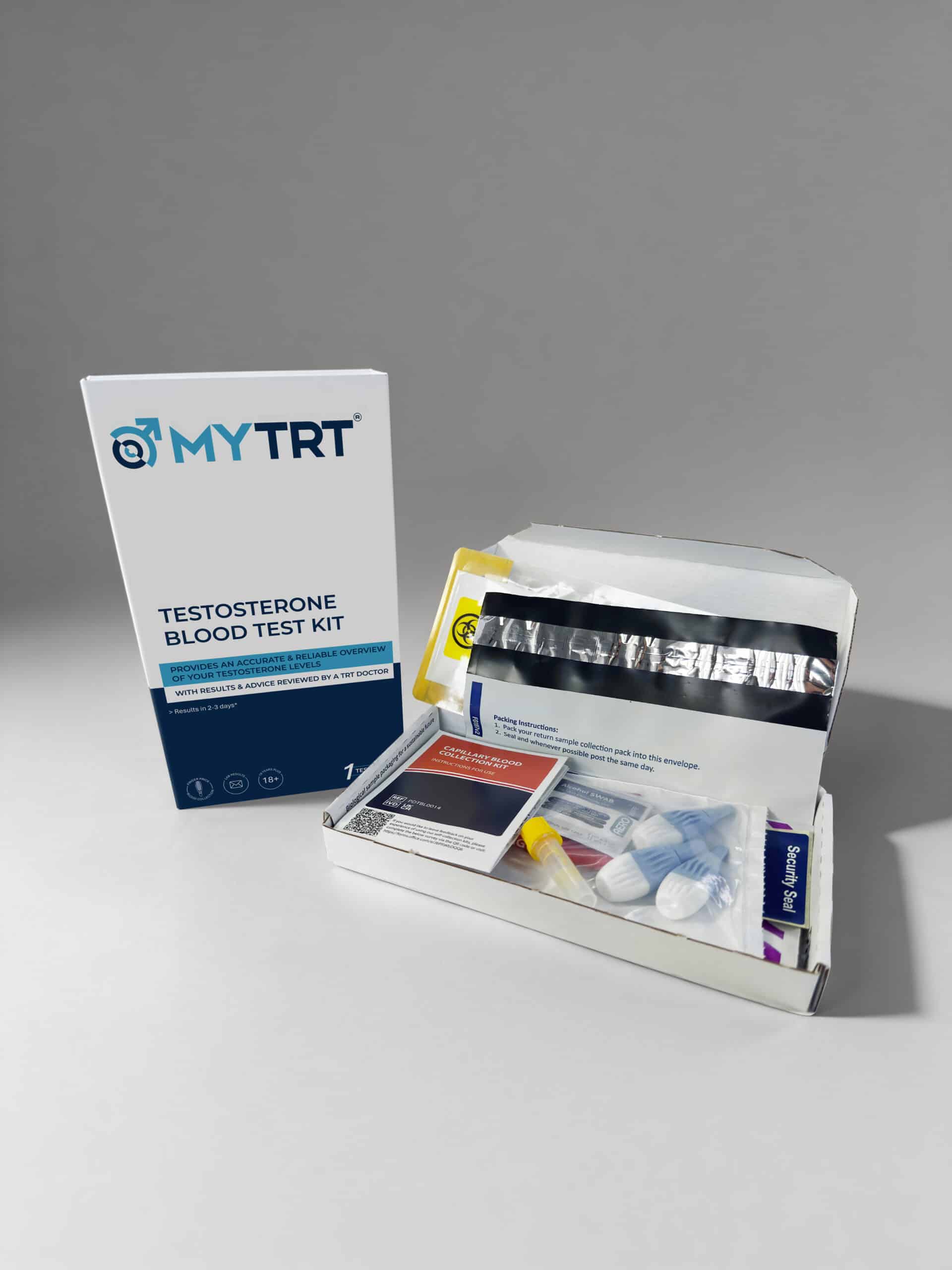
Ready to take control of your health? Find out your testosterone levels with our simple and discreet at-home blood test kit. Order yours today and start your journey to a new you.
Order Your Testosterone Blood Test Kit Now
References
[1] Awareness and prevalence of the symptoms of testosterone deficiency in men in the United Kingdom: a cross-sectional survey – BMJ Open 2025
[2] Why Are We Missing The Diagnosis Of Low Testosterone In Men? – Dr Jeff Foster
[3] The signs of testosterone deficiency all men need to know – Telegraph 2025
[4] Low Testosterone In Men Over 70 – Goldman Laboratories
[5] Why do Gen Z and Millennial men have lower testosterone? – Medichecks
[6] The Benefits and Risks of Testosterone Replacement Therapy: A Review – PMC 2009
[7] Effects of testosterone treatment in older men – TTrials / JCI 2021
[8] Testosterone treatment and risk of hospitalization for heart failure and mortality in men with testosterone deficiency: A VA cohort study – VA Research 2017
[9] Long-Term Treatment with Testosterone Undecanoate in Male Hypogonadism: Effects on Bone Mineral Density – JCEM 1997
[10] Testosterone Treatment and Fractures in Men with Hypogonadism – NEJM 2024
[11] Cardiovascular Safety of Testosterone-Replacement Therapy – NEJM 2023 – TRAVERSE Trial
[12] Testosterone and metabolic syndrome: a meta-analysis study – PMC 2010
[13] The role of testosterone in the brain: a focus on cognitive and emotional function – Frontiers Endocrinology 2023
[14] Testosterone and the brain – ScienceDirect 2016
[15] British Society for Sexual Medicine Guidelines on Adult Testosterone Deficiency, with Statements for Practice – British Society for Sexual Medicine Guidelines 2023
[17] UK Testosterone Statistics – Forth with Life