Are You Struggling to Build Muscle? The Hidden Barrier Could Be Your Testosterone Levels
If you’re putting in the gym time but struggling to build muscle, low testosterone in men could be the hidden barrier. Testosterone plays a key role in muscle growth, energy, and recovery, and understanding your hormone levels can help optimise fitness and overall health.
Testosterone and Building Muscle
Are you putting in the hours at the gym, eating all the right things, but still not seeing the muscle growth and strength gains you expect? It’s a frustrating position to be in, and one that many men experience. While there are many factors that contribute to building a strong, lean physique, one of the most crucial, and often overlooked, is your testosterone levels.
Testosterone is the primary male sex hormone, but it does far more than just regulate your libido. It is a powerful anabolic hormone, meaning it plays a vital role in building and maintaining muscle mass. When your testosterone levels are optimised, your body is in a prime state for muscle protein synthesis, the very process that repairs and builds muscle fibres after a workout. However, as men age, testosterone levels naturally decline by approximately 1% per year [11]. For some, this decline is more significant, leading to a condition known as Testosterone Deficiency (TD).
The Unseen Struggle: When Low Testosterone Sabotages Your Efforts
Testosterone Deficiency is more common than you might think. In the United Kingdom, it is estimated that 8-12% of men aged 40-69 have TD [4], with some estimates suggesting that up to 30% of British men may be affected [6]. The symptoms can be subtle at first, often dismissed as just a part of getting older: low energy, a dip in mood, reduced libido, and that frustrating inability to build muscle or lose stubborn body fat.
For men with low testosterone, the gym can feel like an uphill battle. Despite your dedication, your body is not in an optimal state to respond to your training. This is because low testosterone is associated with decreased muscle protein synthesis and can lead to an increase in fat mass [19]. It’s not a lack of effort on your part; it’s a hormonal handicap.
Unlock Your Potential: The Synergy of Optimal Testosterone and Strength Training
For men diagnosed with hypogonadism (the medical term for low testosterone), Testosterone Replacement Therapy (TRT) can be a life-changing intervention. Under the guidance of a qualified medical professional, TRT restores testosterone levels to a healthy, optimal range. This isn’t about performance enhancement in the athletic sense; it’s about restoring a vital hormone to its natural level, allowing your body to function as it should.
When combined with a consistent strength training programme, the results can be profound. Research has shown that TRT significantly improves muscle mass and strength in hypogonadal men [15]. In fact, studies have demonstrated that combining TRT with resistance exercise leads to more muscle growth than TRT alone [12]. It creates the perfect anabolic environment for your body to not only build new muscle tissue but also to recover more effectively from your workouts, allowing you to train harder and more consistently.
Furthermore, the benefits of TRT extend beyond the gym. Patients often report significant improvements in energy levels, mood, and overall sense of well-being [17]. It can also lead to a reduction in fat mass [19] and an increase in bone mineral density [16], contributing to a stronger, healthier, and more resilient body.
Is It Time to Check Your Levels?
If you’re over 30, struggling to see results in the gym, and experiencing symptoms like fatigue, low mood, or a decreased sex drive, it may be time to consider the role your testosterone levels are playing. You don’t have to guess or continue to struggle in silence. A simple blood test can provide a clear and accurate picture of your hormonal health.
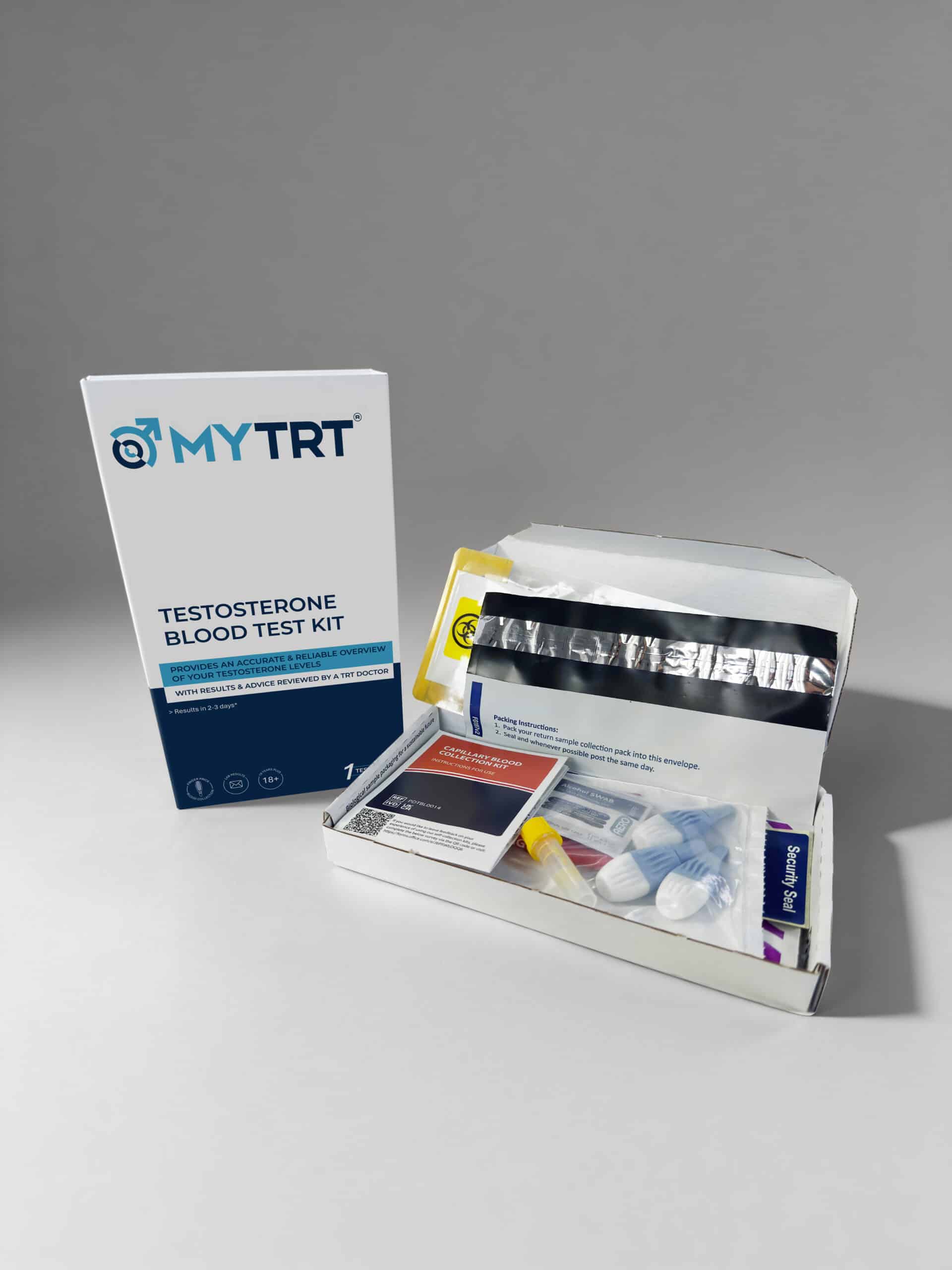
Ready to take control of your health? Find out your testosterone levels with our simple and discreet at-home blood test kit. Order yours today and start your journey to a new you.
Order Your Testosterone Blood Test Kit Now
About the Author
Dr. Raphael Olaiya is a UK-based General Practitioner and expert in Testosterone Replacement Therapy. With years of experience helping men optimise their health, Dr. Olaiya is dedicated to providing safe, effective, and evidence-based care. (GMC No. 7492303)
References
[1] Awareness and prevalence of the symptoms of testosterone deficiency – BMJ Open 2025
[2] Why are we missing the diagnosis of low testosterone in men? – Dr Jeff Foster
[3] The six signs of testosterone deficiency every man needs to know – Telegraph 2025
[4] Low Testosterone In Men Over 70 – Goldman Laboratories
[5] Why do Gen Z and Millennial men have lower testosterone? – Medichecks
[6] Testosterone and the aging male: to treat or not to treat? – PMC 2009 (Benefits and Risks)
[7] The Testosterone Trials: Seven coordinated trials of testosterone treatment in elderly men with low testosterone – TTrials / JCI 2021
[8] Study: Testosterone treatment corrects anemia in men with low T – VA Research 2017
[9] Long-Term Effect of Testosterone Therapy on Bone Mineral Density in Hypogonadal Men – JCEM 1997 (Bone Density)
[10] Testosterone Treatment and Fractures in Men with Hypogonadism – NEJM 2024 (Fractures)
[11] Cardiovascular Safety of Testosterone-Replacement Therapy – NEJM 2023 – TRAVERSE Trial
[12] Testosterone and metabolic syndrome: the link between testosterone deficiency and disease – PMC 2010 (Metabolic Syndrome)
[13] The role of testosterone in type 2 diabetes and metabolic syndrome in men – Frontiers Endocrinology 2023
[14] Low testosterone levels and risk of type 2 diabetes mellitus: a systematic review and meta-analysis – ScienceDirect 2016
[15] British Society for Sexual Medicine Guidelines on Adult Testosterone Deficiency, with a Focus on Male Sexual Dysfunction – British Society for Sexual Medicine Guidelines 2023
[17] UK Testosterone Statistics – Forth with Life