Are Your Testosterone Levels Holding You Back?
Written by Dr. Raphael Olaiya, GP, TRT Expert Doctor (GMC No. 7492303)
For many men, feeling tired, struggling to build muscle, or experiencing a dip in libido is a frustrating reality. You put in the hours at the gym, you try to eat right, but the results just aren’t there. It’s easy to put it down to stress or getting older, but what if there’s a deeper, biological reason? What if the key to unlocking your true potential lies in a hormone you might not be thinking about: testosterone.
Testosterone is the primary male sex hormone, however it also has multiple effects across several key organ systems and its influence extends far beyond the bedroom. It plays a crucial role in everything from muscle mass and bone density to mood and mental clarity. When your levels are optimal, you feel strong, driven, and full of vitality. But when they decline, the effects can be felt throughout your body and mind.
The Silent Epidemic: Low Testosterone in the UK
Testosterone deficiency (TD) is more common than you might think. In the United Kingdom, it is estimated that 8-12% of men aged 40-69 are affected by testosterone deficiency [1]. That translates to potentially millions of men who are not living their lives to the fullest. In fact, some studies suggest that up to 30% of British men may be suffering from the condition [6].
What’s more, average testosterone levels in men are declining by approximately 1% per year [11]. This means that modern men are more likely than ever to experience the symptoms of low testosterone, which can include:
- Reduced muscle mass and strength [15]
- Low libido and erectile dysfunction [3]
- Persistent fatigue and low energy levels [17]
- Increased body fat [19]
- Mood swings and irritability [17]
If these symptoms sound familiar, you are not alone. The good news is that identifying the problem is the first step towards taking back control.
Why Guess When You Can Know for Sure?
Your testosterone level isn’t something you should leave to guesswork. While the symptoms can point towards a potential issue, the only way to know for certain is through a blood test. A simple, accurate blood test can reveal your precise testosterone levels, giving you the clarity you need to make informed decisions about your health.
Understanding your hormonal health is not just about improving your performance in the gym. Low testosterone is an independent risk factor for the development of metabolic syndrome and type 2 diabetes [28]. It is associated with increased insulin resistance, higher levels of “bad” cholesterol, and increased fat mass [30]. By identifying and addressing low testosterone, you are not just investing in your physique; you are investing in your long-term health and well-being.
Your First Step to a New You
Taking a testosterone test is a proactive step towards optimising your health. It empowers you with the knowledge to understand your body better and to seek the right support if needed. Don’t let uncertainty hold you back from feeling your best.
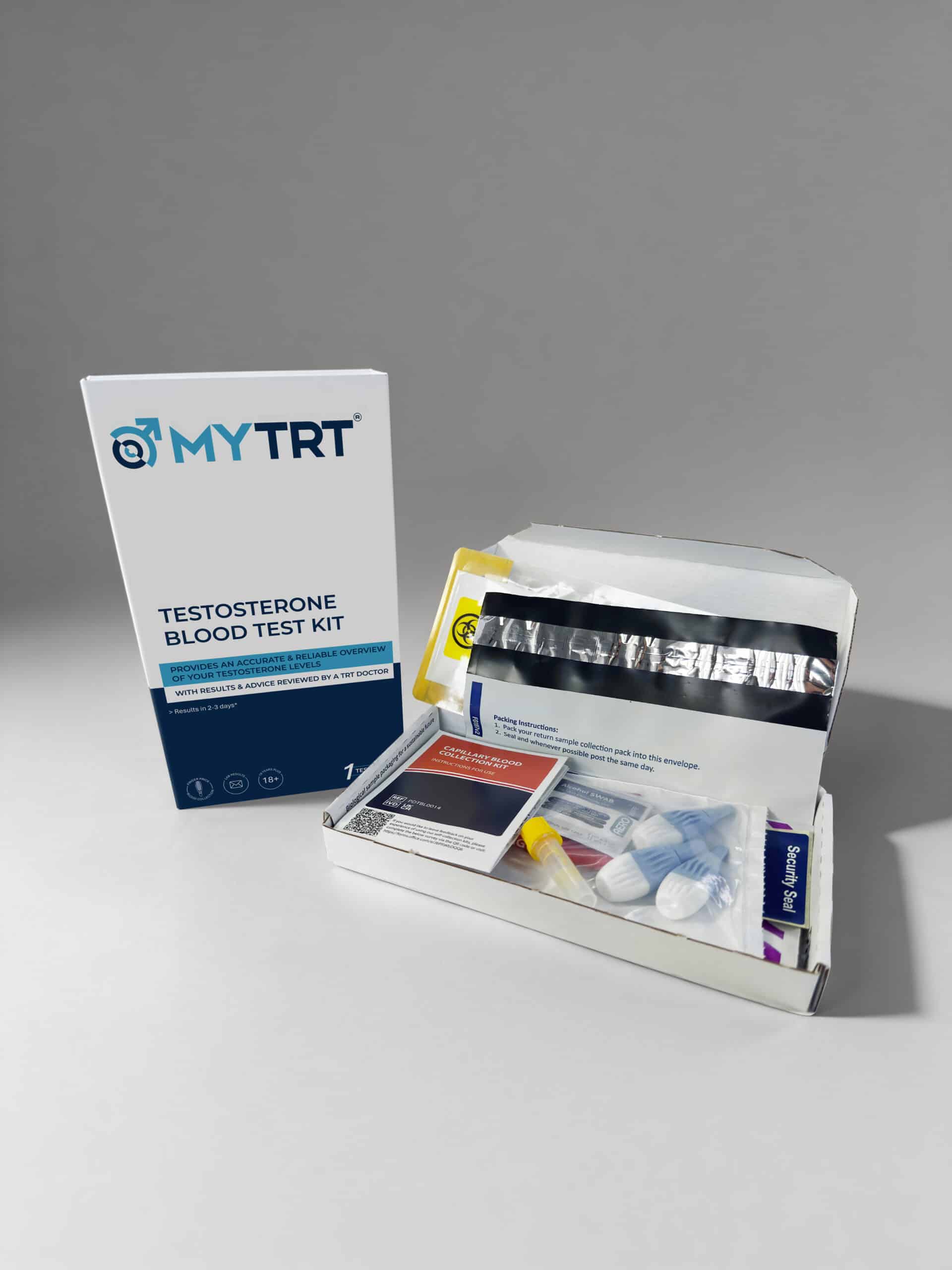
Ready to take control of your health? Find out your testosterone levels with our simple and discreet at-home blood test kit. Order yours today and start your journey to a new you.
Order Your Testosterone Blood Test Kit Now
About the Author
Dr. Raphael Olaiya is a UK-based General Practitioner and Expert in Testosterone Replacement Therapy. With years of experience helping men optimise their health, Dr. Olaiya is dedicated to providing safe, effective, and evidence-based care. (GMC No. 7492303)
References
[1] Awareness and prevalence of the symptoms of testosterone deficiency – BMJ Open 2025
[2] Why are we missing the diagnosis of low testosterone in men? – Dr Jeff Foster
[3] The five signs of testosterone deficiency all men need to know – Telegraph 2025
[4] Low Testosterone In Men Over 70 – Goldman Laboratories
[5] Why do Gen Z and Millennial men have lower testosterone? – Medichecks
[6] Testosterone and the aging male: to treat or not to treat? – PMC 2009 (Benefits and Risks)
[7] The Testosterone Trials: Seven coordinated trials of testosterone treatment in elderly men – TTrials / JCI 2021
[8] Testosterone treatment and heart attack risk – VA Research 2017
[9] Effects of Testosterone Replacement on Bone Mineral Density in Hypogonadal Men – JCEM 1997 (Bone Density)
[10] Testosterone Treatment and Fractures in Men with Hypogonadism – NEJM 2024 (Fractures)
[11] Cardiovascular Safety of Testosterone-Replacement Therapy – NEJM 2023 – TRAVERSE Trial
[12] Testosterone and metabolic syndrome: a meta-analysis study – PMC 2010 (Metabolic Syndrome)
[13] The role of testosterone in type 2 diabetes and metabolic syndrome in men – Frontiers Endocrinology 2023
[14] Testosterone and body fat – ScienceDirect 2016
[15] British Society for Sexual Medicine Guidelines on Adult Testosterone Deficiency, with Statements for UK Practice – British Society for Sexual Medicine Guidelines 2023
[17] UK Testosterone Statistics – Forth with Life