Are You Feeling Like Yourself? Why Checking Your Testosterone Levels is a Crucial First Step
By Dr. Raphael Olaiya, GP and TRT Doctor (GMC No. 7492303)
Life has a way of catching up with us. The energy we once took for granted can start to wane, our mood might dip for no apparent reason, and even our drive in the bedroom might not be what it used to be. For many men, these changes are dismissed as just ‘getting older’. But what if it’s something more? What if it’s a sign of low testosterone?
In the UK, it’s estimated that 8-12% of men aged 40-69 have testosterone deficiency (TD) [1]. That’s a significant number of men who may be struggling with symptoms that can have a real impact on their quality of life. In fact, up to 30% of British men may be suffering from low testosterone, yet a staggering 20% of men over 50 with the condition are never properly diagnosed [2, 3].
The Unseen Impact of Low Testosterone
Low testosterone isn’t just about a dip in your libido. It can affect your health in a number of ways. Men with low testosterone often report a range of symptoms, including:
- Low libido and erectile dysfunction: Studies show that 31% of men with TD symptoms report a low libido, and 27% experience reduced erectile function [1].
- Fatigue and low energy: Feeling constantly tired, even after a good night’s sleep, is a common complaint.
- Mood swings and irritability: Low testosterone can affect your mood, leading to feelings of sadness, irritability, or a general lack of motivation.
- Loss of muscle mass and strength: Testosterone plays a key role in maintaining muscle mass, so a deficiency can lead to a noticeable decrease in strength [4].
- Increased body fat: Low testosterone is associated with an increase in body fat, particularly around the abdomen [5].
Beyond these symptoms, low testosterone is also an independent risk factor for the development of metabolic syndrome and type 2 diabetes [6]. With 33-57% of men with type 2 diabetes also having decreased testosterone levels, the link is clear [7].
Taking the First Step: The Importance of Testing
The good news is that testosterone deficiency is treatable. Testosterone Replacement Therapy (TRT) has been shown to have a number of benefits for men with low testosterone, including:
- Improved sexual function: TRT can significantly improve overall sexual activity, desire, and erectile function [8].
- Increased muscle mass and strength: Studies have shown that TRT can help to restore muscle mass and strength in men with low testosterone [4].
- Improved bone density: TRT can increase bone mineral density, reducing the risk of fractures [9, 10].
- Enhanced mood and energy levels: Many men on TRT report improvements in their energy levels, mood, and overall sense of well-being [4].
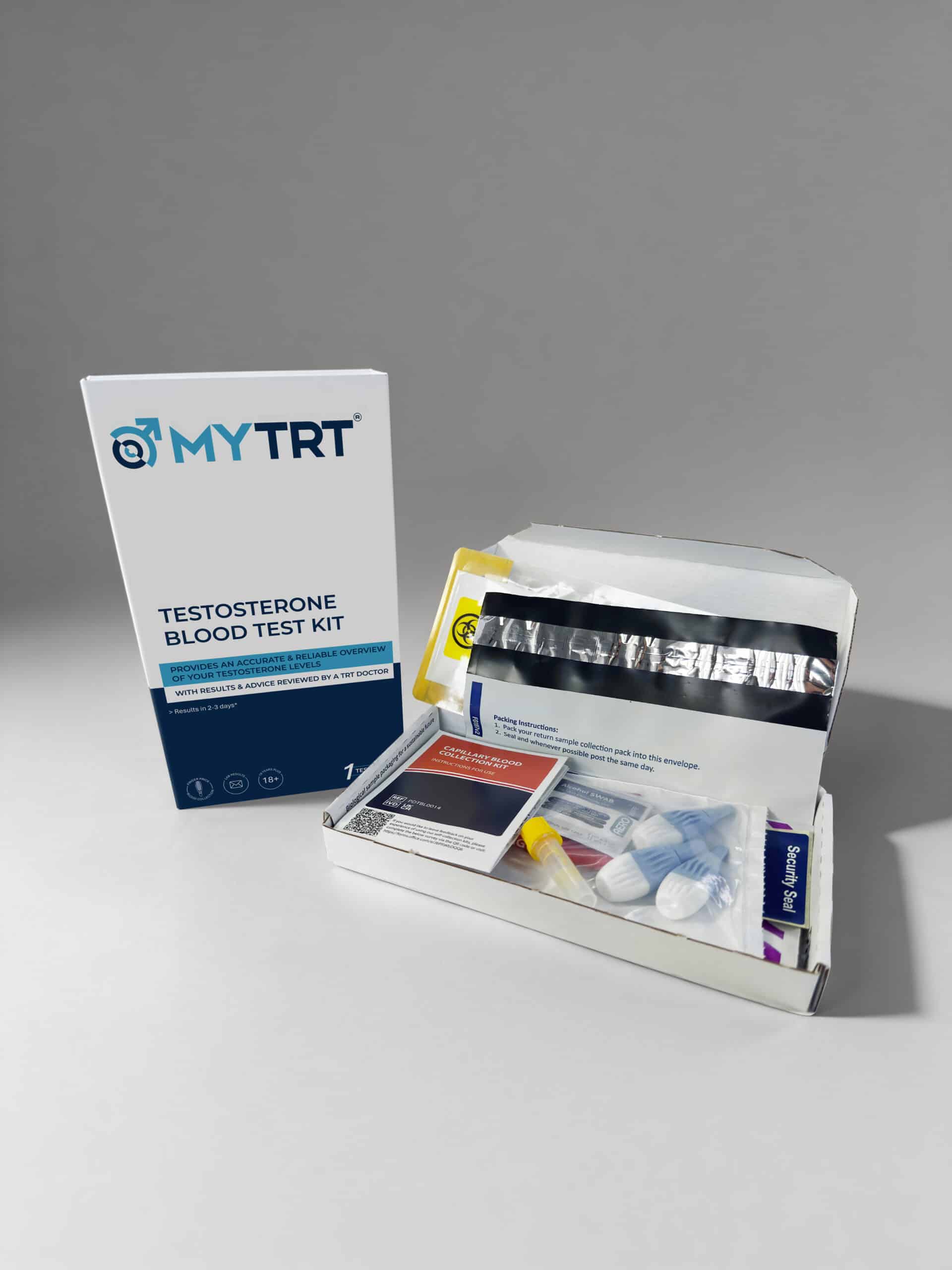
But before you can start to address the problem, you need to know if you have it. That’s where our Testosterone Blood Test Kit comes in. It’s a simple, discreet, and accurate way to check your testosterone levels from the comfort of your own home.
Is TRT Safe? Addressing the Concerns
It’s natural to have questions about the safety of any medical treatment. The good news is that a major clinical trial, the TRAVERSE trial, which enrolled 5,246 men, found that testosterone-replacement therapy was noninferior to placebo for major adverse cardiovascular events [11]. This means that for men with low testosterone, TRT did not increase the risk of heart attack or stroke.
Your Journey to a New You Starts Here
Don’t let the symptoms of low testosterone hold you back any longer. Taking control of your health starts with understanding what’s going on inside your body. Our simple and discreet at-home blood test kit is the first step on your journey to a new you.
Ready to take control of your health? Find out your testosterone levels with our simple and discreet at-home blood test kit. Order yours today and start your journey to a new you.
Order Your Testosterone Blood Test Kit Now
About the Author
Dr. Raphael Olaiya is a UK-based General Practitioner and a specialist in Testosterone Replacement Therapy. With years of experience helping men optimise their health, Dr. Olaiya is dedicated to providing safe, effective, and evidence-based care. (GMC No. 7492303)
References
[1] Awareness and prevalence of the symptoms of testosterone deficiency – BMJ Open 2025
[2] Why are we missing the diagnosis of low testosterone in men? – Dr Jeff Foster
[3] The signs of testosterone deficiency every man needs to know – Telegraph 2025
[4] Low Testosterone In Men Over 70 – Goldman Laboratories
[5] Why do Gen Z and Millennial men have lower testosterone? – Medichecks
[6] Benefits and Risks of Testosterone Treatment in Older Men – PMC 2009 (Benefits and Risks)
[7] Testosterone Treatment and Sexual Function in Older Men with Low Testosterone Levels – TTrials / JCI 2021
[8] Testosterone treatment and sexual function in older men with low testosterone – VA Research 2017
[9] Effects of Testosterone Replacement on Bone Mineral Density in Men with Opioid-Induced Androgen Deficiency – JCEM 1997 (Bone Density)
[10] Testosterone and Fractures in Men with Hypogonadism – NEJM 2024 (Fractures)
[11] Cardiovascular Safety of Testosterone-Replacement Therapy – NEJM 2023 – TRAVERSE Trial
[12] Testosterone and Metabolic Syndrome: The Link, the Myth, and the Future – PMC 2010 (Metabolic Syndrome)
[13] The Role of Testosterone in Type 2 Diabetes and Metabolic Syndrome in Men – Frontiers Endocrinology 2023
[14] Testosterone and the metabolic syndrome – ScienceDirect 2016
[15] British Society for Sexual Medicine Guidelines on Adult Testosterone Deficiency, with Statements for Practice – British Society for Sexual Medicine Guidelines 2023
[17] UK Testosterone Statistics – Forth with Life