Feeling Off? The Hidden Reason Millions of Men Are Suffering in Silence – And How to Take Back Control
Are you constantly tired, struggling with low mood, or noticing a dip in your libido and physical performance? You might be quick to blame stress or getting older, but there could be a deeper, underlying cause that millions of men in the UK are facing: Testosterone Deficiency (TD).
It’s more common than you think. In the UK, studies show that between 8% and 12% of men aged 40-69 are living with this condition, many without even knowing it [1]. The symptoms can be subtle and are often dismissed as a normal part of ageing:
- Persistent fatigue and low energy levels
- A noticeable decrease in sex drive (libido) [1]
- Difficulty achieving or maintaining erections [1]
- Loss of muscle mass and strength
- Increased body fat, especially around the mid-section
- Low mood, irritability, and difficulty concentrating
If this sounds familiar, you are not alone. Research indicates that as many as 20% of UK men over 50 may have low testosterone, yet a staggering 99% of them are not diagnosed or treated [2]. It’s a silent epidemic, but ignoring it can have significant long-term consequences for your health.
Why Ignoring Low Testosterone is a Risk You Can’t Afford
Low testosterone isn’t just about feeling less vital; it is an independent risk factor for serious health conditions like metabolic syndrome and type 2 diabetes [3]. In fact, up to 57% of men with type 2 diabetes are found to have low testosterone levels [4]. The condition is also linked to reduced bone density, which can lead to osteoporosis and an increased risk of fractures [5].
For years, concerns about the cardiovascular risks of Testosterone Replacement Therapy (TRT) have made both patients and doctors hesitant. However, the landmark TRAVERSE trial in 2023, the largest randomised controlled trial on TRT to date, provided reassuring evidence. The study, involving over 5,200 men, found that testosterone therapy was non-inferior to placebo for major adverse cardiovascular events, meaning it did not increase the risk of heart attacks or strokes in men with hypogonadism, even those with pre-existing cardiovascular conditions [6].
This confirms what many specialists have long known: when medically appropriate and properly monitored, TRT can be a safe and life-changing treatment. It has been shown to:
- Significantly improve sexual desire and erectile function [7]
- Increase muscle mass and reduce fat mass [8]
- Boost bone mineral density [5]
- Enhance energy levels and mood [8]
Your First Step: Knowledge is Power
Before you can explore treatment options, you need to know your numbers. You can’t manage what you don’t measure. The only way to know for sure if you have low testosterone is to get tested.
Waiting for a GP appointment can be slow, and discussing these symptoms can feel uncomfortable. That’s why a simple, discreet, and reliable at-home blood test is the perfect first step. It empowers you to take control of your health from the privacy of your own home.
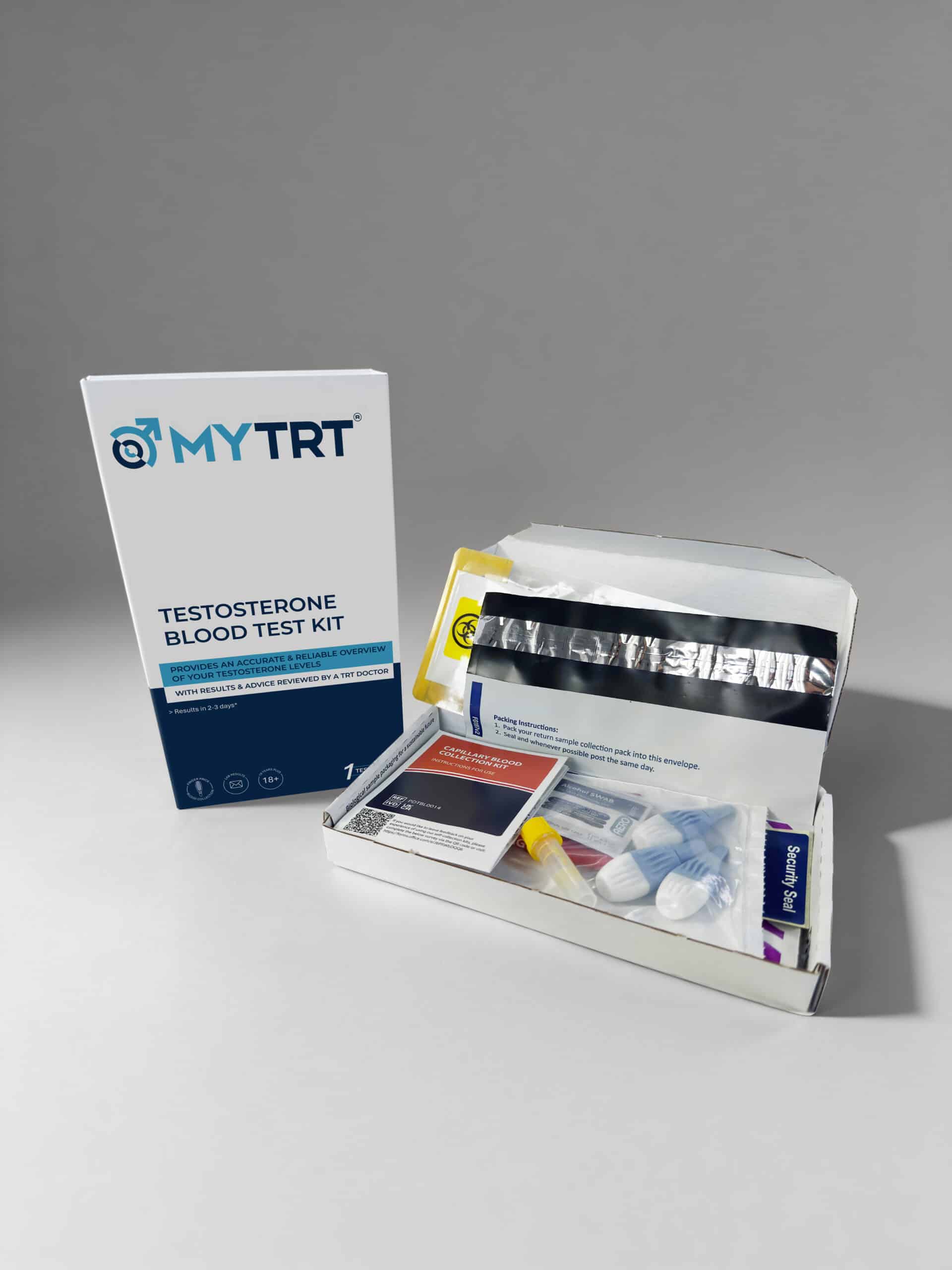
Our Testosterone Blood Test Kit is a simple finger-prick test that gives you a clear, accurate reading of your testosterone levels. No appointments, no waiting rooms – just the data you need to start a meaningful conversation with a healthcare professional.
Understanding Your Options: What is TRT?
If your results show that you have low testosterone, one of the most effective treatment options is Testosterone Replacement Therapy (TRT). TRT is a medical treatment designed to restore your testosterone levels to a healthy, optimal range. It comes in several forms, each with its own set of benefits, allowing a treatment plan to be tailored to your lifestyle and needs.
| Treatment Type | Description | Pros | Cons |
|---|---|---|---|
| Injections | Testosterone is injected into a muscle, typically every 1-2 weeks, or more frequently with smaller doses. | Highly effective, low cost, predictable dosing. | Requires needles, can cause peaks and troughs in hormone levels. |
| Gels | A clear gel containing testosterone is applied to the skin daily, usually on the shoulders or upper arms. | Stable hormone levels, non-invasive. | Risk of transference to others, daily application required. |
| Patches | A patch containing testosterone is applied to the skin each day. | Convenient, provides a steady release of hormones. | Can cause skin irritation, may not adhere well. |
Choosing the right option is a decision that should be made with a qualified medical professional who can assess your individual health profile and guide you towards the safest and most effective treatment plan.
Ready to take control of your health? Find out your testosterone levels with our simple and discreet at-home blood test kit. Order yours today and start your journey to a new you.
Order Your Testosterone Blood Test Kit Now
About the Author
Dr. Raphael Olaiya is a UK-based General Practitioner and a specialist in Testosterone Replacement Therapy. With years of experience helping men optimise their health, Dr. Olaiya is dedicated to providing safe, effective, and evidence-based care. (GMC No. 7492303)
References
[1] Awareness and prevalence of the symptoms of testosterone deficiency: a cross-sectional survey of community-dwelling men in the UK – BMJ Open 2025
[2] Low Testosterone in Men Over 70: Complete UK Guide – Goldman Laboratories
[3] Testosterone and the metabolic syndrome – PMC 2010
[4] New evidence for the effect of type 2 diabetes and glycemic control on testosterone – Frontiers in Endocrinology 2023
[5] Long-Term Effect of Testosterone Therapy on Bone Mineral Density – JCEM 1997
[6] Cardiovascular Safety of Testosterone-Replacement Therapy – NEJM 2023
[7] Testosterone replacement in aging men: an evidence-based review – Journal of Clinical Investigation 2021
[8] The benefits and risks of testosterone replacement therapy: a review – PMC 2009