Feeling Tired All the Time? It Could Be More Than Just Burnout.
Are you constantly battling fatigue, struggling to get through the day no matter how much you sleep? Is your get-up-and-go… gone? While modern life is demanding, persistent exhaustion isn’t something you just have to accept. It could be a sign of something deeper: low testosterone.
For millions of men, feeling drained, irritable, and less driven isn’t just a phase—it’s a medical condition known as Testosterone Deficiency (TD). In the UK alone, it’s estimated that 8-12% of men aged 40-69 are affected, with some studies suggesting up to one in five men over 50 could be suffering [1] [2]. Yet, astonishingly, only a fraction of them receive a proper diagnosis [2].
Feeling tired, drained, or unmotivated isn’t always just burnout. In many men, low testosterone may be the reason behind persistent fatigue, reduced motivation, and decreased performance. Understanding the link between low testosterone in men, energy levels, and overall well-being can help men take proactive steps with testosterone blood testing and TRT treatment.
The Unseen Impact of Low Testosterone
Testosterone is the primary male hormone, but it does far more than just fuel your libido. It’s crucial for maintaining energy levels, mood, muscle mass, and overall vitality. When your levels are low, the impact can be felt across your entire life.
Men with symptoms of TD often report not just fatigue, but also low mood, reduced erectile function, and a significant drop in their sex drive [1]. It’s not just about feeling tired; it’s about a decline in your quality of life. Furthermore, research has shown that low testosterone is an independent risk factor for developing more serious health problems like metabolic syndrome and type 2 diabetes [3].
Take Back Control: The Power of Knowing Your Levels
Ignoring these symptoms means accepting a life that’s less than you deserve. The first step to reclaiming your energy and vitality is to get a clear, accurate picture of your hormonal health. A simple blood test is the only way to know for sure if low testosterone is the root cause of your fatigue.
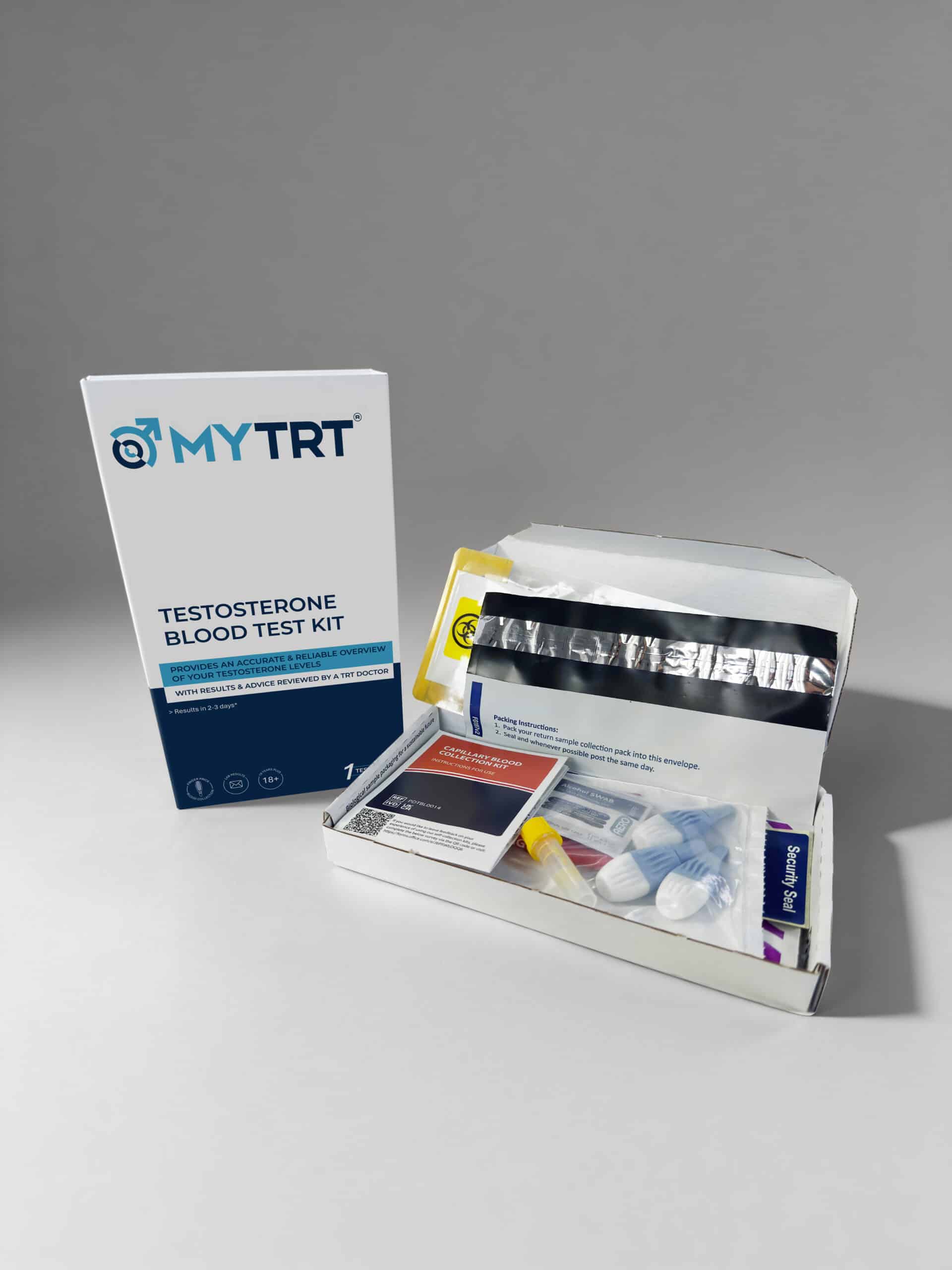
At MYTRT, we believe in empowering men with the knowledge they need to take control of their health. Our at-home testosterone blood test kit is discreet, simple to use, and provides you with the crucial data you need to start a conversation with a healthcare professional.
Is Testosterone Replacement Therapy (TRT) the Answer?
If your results show a deficiency, Testosterone Replacement Therapy (TRT) is a clinically proven and effective treatment. Under the guidance of a specialist, TRT can lead to transformative improvements in your well-being.
Decades of research have documented the powerful benefits of optimising testosterone levels:
| Benefit | Clinical Evidence |
|---|---|
| Energy & Mood | Documented improvements in energy, mood, and a general sense of well-being [4]. |
| Sexual Function | Significantly improves libido, sexual activity, and erectile function [5]. |
| Physical Health | Increases muscle mass and strength, reduces fat mass, and improves bone density [6] [7]. |
Concerns about the safety of TRT are understandable, but modern medicine has made significant strides. The largest-ever randomised controlled trial on TRT, the TRAVERSE trial, found that testosterone therapy was noninferior to a placebo for major adverse cardiovascular events, even in men with pre-existing heart conditions [8].
Your Journey to a New You Starts Here
Don’t let fatigue dictate your life any longer. Understanding your testosterone levels is the first, most critical step towards revitalising your health. It’s time to move from guessing to knowing.
Ready to take control of your health? Find out your testosterone levels with our simple and discreet at-home blood test kit. Order yours today and start your journey to a new you.
Order Your Testosterone Blood Test Kit Now
About the Author
Dr. Raphael Olaiya is a UK-based General Practitioner and a specialist in Testosterone Replacement Therapy. With years of experience helping men optimise their health, Dr. Olaiya is dedicated to providing safe, effective, and evidence-based care. (GMC No. 7492303)
References
[1] Awareness and prevalence of the symptoms of testosterone deficiency in men in the UK: a cross-sectional survey – BMJ Open 2025
[2] Why are we missing the diagnosis of low testosterone in men? – Dr Jeff Foster
[3] The signs of testosterone deficiency all men need to know – Telegraph 2025
[4] Low Testosterone in Men Over 70 – Goldman Laboratories
[5] Why do Gen Z and Millennial men have lower testosterone? – Medichecks
[6] Testosterone and the aging male: to treat or not to treat? – PMC 2009 (Benefits and Risks)
[7] The Testosterone Trials: Seven coordinated trials of testosterone treatment in elderly men – TTrials / JCI 2021
[8] Testosterone treatment and heart attack risk – VA Research 2017
[9] Effects of Testosterone Replacement Therapy on Bone Mineral Density in Hypogonadal Men – JCEM 1997 (Bone Density)
[10] Testosterone Treatment and Fractures in Men with Hypogonadism – NEJM 2024 (Fractures)
[11] Cardiovascular Safety of Testosterone-Replacement Therapy – NEJM 2023 – TRAVERSE Trial
[12] The dark side of testosterone deficiency: II. Type 2 diabetes and metabolic syndrome – PMC 2010 (Metabolic Syndrome)
[13] Testosterone deficiency, metabolic syndrome and type 2 diabetes: a new clinical-diagnostic therapeutic approach – Frontiers Endocrinology 2023
[14] Testosterone and the Heart – ScienceDirect 2016
[15] British Society for Sexual Medicine Guidelines on Adult Testosterone Deficiency, with a Focus on UK Practice – British Society for Sexual Medicine Guidelines 2023
[17] UK Testosterone Statistics – Forth with Life