Are You Feeling Off? The Hidden Link Between Your Mood and Testosterone
Written by Dr. Raphael Olaiya, GP and TRT Doctor (GMC No. 7492303)
Do you ever feel like you’re not quite yourself? Perhaps you’re more irritable than usual, your energy levels have plummeted, or you’ve lost that spark of interest in things you once enjoyed. Many men dismiss these feelings as just a part of getting older, but they could be a sign of something more: low testosterone.
Mood changes, irritability, low motivation, and fatigue can make men feel “off” without understanding why. Many of these symptoms may be linked to low testosterone in men. Recognising the connection between testosterone and mood can help men take steps to assess their hormone levels and explore ways to restore balance and improve emotional well-being.
Testosterone is often associated with muscle mass and sex drive, but its influence extends far beyond the bedroom and the gym. It plays a crucial role in regulating mood, maintaining cognitive function, and supporting overall mental well-being. When your levels are low, the impact on your quality of life can be significant.
The Unseen Impact of Low Testosterone
In the UK, it’s estimated that between 8% and 12% of men aged 40-69 have testosterone deficiency [1]. That’s a substantial number of men who may be struggling in silence. Symptoms are often subtle and can be easily mistaken for stress or burnout. They can include:
- Persistent low mood or feelings of sadness
- Increased irritability and anxiety
- Difficulty concentrating and “brain fog“
- A noticeable drop in motivation and self-confidence
- Low libido and reduced erectile function [1]
These symptoms don’t just affect you; they can strain your relationships, impact your performance at work, and diminish your overall enjoyment of life. Yet, despite how common this issue is, a staggering 20% of UK men over 50 suffer from low testosterone, with only 1% receiving a proper diagnosis [2].
Why You Shouldn’t Ignore the Signs
Low testosterone is more than just a mood-killer. It is an independent risk factor for developing serious health conditions like metabolic syndrome and type 2 diabetes [3]. Research shows a strong association between low testosterone and increased insulin resistance, higher levels of harmful cholesterol, and an increase in body fat [4].
Furthermore, testosterone levels in men are declining by approximately 1% every year, making it a growing concern for men of all ages [5]. The odds of having testosterone deficiency are 1.5 to 2 times higher for men over 50 compared to their younger counterparts [1].
Take the First Step: Knowledge is Power
The good news is that you don’t have to guess what’s going on with your health. A simple blood test can provide a clear and accurate picture of your testosterone levels. Understanding your numbers is the first and most crucial step towards addressing any potential deficiency and reclaiming your vitality.
For many men, Testosterone Replacement Therapy (TRT) can be a life-changing treatment. Clinical studies have shown that TRT can significantly improve not only sexual function and muscle mass but also energy levels, mood, and a general sense of well-being [6] [7]. Importantly, the largest randomised controlled trial on TRT to date, the TRAVERSE trial, found no increase in major adverse cardiovascular events, confirming its safety for many men [8].
Your Journey to a New You Starts Here
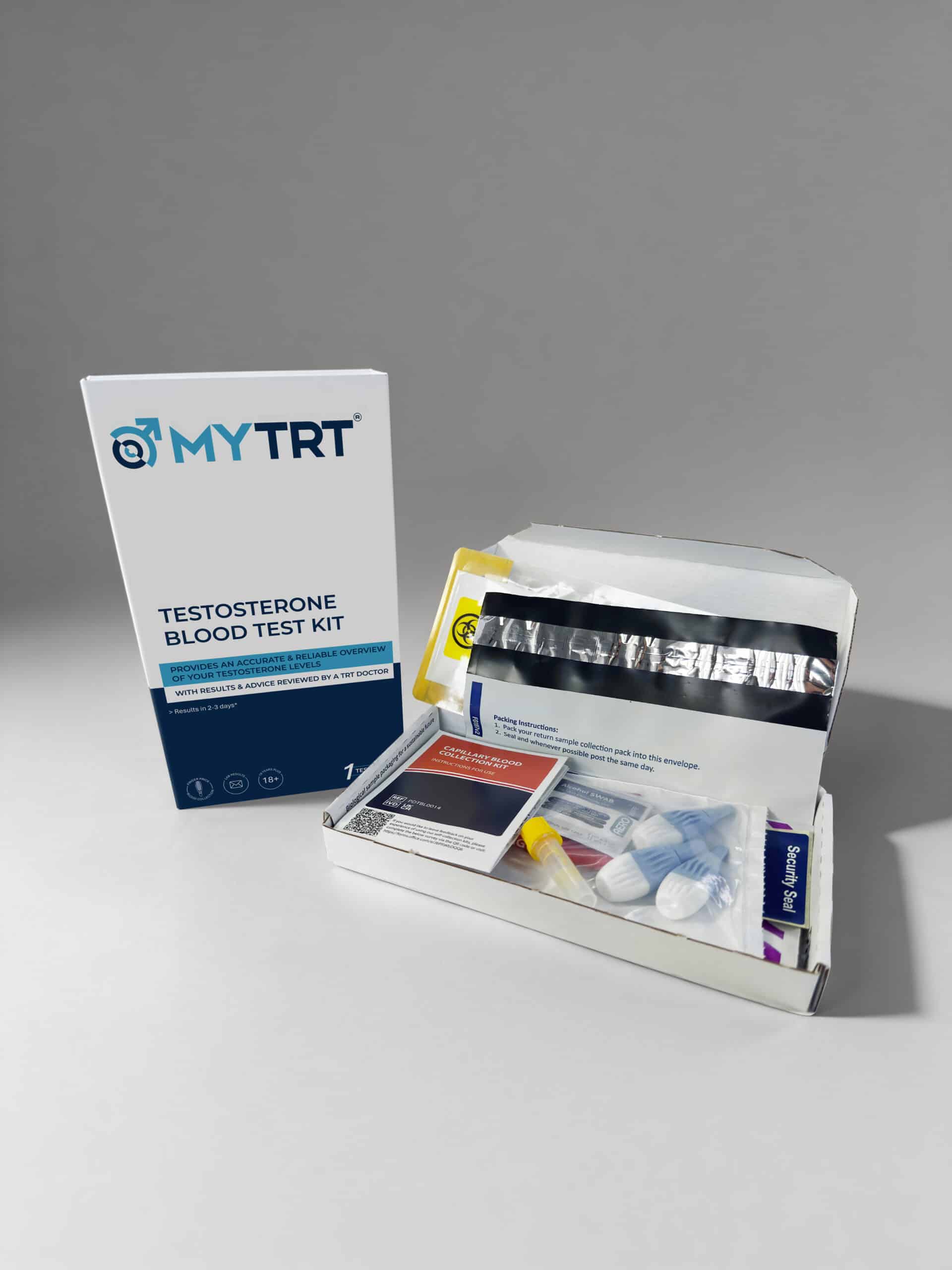
Don’t let low testosterone silently undermine your health and happiness. It’s time to stop guessing and start knowing. Our comprehensive testosterone blood test is a simple, discreet, and reliable way to check your levels from the comfort of your own home.
Ready to take control of your health? Find out your testosterone levels with our simple and discreet at-home blood test kit. Order yours today and start your journey to a new you.
Order Your Testosterone Blood Test Kit Now
About the Author
Dr. Raphael Olaiya is a UK-based General Practitioner and a specialist in Testosterone Replacement Therapy. With years of experience helping men optimise their health, Dr. Olaiya is dedicated to providing safe, effective, and evidence-based care. (GMC No. 7492303)
References
[1] Awareness and prevalence of the symptoms of testosterone deficiency: a cross-sectional survey of community-dwelling men in the UK – BMJ Open 2025
[2] Low Testosterone in Men Over 70: Complete UK Guide – Goldman Laboratories
[3] Testosterone and the metabolic syndrome – PMC 2010
[4] Testosterone deficiency, metabolic syndrome and diabetes mellitus – ScienceDirect 2016
[5] Why Are Men’s Testosterone Levels Decreasing? – Medichecks
[6] Testosterone replacement in aging men: an evidence-based review – Journal of Clinical Investigation 2021
[7] The benefits and risks of testosterone replacement therapy: a review – PMC 2009
[8] Cardiovascular Safety of Testosterone-Replacement Therapy – NEJM 2023