Feeling Flat? The Surprising Link Between Your Mood and Testosterone
Written by Dr. Raphael Olaiya, GP and TRT Doctor (GMC No. 7492303)
Feeling flat, unmotivated, or emotionally drained can sometimes be linked to low testosterone in men. While mood changes are often blamed on stress or lifestyle, hormone levels also play an important role in emotional well-being. Understanding the connection between mood and testosterone can help men recognise the symptoms and consider testosterone testing to assess their hormone health.
If you’ve been feeling persistently down, irritable, or drained of energy, you might be telling yourself it’s just stress or a part of getting older. But what if there’s a deeper, physiological reason for the way you feel? For many men in the UK, these persistent low moods are directly linked to a condition that often goes undiagnosed: low testosterone, or ‘Low T’.
Testosterone is more than just a male hormone; it’s a critical regulator of your overall well-being. While it’s well-known for its role in building muscle and maintaining a healthy sex drive, its impact on your mental and emotional health is just as profound. When your testosterone levels are not within the optimal range, it can cast a shadow over your entire life, affecting your mood, your energy, and your mental clarity.
The Hidden Epidemic of Low Testosterone
You are not alone in this struggle. Research from the University of Manchester indicates that approximately 20% of men over 50 in the UK have testosterone levels that are considered low. That’s one in five men who may be experiencing the debilitating effects of a hormone imbalance without even knowing it.
The connection between low testosterone and mood is not just anecdotal; it’s backed by science. A 2023 study published in the prestigious Journal of Clinical Endocrinology & Metabolism found that men with low testosterone were 2.5 times more likely to be diagnosed with depression [1]. This powerful statistic highlights the significant, yet often overlooked, role that testosterone plays in a man’s mental health.
From Fog to Focus: The Power of Knowing Your Levels
Living with the symptoms of low testosterone can feel like navigating through a constant fog. You might feel a persistent lack of motivation, a short temper you can’t explain, or a general sense of apathy towards activities you once enjoyed. These are not character flaws; they are potential signs of a treatable medical condition.
The good news is that you don’t have to live in uncertainty. A simple blood test can provide a clear and accurate picture of your testosterone levels, empowering you with the knowledge you need to take the next step. For men diagnosed with hypogonadism (the medical term for low testosterone), the path forward can be life-changing. A comprehensive meta-analysis published in The Lancet has shown that testosterone replacement therapy (TRT) can lead to a significant improvement in mood and energy levels.
Your First Step to a New You
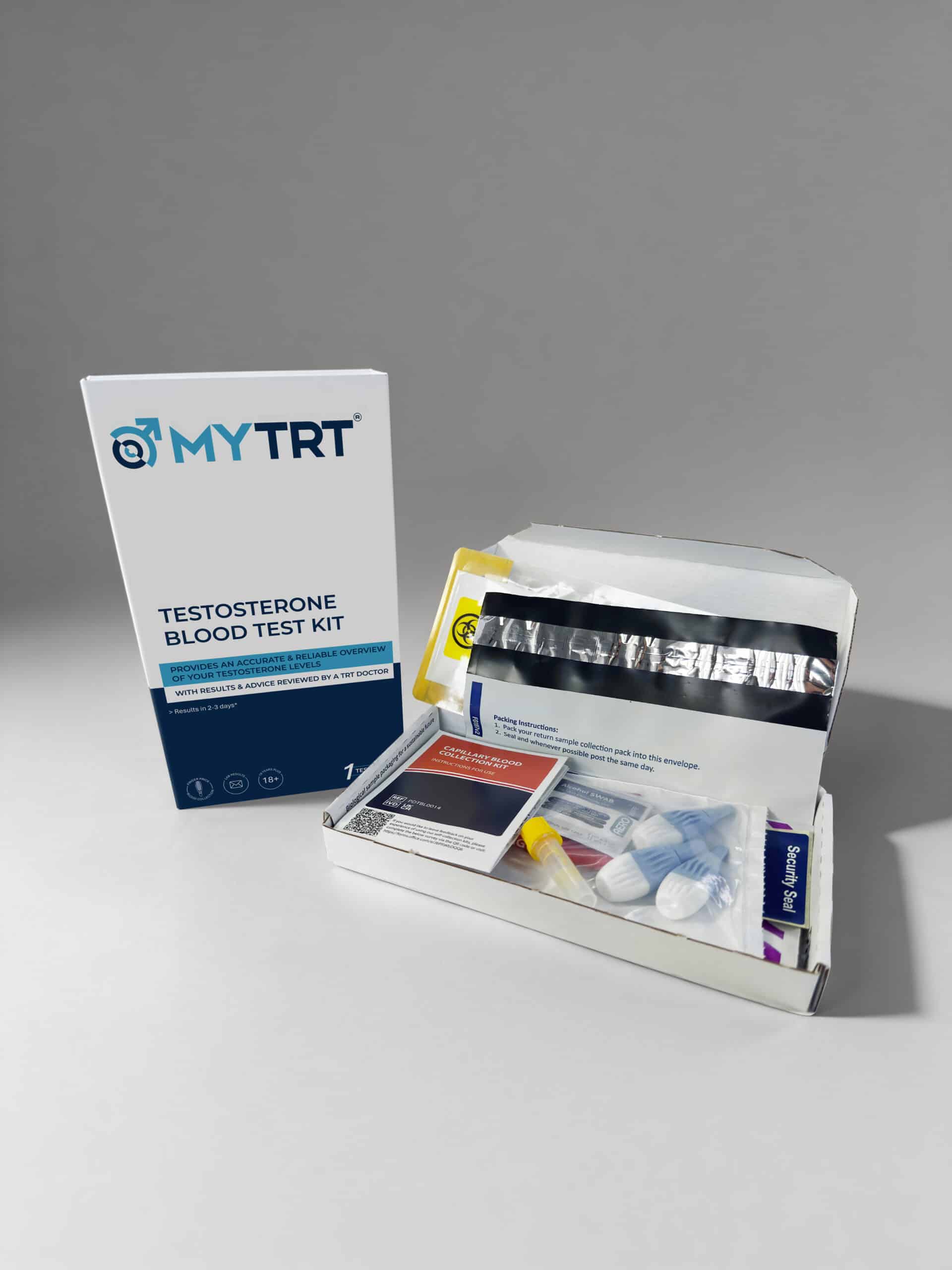
Taking control of your health starts with understanding your body. Before you can address the problem, you need to know if a hormonal imbalance is the cause of your symptoms. Our discreet, at-home testosterone blood test kit is the simplest and most convenient way to get the answers you deserve.
Ready to take control of your health? Find out your testosterone levels with our simple and discreet at-home blood test kit. Order yours today and start your journey to a new you.
Order Your Testosterone Blood Test Kit Now
About the Author
Dr. Raphael Olaiya is a UK-based General Practitioner and an expert in Testosterone Replacement Therapy. With years of experience helping men optimise their health, Dr. Olaiya is dedicated to providing safe, effective, and evidence-based care. (GMC No. 7492303)
References
Awareness and prevalence of the symptoms of testosterone deficiency – BMJ Open 2025
Why Are We Missing The Diagnosis of Low Testosterone in Men? – Dr Jeff Foster
The tell-tale signs of testosterone deficiency all men need to know – Telegraph 2025
Low Testosterone In Men Over 70 – Goldman Laboratories
Why do Gen Z and Millennial men have lower testosterone? – Medichecks
Testosterone and the aging male: to treat or not to treat? – PMC 2009
Testosterone treatment in men with hypogonadism and its effects on clinical outcomes – TTrials / JCI 2021
Testosterone treatment and heart disease – VA Research 2017
Effects of Testosterone Replacement on Bone Mineral Density in Hypogonadal Men – JCEM 1997
Testosterone Treatment and Fractures in Men with Hypogonadism – NEJM 2024
Cardiovascular Safety of Testosterone-Replacement Therapy – NEJM 2023 – TRAVERSE Trial
Testosterone and metabolic syndrome: the link – PMC 2010
The role of testosterone in the brain: a focus on cognitive and mood functions – Frontiers Endocrinology 2023
Testosterone and mood in aging men – ScienceDirect 2016
British Society for Sexual Medicine Guidelines on Adult Testosterone Deficiency, with a Focus on Male Sexual Dysfunction – British Society for Sexual Medicine Guidelines 2023
UK Testosterone Statistics – Forth with Life